

CS Barasa urges investors to back Africa’s homegrown climate financing
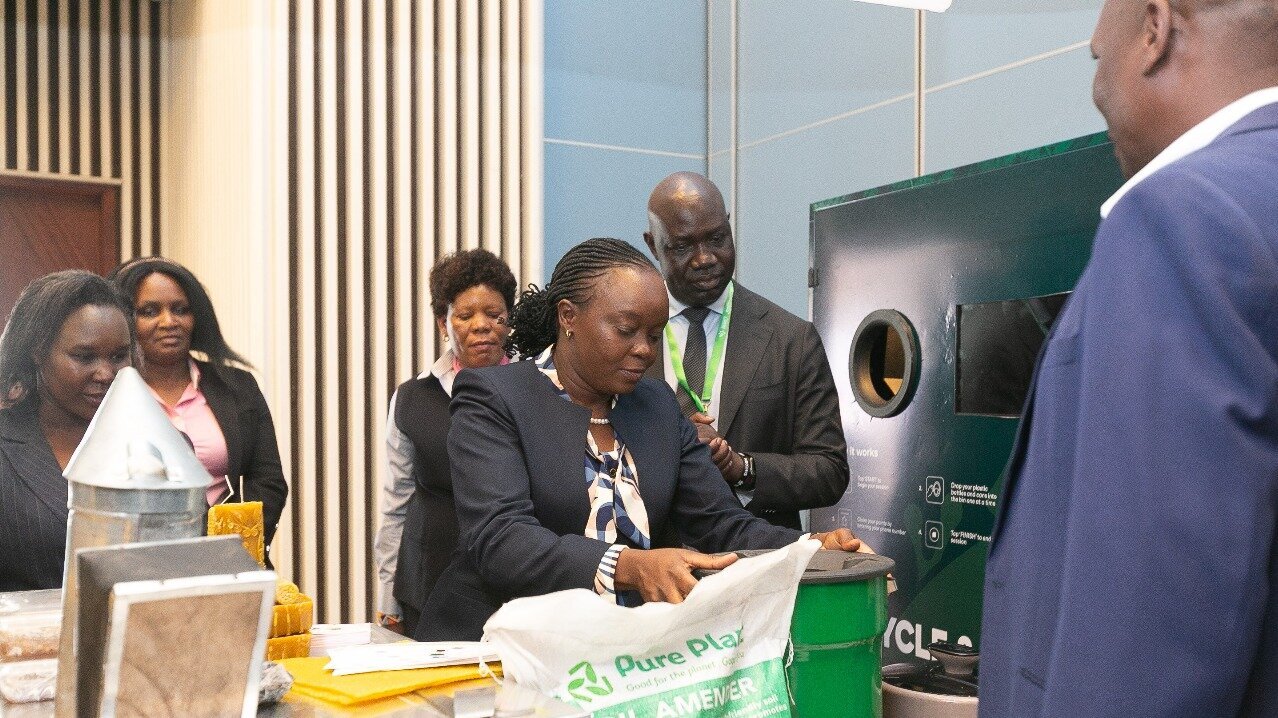
Cabinet Secretary for Environment, Climate Change and Forestry Deborah Barasa tours an exhibition stand at The Edge Convention Center in Nairobi during the opening of the Africa Climate Investment Summit 2025 on October 28, 2025. Guiding her through is Kenya Climate Innovation Centre Chief Executive Officer Joseph Murabula. Photo/KCIC
The Africa Climate Investment Summit (ACIS 2025) has set out to unlock African investments into the green economy by mobilising local capital, innovation, and partnerships to finance the continent’s climate transition.
The three-day summit, which began on Monday at The Edge Convention Centre in Nairobi, is hosted by the Kenya Climate Innovation Centre (KCIC) and brings together policymakers, investors, and development partners from across Africa and beyond.
Speaking during the opening ceremony, Cabinet Secretary for Environment, Climate Change and Forestry Deborah Mlongo Barasa called on investors to seize Africa’s growing green investment opportunities as the continent moves to finance its own climate transition.
“Our message to the global investment community is clear and unwavering: Kenya is open for green business. We have policy certainty and regulatory stability,” said CS Barasa.
She said Kenya has finalised the Climate Change (Carbon Trading) Regulations, 2025, to create a predictable and transparent legal framework for carbon markets, and is also developing policies to promote green bonds and public-private partnerships in climate financing.
CS Barasa noted that the implementation of Kenya’s second Nationally Determined Contribution (NDC) for 2031–2035 requires USD 62 billion, of which 19 percent will be funded through domestic resources. She invited private investors to tap into the remaining USD45 billion opportunity.
“The purpose of this summit must be to create a bridge between our continent’s policy ambitions, the innovators, and the global capital that is ready to be deployed,” she said.
Kenya Climate Innovation Centre Chief Executive Officer Joseph Murabula said Africa’s green transition must be powered by the continent’s own resources and leadership.
“Africa’s green transition cannot rely solely on external financing; it must be powered by African institutions, entrepreneurs, and investors,” said Mr Murabula.
He said unlocking regional capital will not only address climate challenges but also strengthen resilience and build sustainable livelihoods.
GIZ Country Director Bodo Immink described the green economy as Africa’s next growth frontier, noting that it presents both environmental and economic opportunities.
“The green economy is not just an environmental imperative; it is an economic opportunity,” said Immink.
“With the right investments, Africa can lead the world in sustainable production, circular business models, and inclusive innovation.”
KCIC Consulting Group Chief Executive Officer Edward Mungai called on African leaders to move from commitments to practical implementation.
“We must move from commitment to implementation. Africa’s climate economy will thrive when we combine leadership with execution, translating ambition into projects, and projects into prosperity,” said Mr Mungai.
Delegates at the summit called for new financial models, including de-risking instruments and blended finance, to support climate enterprises.
They also urged regional cooperation through the Africa Climate Innovation Network to harmonise investment approaches and scale sustainable projects across Africa.
Mr Murabula added that KCIC remains committed to connecting capital with creativity to ensure that every investment supports people, the planet, and shared prosperity.
To advertise with us, send an email to advert@avdeltanews.world