

DCI to investigate 1,188 SHA files as Duale suspends 85 health facilities
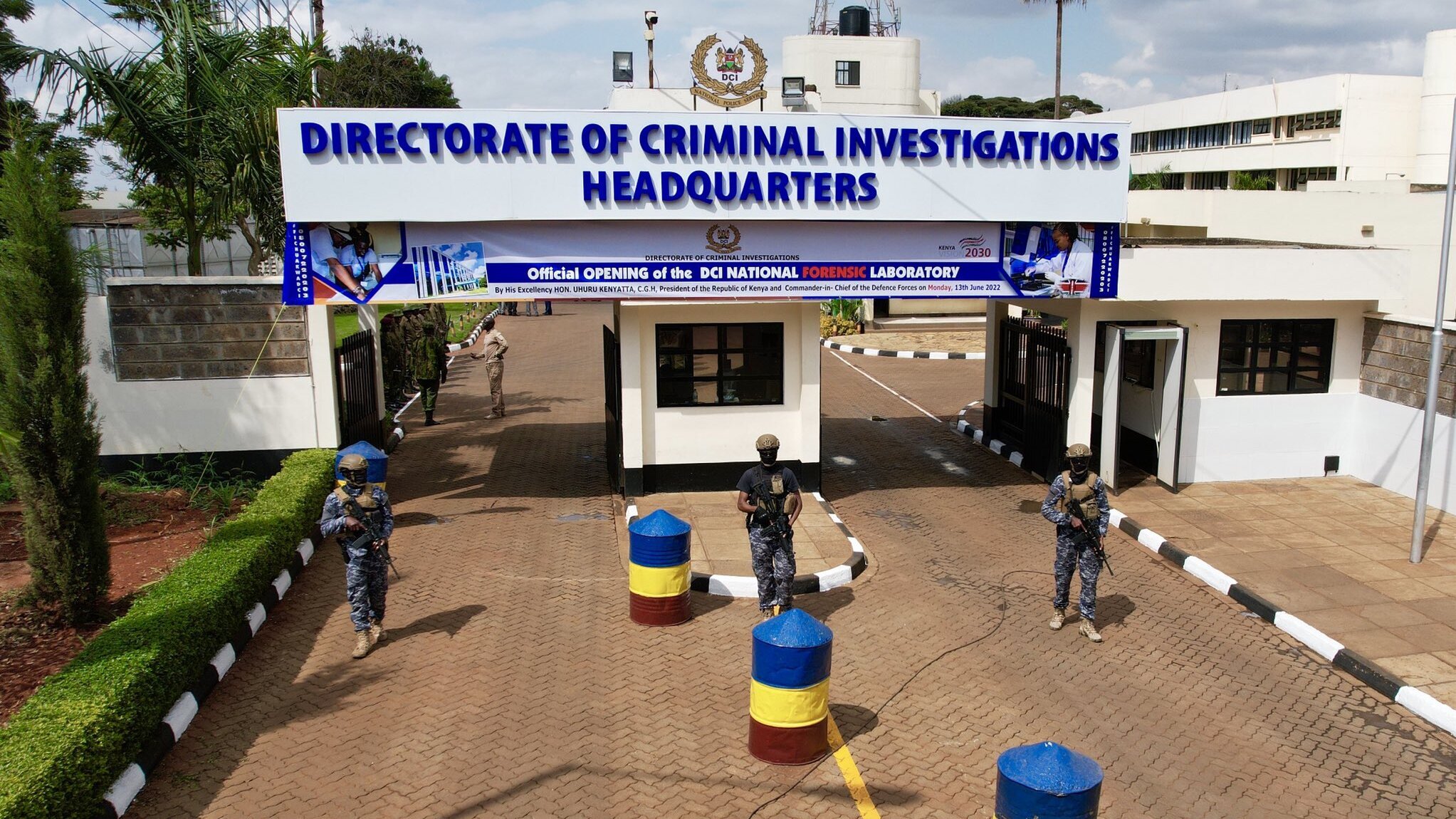
Directorate of Criminal Investigations (DCI) headquarters along Kiambu Road. Photo/National Police Service
The spotlight on Kenya’s health care fraud intensified sharply over the weekend, with the Director of Criminal Investigations (DCI) revealing the receipt of 1,188 suspicious files from the Social Health Authority (SHA) and the Kenya Medical Practitioners and Dentists Council (KMPDC).
Health Cabinet Secretary Aden Duale, addressing the issue head-on, has vowed that those involved will face justice.
In a statement issued on Monday, September 1, 2025, CS Duale confirmed that 85 health facilities have already been suspended over fraudulent activities uncovered through a forensic audit.
These include manipulated medical reports, “ghost patient” claims, billing outpatient cases as more expensive inpatient treatments, and outright upcoding.
Meanwhile, KMPDC has revoked licences from 544 unlicensed facilities and withdrawn operating permits for 454 others found wanting in standards or staffed by unauthorised personnel.
“These malpractices are not just theft—they put lives at risk,” said Duale, announcing that all the 1,188 files were fast-tracked to the DCI for criminal investigation.
He underscored the government’s commitment to accountability: “Any facility, doctor, or patient involved in fraud will be brought to book.”
The political ramifications cannot be overstated.
Over the weekend, a delegation of MPs led by Nairobi Senator Edwin Sifuna demanded CS Duale’s resignation, warning he could face impeachment if he remained in office. Their stance was clear: failure to take responsibility equals loss of credibility.
Yet, at the same time, fatalistic voices rose louder. Former Deputy President Rigathi Gachagua, attending a church service in Ongata Rongai, persona non grata, decried the SHA as a “grand scam.”
He condemned the government’s flagship health reform, accusing insiders of siphoning off “billions” to ghost hospitals while mission facilities remain unpaid.
“There is massive corruption at SHA. Billions are being allocated to ghost hospitals—yet mission hospitals receive nothing,” Gachagua declared.
“Who is fooling who?” His words, dripping with populist anger, predictably escalated public pressure on the Health Ministry.
It is in this volatile environment that the DCI begins its probe. A multi-agency team is now meticulously reviewing all the files—190 from the SHA and 998 from the KMPDC—with instructions to pursue prosecutions regardless of political status or social standing.
Officials were unambiguous: documents point to potential criminality among a wide spectrum of actors, and no one will be exempt.
The health sector, which lies at the heart of the government's Universal Health Coverage reforms, now faces its most serious integrity test yet.
Critics argue that SHA was meant to overhaul the broken NHIF system, but instead may have opened avenues for fraud.
President William Ruto, defending Duale, insisted the irregularities were not new but exposed by the SHA’s upgraded digital systems.
“The system we have introduced is exposing issues that have been ongoing for years,” he said.
“We will not shield anyone. If you stole, you must return what belongs to the people.”
The sheer scope of the files—nearly 1,200—suggests systemic rot rather than isolated wrongdoing.
Investigators will likely untangle ghost claims, upside-down billing, forged records, and licensing fraud, with forensic acuity.
The government also promises asset recovery: funds and property misappropriated must be reclaimed.
To advertise with us, send an email to advert@avdeltanews.world