

Horn of Africa warned to brace for climate shocks
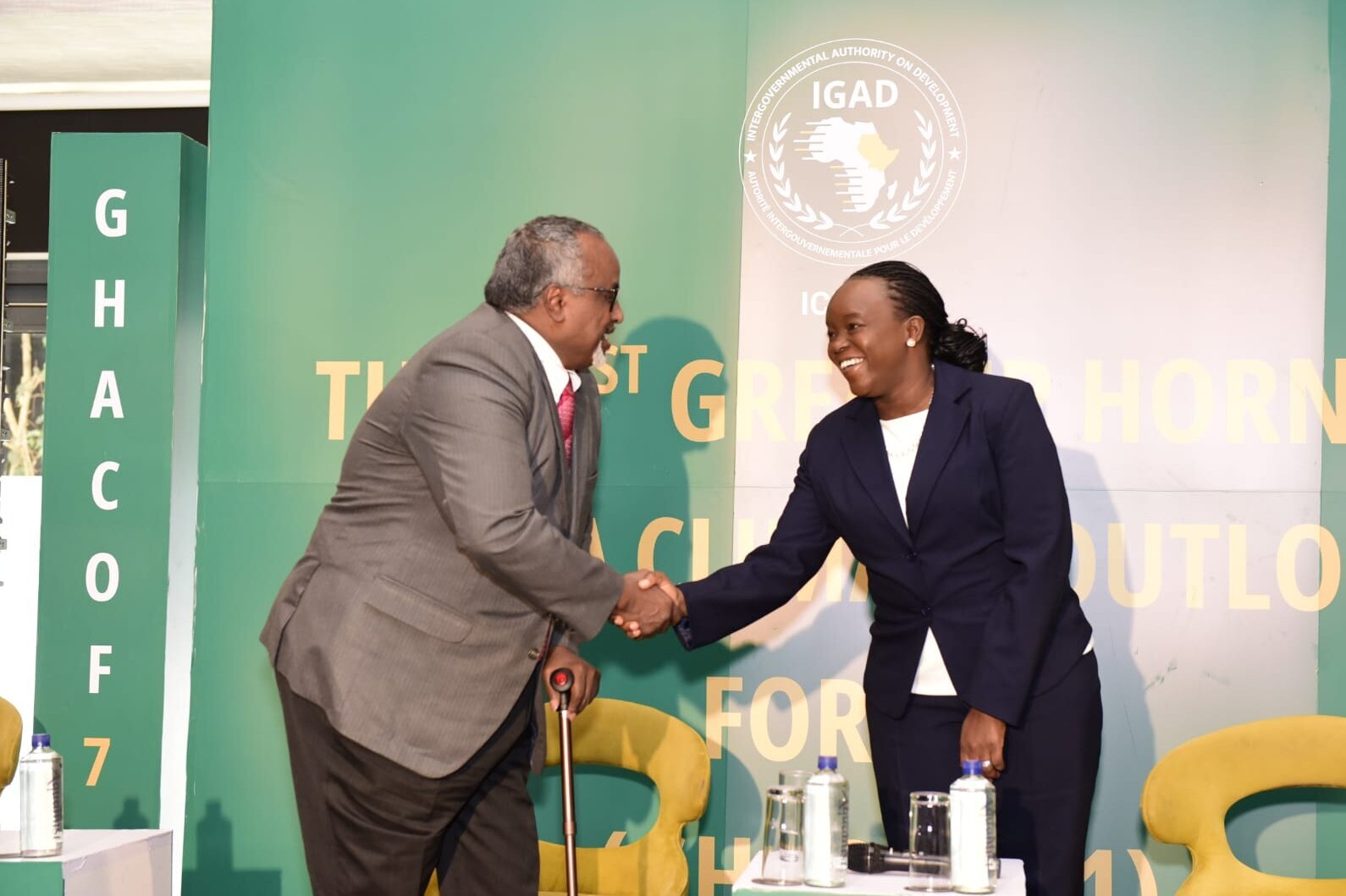
Cabinet Secretary for Environment, Climate Change and Forestry Deborah Barasa (right) with IGAD Deputy Executive Secretary Mohamed Abdi Ware, during the official opening of the 71st Greater Horn of Africa Climate Outlook Forum (GHACOF 71) in Nairobi. Photo/Sande Onyango
Communities across the greater Horn of Africa are being urged to prepare for a volatile October–December 2025 season.
Scientists warn of unpredictable rainfall, droughts, and floods that could damage livelihoods and infrastructure.
The warning came during the opening of the 71st Greater Horn of Africa Climate Outlook Forum in Nairobi.
Policymakers, climate scientists, and development partners gathered to assess projections and agree on response strategies.
Environment Cabinet Secretary Deborah Barasa said the region’s changing climate is no longer a distant threat, but a lived reality.
“The Greater Horn of Africa is becoming increasingly vulnerable to climate extremes, with communities facing the consequences of erratic rainfall, prolonged droughts, and devastating floods,” Dr Barasa said.
“Addressing them requires more than awareness; it calls for shared knowledge, timely information, and a united regional approach.”
Experts highlighted that the October–December “short rains” season, once relied on by farmers and pastoralists, is becoming harder to predict.
This unpredictability threatens food production, water access, and disaster preparedness in a region already struggling with conflict and displacement.
Deputy Executive Secretary of the Intergovernmental Authority on Development (IGAD) Mohamed Abdi Ware warned that climate extremes are rewriting the region’s weather calendar.
“Our climate crisis has disrupted the reliability of seasons, leaving communities exposed to harsher droughts, sudden floods, and unpredictable rainfall,” Mr Ware said.
“One of the most powerful tools we have in this journey is climate information. When it is timely, reliable, and accessible, it saves lives, protects livelihoods, and enables governments and communities to plan better. But when it fails to reach the last mile, the cost is counted in human suffering.”
What this warning means for you
Experts at GHACOF 71 shared practical steps for communities and leaders ahead of the October–December rains.
Farmers: Plant drought- and flood-tolerant crops, stagger planting dates, and use water-harvesting methods to make the most of unpredictable rainfall.
Pastoralists: Diversify grazing areas, stockpile fodder where possible, and pay attention to local weather alerts before moving livestock.
Households: Harvest and store rainwater, strengthen drainage around homes, and prepare emergency supplies such as food and medication.
Local leaders: Disseminate forecasts in local languages, identify evacuation centres early, and coordinate with disaster response teams.
Governments: Invest in early warning systems, repair flood-prone infrastructure, and ensure humanitarian aid is pre-positioned.
“A forecast only makes sense when it changes what people do on the ground,” reads a reminder to communities.
To advertise with us, send an email to advert@avdeltanews.world