

Kenyans marvel at a rare ‘Blood Moon’ eclipse
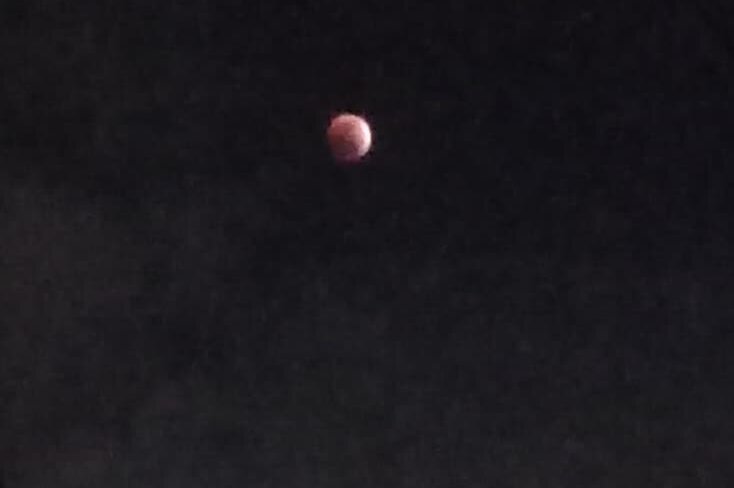
Blood Moon as observed in the sky on September 7, 2025. Photo/Juma Namlola
Kenyans across the country were captivated on Sunday night as a rare blood moon graced the skies--a total lunar eclipse that lit up Nairobi and beyond with a haunting red glow.
The eclipse was visible from approximately 8:30pm to 9:52pm East African Time (EAT), giving onlookers roughly 82 minutes of totality, one of the decade’s longest.
As the celestial spectacle unfolded, veteran tourism figure Mohamed Hersi, who is former chair of the Kenya Tourism Federation and Coast Tourism Association, took to Facebook to share his enthusiasm.
“#whyilovekenya Kenyans to Witness Rare ‘Blood Moon’ and Saturn Alignment today in the evening,” he wrote, urging sky watchers to keep an eye on the planet Saturn glowing nearby in the night sky.
Scientifically, the blood moon’s crimson tint is caused by Rayleigh scattering. As Earth comes between the sun and the full moon, its atmosphere filters sunlight, removing blue wavelengths and allowing red light to bend and illuminate the lunar surface. This gives the moon its eerie, coppery hue during totality.
The event drew Nairobi residents to rooftops and open spaces, armed with cameras and binoculars.
Unlike solar eclipses, the lunar event was completely safe to observe with the naked eye.
Astronomers also noted that during totality, the night sky becomes more visible, with Saturn adding to the cosmic performance as a bright point of light near the moon.
Muslim communities across Kenya marked the eclipse with the Khusoof prayer, a special prayer offered during lunar eclipses. It underscores humility before divine power--typical of the reflective tone many observers struck during the event.
This eclipse marks the second total lunar eclipse of the year. The next similar celestial display is expected on March 2–3, 2026.
For many Kenyans, the night was a blend of science, culture, and a sense of wonder under the shared sky.
To advertise with us, send an email to advert@avdeltanews.world