

Raila revives calls to reduce counties as Kenya marks first Katiba Day
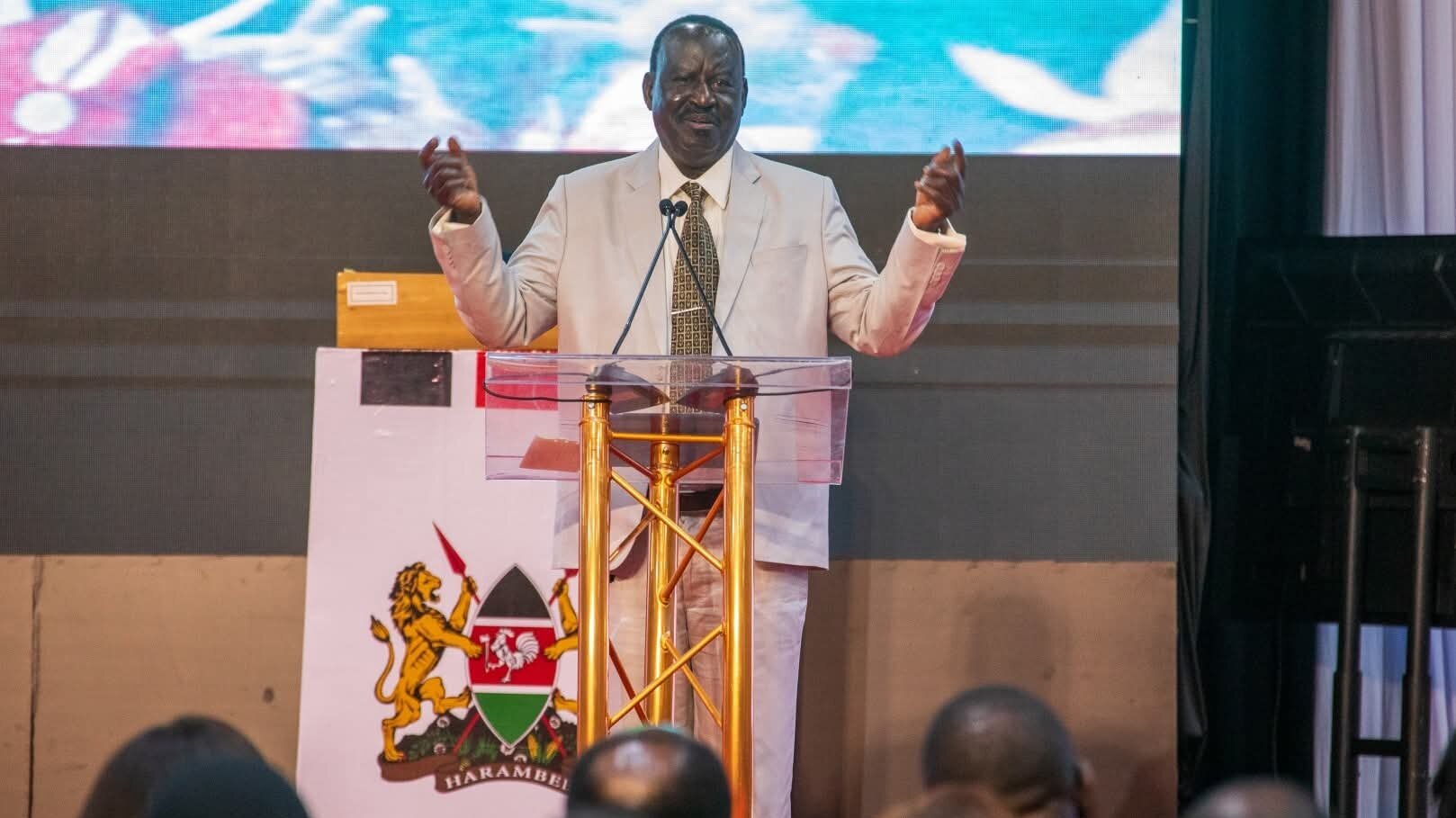
Orange Democratic Movement (ODM) leader Raila Odinga addressing Kenyans during the Katiba Day celebrations at the Kenyatta International Convention Centre (KICC), Nairobi on August 27, 2025. Courtesy photo
Opposition leader Raila Odinga has called for a fresh national conversation on the size and structure of Kenya’s devolved system, reviving a debate that has simmered since the promulgation of the 2010 Kenya,Constitution.
Speaking at the Kenyatta International Convention Centre (KICC) during the inaugural Katiba Day celebrations on Wednesday, Mr Odinga said the country should reconsider whether 47 counties are sustainable for a nation of Kenya’s size.
He proposed the introduction of a three-tier system--county, regional and national governments--as a way of streamlining governance and ensuring efficient service delivery.
“Kenya, in my view, is too tiny for 47 devolved units,” Mr Odinga told the packed hall, which included senior government officials, constitutional experts and civil society leaders.
“I wouldn’t advocate for the abolition of any county, but I believe we are ripe for a three-tier system that has county, regional and national governments.”
The remarks echo his long-standing concern that devolution, while one of the crowning achievements of the 2010 Constitution, has faced persistent challenges in financing, accountability, and duplication of roles.
He added that the current structure had led to bloated administrations and sometimes weakened service delivery, despite giving Kenyans greater say in local governance.
Mr Odinga’s proposal is not entirely new. Nearly a decade ago, during the height of the Building Bridges Initiative (BBI) process, the idea of reducing Kenya’s counties was floated in public debate.
Some proponents suggested consolidating the devolved units into about 13 regions, largely aligned to the country’s former provinces, arguing that this would reduce administrative costs and strengthen development planning.
At the time, the idea triggered heated reactions. Supporters hailed it as a rational step towards economic sustainability, while opponents warned that it would amount to rolling back devolution and undermining the people’s hard-won right to local self-governance.
Ultimately, the BBI debate collapsed in the courts before the issue could be settled.
On Wednesday, however, Mr Odinga suggested that the country had matured enough to revisit the matter with less suspicion and more pragmatism.
He argued that the spirit of Katiba Day — a commemoration of Kenya’s long struggle for constitutional reform — should encourage honest discussions about what is working and what requires change.
“Even if some of the institutions that came with the new constitution have lived below expectations, as a nation we are in a better place and more hopeful than we were before 2010,” he said.
“As we work to perfect the areas in which the Constitution is struggling, we also need to take a fresh look at parts whose implementation has been problematic.”
Mr Odinga also questioned whether Kenyans fully understood Article 1 of the Constitution, which grants citizens the right to exercise sovereignty directly or through their elected representatives.
While the electoral process is well-established, he said, the direct exercise of people’s power remains poorly defined and under-utilised.
The former Prime Minister paid tribute to those who fought for constitutional reform, recalling an era when advocating for a new legal order could land one in detention.
“Those who have come of age towards the tail end of the very protracted struggle, or under this constitution, may not believe it, but there was a time when being perceived to be harbouring thoughts about a new constitution landed people in jail,” he said.
With Katiba Day now enshrined in the national calendar, Mr Odinga urged citizens to embrace it as a space for bold engagement with the Constitution.
“It is my belief that this annual Constitution Day will be an avenue for a robust take on our Constitution, what works and what is failing,” he said.
His remarks are expected to reignite debate over the future of devolution, a subject that remains close to the heart of millions of Kenyans who view county governments as a vital link to resources and development.
Whether the country is prepared to reduce the number of counties or adopt a hybrid three-tier model will now be a question for both political leaders and citizens, as Kenya reflects on the legacy of its hard-won Constitution.
To advertise with us, send an email to advert@avdeltanews.world