

Ruto: 'Our police officers are ill-equipped in Haiti'
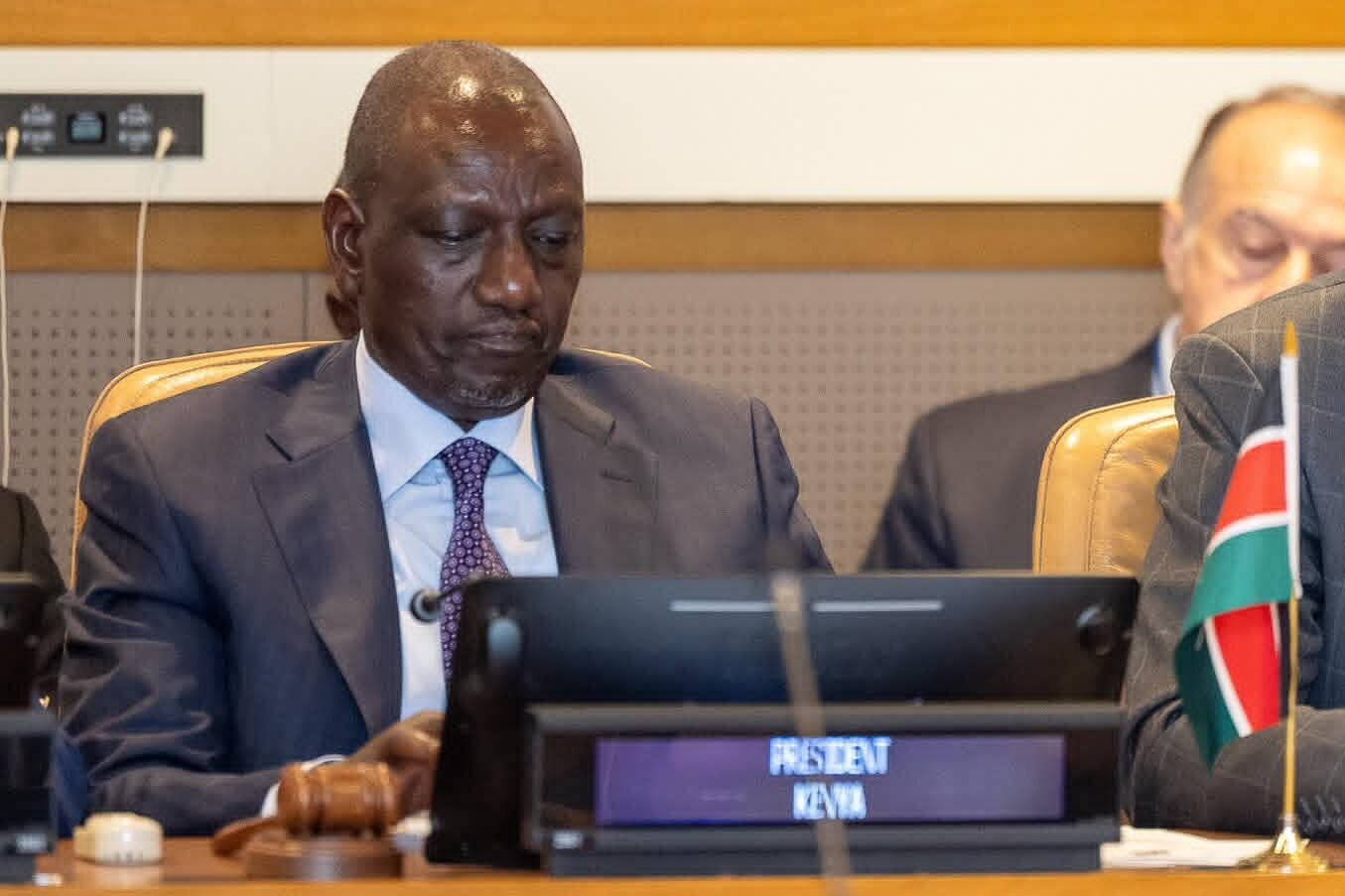
President William Ruto at the United Nations General Assembly (UNGA) in New York. Photo/PCS
President William Ruto has lamented at how Kenyan security officers in Haiti are often left stranded in dangerous places because of unreliable second-hand vehicles supplied to them.
Speaking at the United Nations General Assembly (UNGA) in New York on Wednesday, Dr Ruto said the cars frequently broke down, exposing the peacekeepers to unnecessary risks.
“Most of the vehicles were second-hand vehicles … they broke down a lot, many times. And in fact, it put our personnel in great danger when they broke down in very dangerous places,” he told the Assembly, drawing murmurs of surprise and laughter from the hall.
The Haitian mission, meant to stabilise a country paralysed by gang violence, has not been easy.
Kenyan officers have found themselves battling not only armed groups but also faulty engines on the streets of Port-au-Prince.
The President’s light-hearted but pointed account turned the UNGA spotlight on a grim reality: international peacekeeping, without adequate tools, can put lives at risk rather than save them.
From this comic relief, Dr Ruto turned to the bigger picture.
He said Haiti’s struggles underscored the urgent need to rethink how the world organises peace and security.
“We cannot continue with a system where interventions are hurriedly assembled, poorly equipped, and left to fail,” he said.
“Missions must be well-resourced, guided by clear mandates, and supported by genuine global solidarity.”
He then addressed the long-standing question of Africa’s place in global decision-making.
Calling the absence of a permanent African seat on the UN Security Council “a wound on the credibility of the United Nations,” Dr Ruto argued that reforming global institutions was no longer a favour to Africa but a necessity for global stability.
“It is unjust and dangerous to have a world body where the majority are treated as observers in matters that affect their survival,” he said.
On climate change, the President was blunt. He warned that current approaches continue to unfairly burden developing nations.
“To expect countries with fragile economies to make the same sacrifices as those that have prospered from centuries of carbon emissions is to institutionalise injustice,” he said.
Instead, he called for climate financing mechanisms that are fair, predictable, and based on common but differentiated responsibilities.
Dr Ruto also pressed for a rethinking of how climate funds are disbursed, noting that African countries often wait endlessly for pledges that never materialise.
“We do not need charity. We need fairness. We need commitments that are honoured. Africa is ready to be a green powerhouse, but we cannot do so while drowning in debt and empty promises,” he added.
He linked the issues of peace, governance, and climate together as part of one global crisis of trust.
“When the powerful fail to keep their word, when institutions fail to represent us, when resources fail to reach the ground, people lose faith — and instability follows,” he said.
He closed by reminding the Assembly that Africa’s youthful population was not a burden but an opportunity the world could ill afford to waste.
“Kenya is no longer content to merely attend the table; we want to shape it. Africa’s voice will no longer be silenced. We demand a system that reflects today’s realities, not the world of 1945,” he said.
To advertise with us, send an email to advert@avdeltanews.world