

Samia declared winner as EU calls polls ‘neither free nor fair’
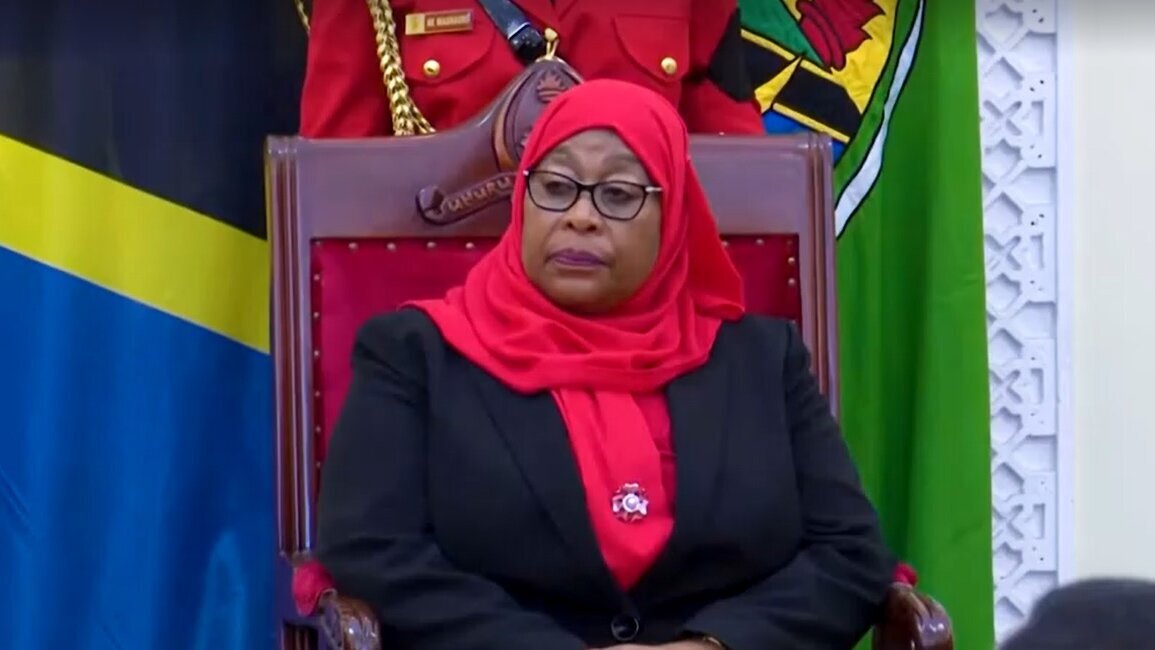
President Samia Suluhu Hassan of Tanzania, who secured her first elected term in a controversial vote held on October 29, 2025. Photo/Videograb
Tanzania’s National Electoral Commission on November 1, 2025, declared President Samia Suluhu Hassan the winner of the October 29 presidential vote, reporting she secured roughly 97.66% of valid ballots.
The commission said the result--which gives Samia a commanding margin--followed the completion of national tallying and certification.
Electoral officials announced the result in a televised statement from Dar es Salaam, citing rapid tabulation of forms submitted from polling stations across the country.
The commission reported turnout of well over half of registered voters and said the vote proceeded under official observation at polling sites.
Opposition parties, however, rejected the count as preordained, with critics pointing to the absence of major challengers and restricted civic space during the campaign period.
Widespread protests and unrest first broke out on election day, as voting was underway.
Demonstrations spread quickly in Dar es Salaam and other urban centres--scenes that included road blockages, burning of campaign material and clashes with security forces.
Authorities moved to contain the unrest by deploying the military in parts of the city and imposing curfews.
The government also restricted internet access, a move documented by monitoring groups as a near-nationwide data disruption.
Authorities imposed curfews in major cities and deployed uniformed and paramilitary units to restore order after the early protests.
Reuters and AP reported heavy security presence and curfew measures in Dar es Salaam.
NetBlocks and independent monitors recorded significant mobile-data and social-media disruptions beginning on election day; access to major platforms and messaging services was restricted or intermittent for large parts of the country.
Observers described the outage as a deliberate move to limit the viral spread of protest footage and coordination.
Media muzzling and accreditation issues: Several independent outlets and journalists reported difficulties obtaining accreditation, restricted access to polling stations, and surveillance or pressure on editorial coverage in the run-up to and during the poll.
Human-rights groups noted a pattern of shrinking civic space prior to the vote.
Major opposition parties were sidelined in the run-up to the election — some candidates and parties were disqualified, and leading opposition figures faced legal action.
The most visible opposition leader, Tundu Lissu, was detained on treason charges, a move that critics and rights groups say effectively removed credible competition from the ballot.
These pre-election actions helped shape an environment in which the ruling party enjoyed a near-uncontested path.
Shortly after the declaration, the European Parliament issued a strongly worded resolution saying the elections “cannot be regarded as free, fair or credible,” citing months of repression of opposition parties, harassment of civil society, and media restrictions.
The EU urged independent investigations and warned recognition of the results without credible inquiry would undermine democratic standards.
Reports of casualties and injuries vary widely.
Opposition sources and some civil-society groups put the death toll in the hundreds; independent verification is difficult amid the communications blackouts and restrictions.
The UN and other agencies confirmed a smaller, verified number of fatalities while calling for calm and independent investigation into claims of excessive force.
AVDelta News is continuing to monitor and will update verified casualty figures as credible confirmations emerge.
Observers say the EU resolution and the pattern of media and civic restrictions could affect Tanzania’s diplomatic standing and investor confidence.
Several international bodies and rights organisations have called for credible, independent inquiries into election conduct and the security response to protests.
Analysts add that while the CCM’s dominance is reinforced on paper, the political cost — domestically and internationally — may be significant.
What to watch next
Calls for independent inquiry into the conduct of the polls and post-election security operations.
Possible diplomatic responses from international partners, including the EU and regional bodies.
Restoration of internet services and safe reporting access for media and human-rights observers.
Any formal legal challenges lodged by opposition figures or civil-society organisations.
To advertise with us, send an email to advert@avdeltanews.world