

Youths decry ‘use-and-dump’ politics, confront NCIC over exclusion in governance talks
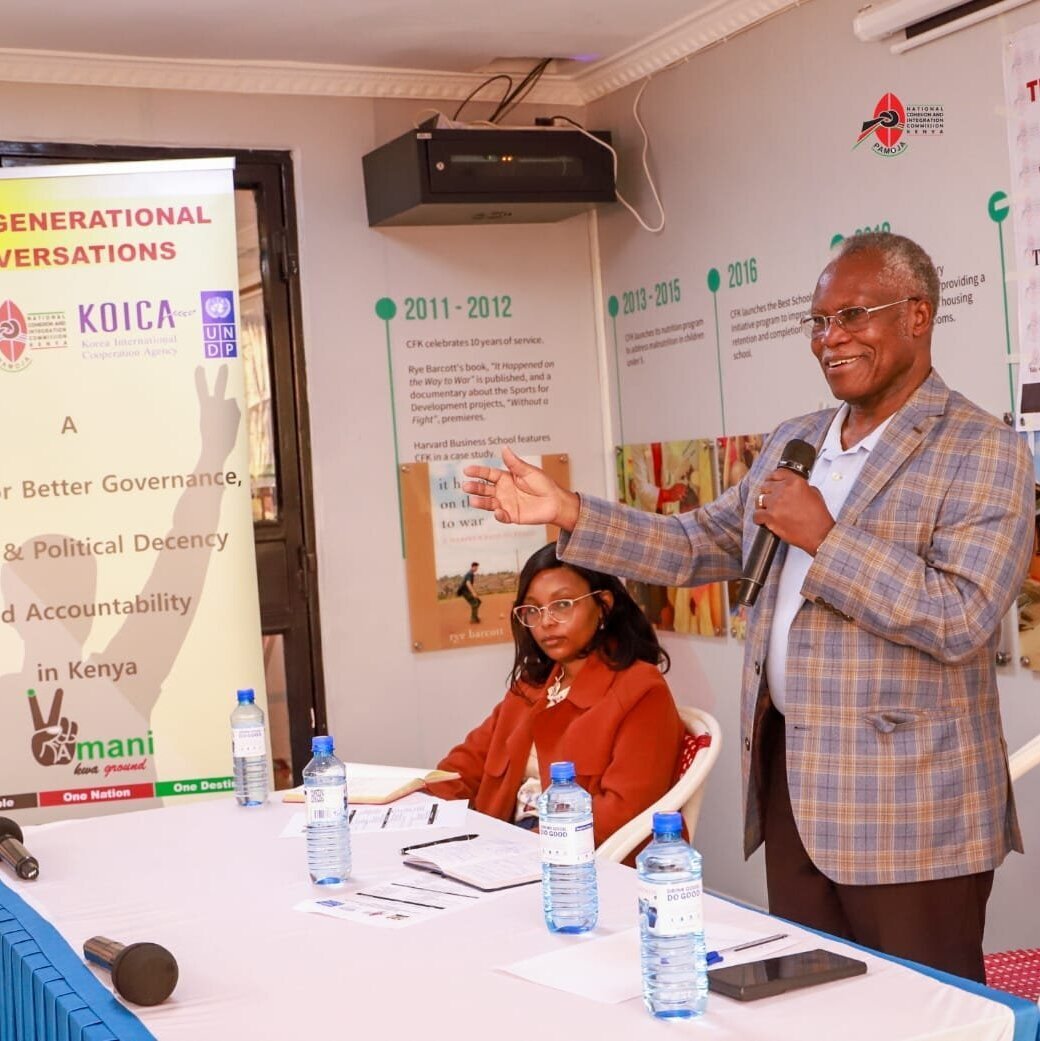
NCIC Chairperson Rev. Dr. Samuel Kobia speaking during the Transgenerational Conversations forum held in Kibra in September 10, 2025.
Kenyan youths have accused politicians of using them as pawns during election campaigns only to abandon them afterwards, warning that the “use-and-dump” culture threatens peace and national stability.
They say the practice of mobilising young people for rallies and protests, sometimes at the expense of harmony in communities, must come to an end.
Instead, they want leaders to prioritise youth empowerment through jobs, education, and inclusion in governance.
This frustration was echoed strongly in Kibra where young people challenged the National Cohesion and Integration Commission (NCIC) to back words with action.
They accused leaders of sidelining them despite repeated promises of inclusion.
Speaking during a Transgenerational Conversations town hall at CFK Africa, youth representative Shireen Onyango said young people felt exploited in politics and programmes but locked out of meaningful opportunities.
“We are always called tokens in government programs, but when it comes to real opportunities, we are left out,” she said.
The NCIC forum, led by Chairperson Rev. Dr Samuel Kobia and Commissioner Abdulaziz Ali Farah, was part of a week-long engagement with Nairobi’s informal settlements.
The talks brought together youth, women, and community leaders to air concerns on governance, peace, and social inclusion.
Community leader Philip Omondi urged NCIC not to turn the discussions into another report that “gathers dust.”
He said residents had spoken candidly and deserved accountability.
“People here have spoken openly. What we need now is action so that our voices do not end up in reports that gather dust,” he said.
The role of religion in politics also featured. Woman representative Asha Said condemned the use of churches as campaign venues, saying it fuelled divisions.
“Churches should remain sacred. When leaders turn pulpits into political arenas, they divide us instead of uniting us,” she said.
In response, Rev. Kobia stressed that the forums were designed to bring voices from the grassroots into national dialogue and policymaking.
“These conversations are about creating a future where all generations feel included, respected, and heard,” he said.
Commissioner Farah assured participants that the Commission would escalate their concerns to the appropriate institutions.
“We are not just listening for the sake of it. The concerns raised here will inform recommendations to government and partners,” he said.
The Kibra session followed similar engagements in Kangemi and Kawangware earlier in the week.
The initiative, supported by KOICA and UNDP Kenya, will continue in other informal settlements and academic institutions, including Kenya Methodist University.
According to NCIC, the wider programme aims to reduce hate speech, strengthen political decency, promote digital responsibility, and build trust across generations.
To advertise with us, send an email to advert@avdeltanews.world