

Petitioners challenge appointment process of Ruto's 19 new CSs
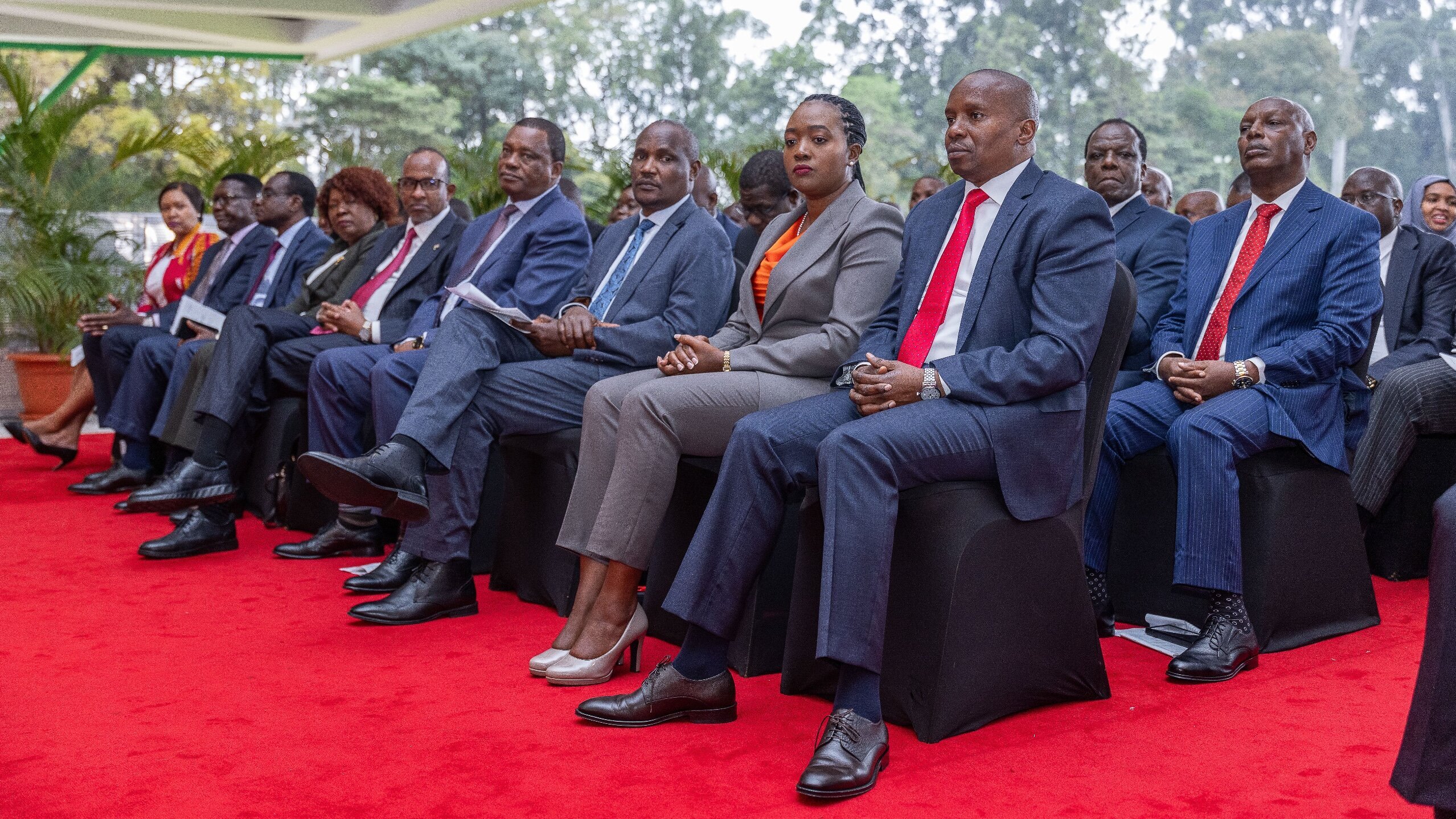
CSs during the swearing-in ceremony. Photo/ PCS
The fate of the just sworn-in 19 Cabinet Secretaries (CSs) now hangs in the balance after two petitioners sought the High Court to declare the appointment of the CSs as illegal, citing lack of adequate public participation in the vetting process.
The two now want President William Ruto to initiate fresh appointment of his CSs in adherence to the rule of law.
The corridors of power trembled as two determined souls stepped into the hallowed halls of justice.
Their mission was just one - to challenge the appointment of 19 CSs.
Their spirits aflame with the fire of righteousness, the petitioners want the whole process overhauled.
The air crackled with anticipation, for this was no ordinary battle—it was a clash between duty and secrecy, between the people’s voice and the veiled machinations of power.
Issa Elanyi Chamao and Patrick Karani Ekirapa, the champions of transparency, filed their case before the High Court.
Their voices echoed through the marble chambers, accusing the National Cohesion and Integration Committee of skirting legal protocols.
The committee, entrusted with gathering public opinions at the Bomas Hall, had allegedly crafted its decisions behind closed doors, shrouded in darkness.
Wanjiru Gikonyo, a fierce human rights activist, stood alongside the National Human Rights Commission.
Together, they raised their banners against the murky process. Four reasons fueled their discontent - a lack of transparency, a disregard for public involvement, a whisper of impropriety, and the omission of ethical scrutiny.
The committee’s decisions, petitioners argued, “hang like a heavy curtain, shielding the truth from the very citizens it purported to serve”.
In their plea, the dissenters pointed fingers at Wycliffe Oparanya (CS MSMEs), whom they claimed his integrity wavered in the shadows.
The vetting process, they argued, had failed to delve into his history, qualifications, and suitability for ministerial office. However, during the vetting process, Mr Oparanya came out clean, stating that his file where he had been under investigations, was closed.
As the case unfolded, the nation held its breath. Speaker Moses Wetangula’s committee, accused of negligence, faces the piercing gaze of Lady Justice.
Had they truly overlooked critical aspects of the candidates? Had they danced with deception, ignoring the heartbeat of democracy—the people?
President Ruto, eager to wield his freshly minted Cabinet, is now at crossroads. The fate of his chosen ministers hangs in the balance. Will he defend their appointments, or will he heed the whispers of justice?
For now, the courtroom walls have absorbed this tension, waiting for the gavel’s decisive strike.