

US partners with Mogo to fast-track Kenya's electric mobility transition
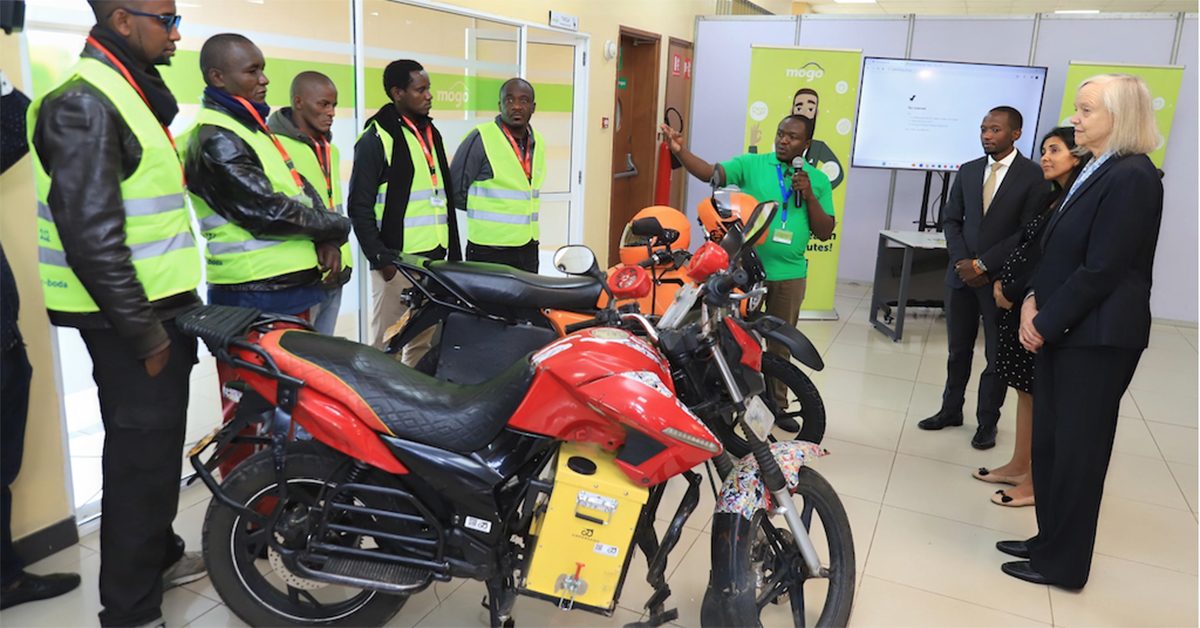
The US and Mogo Partner to Drive Kenya's Electric Mobility Transition. The US Ambassador to Kenya Meg Whitman (right) has lauded the nation's strides in decarbonizing its transport sector. Courtesy photo
Nairobi, Kenya
Kenya's ambitious journey toward a greener, more sustainable future received a significant boost as the United States (the US) and leading asset financier Mogo reaffirmed their commitment to advancing the country's transition to electric mobility.
During a visit to Mogo's electric vehicle (EV) showroom in Nairobi on August 13, 2024, the US Ambassador to Kenya Meg Whitman lauded the nation's strides in decarbonizing its transport sector.
Mogo, a pioneer in East Africa's asset financing landscape, is among three e-mobility companies in Kenya that have collectively secured Sh3.9 billion ($30 million) in financing from the US's International Development Finance Corporation (DFC).
This funding has been a catalyst for Mogo's expansion into the EV market, with Sh1.3 billion allocated to financing zero-emission vehicles.
The firm is particularly focused on making electric bikes and three-wheelers, popularly known as Tuk-tuks, accessible to Kenyans, supporting the nation’s growing green mobility movement.
"Investing in electric vehicles and motorcycles benefits Kenya in multiple ways," remarked Amb. Whitman.
"These investments create high-quality jobs for Kenyans in a growing industry, reduce dependence on fossil fuels, modernise the transport system, especially in urban areas, and address climate crisis concerns," she added.
One of the most immediate impacts of this initiative is being felt by boda boda operators motorcycle taxi drivers who are earning at least Sh300 more daily by switching to electric bikes.
This increase in earnings is attributed to savings on fuel and maintenance costs, as well as lower interest rates offered by Mogo for electric boda bodas.
The popular battery-swapping model, where riders can exchange empty batteries for fully charged ones within minutes, is also contributing to the efficiency and appeal of electric motorcycles.
According to the Chief Executive Officer (CEO) of Mogo Africa & Asia Tomas Sudnius, affordability is a key barrier to achieving e-mobility, particularly in Sub-Saharan Africa.
"By investing in e-mobility, we aim to not only expand access to economically empower Kenya's fast-growing micro, small, and medium enterprises (MSMEs) but also mitigate the impacts of global warming by reducing greenhouse gas emissions," Sudnius said.
The transportation sector, heavily reliant on fossil fuels, is a major contributor to Kenya's emissions.
However, the country's shift towards electric mobility aligns with several national strategies, including the National Climate Change Action Plan (NCCAP) 2023-2027, the Long-Term Low Emission Development Strategy (LT-LEDS) 2022-2050, and the Nationally Determined Contribution (NDC) to cut greenhouse gas emissions by 32 percent by 2030.
The Kenyan government envisions that by 2025, at least five (5) percent of all registered vehicles in the country will be electric.
Supporting this goal, the government has pledged to facilitate the acquisition of 200,000 electric motorcycles by the end of 2024. According to the United Nations Environment Programme, a global transition to electric motorcycles could prevent 11 billion tons of carbon dioxide emissions by 2050, saving motorcycle owners a staggering Sh5 trillion (US$ 350 billion) in fuel and maintenance costs.
With Mogo's continued investment in the sector, Kenya is poised to become a regional leader in electric mobility, driving economic growth while addressing the urgent challenges of climate change.