
Can the moon, tides determine a harvest?
- Created by Sande Onyango
- Climate/Environment
For Kibuyuni residents, the moon and tides are timekeepers, guardians, and teachers, helping a community weave survival out of seaweed, patience, and tradition.
In Kibuyuni, a quiet fishing village tucked along Kwale’s shoreline, the ocean is not just scenery.
It is rhythm, it is breath, it is the invisible hand that shapes survival. Here, the tide decides when the day begins and when it ends. It also decides whether dinner will be on the table.
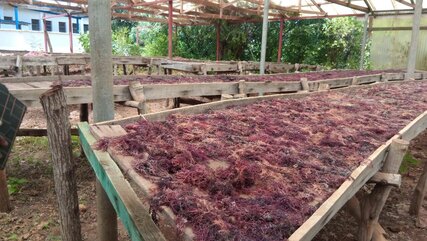
For years now, families in Kibuyuni have turned to seaweed farming. What makes this practice remarkable is not just its success, but how closely it is bound to the cycles of the moon.
Unlike outsiders who depend on technical tidal charts, most Kibuyuni farmers trust a much older compass: the Muslim lunar calendar. It has been passed down through generations, quietly guiding when to plant, when to tend, and when to harvest.
Amiri Juma, the chairperson of the Kibuyuni Seaweed Farmers’ Cooperative, gestures toward the endless blue.
"We check the calendar and plan our work around it. The tides follow the moon, so by using the calendar we know when the seaweed will be accessible. Timing is everything in this work," he explains.
That timing is precise. During new and full moons, the ocean withdraws just enough to reveal submerged gardens. Farmers wade in, ropes and seedlings in hand. A single misstep—planting too late, harvesting too soon—can turn months of labour into loss. Seaweed left untended rots or weakens. Mature crops, ready after about 45 days, must be replanted immediately to keep the cycle alive.
Marinda Bakari Nasoro, the cooperative’s vice chairperson, describes the delicate balance.
"When we harvest, we replant straight away. Sometimes we take only part of the ropes, other times we clear everything. It depends on how much we need and what the sea allows. The important thing is that nothing is left idle."
For five to seven days each month, the entire village comes alive. Men, women, and children pour into the shallows, their laughter mixing with the slap of waves and rustle of ropes. Outsiders may arrive with charts and gadgets, but for locals, the calendar is enough.
Ramtu Bakari, the cooperative’s marketing officer, says it with certainty, "The farms are visible when the water goes below two(2) feet. Visitors may use tidal charts, but we rely on the calendar. It tells us exactly when to step into the water and work."
The cooperative has also transformed the market. Farmers no longer sit anxiously waiting for international buyers.
"Before, farmers could wait for weeks without income. Now anyone in need can sell directly to the cooperative, which later handles exports," Juma explains.
The change is most visible among women. Of the 287 members, 212 are women, their earnings often going straight into school fees, small businesses, and household needs.
"Women are very active in planting, harvesting, and sales. This work has empowered them socially and financially," Juma adds.
The seaweed itself does more than feed families. It nurtures the ocean, growing without fertiliser or pesticides, quietly cleaning the surrounding waters. But the sea can be fickle. A sudden storm, a surge in tide, and months of work can vanish. Farmers say their moon-guided vigilance helps them avoid the worst, but they never grow complacent.
Support from The Nature Conservancy and the Kenya Marine and Fisheries Research Institute has added another layer of strength. Training, better methods, and market links are drawing younger people into the trade.
"With the support we get, we can reach young people and show them seaweed farming is both profitable and sustainable. Our goal is self-reliance for every coastal family," says Juma.
For Kibuyuni, the moon is more than a light in the night sky. The tides are more than water rising and falling. Together, they are timekeepers, guardians, and teachers—helping a community weave survival out of seaweed, patience, and tradition.