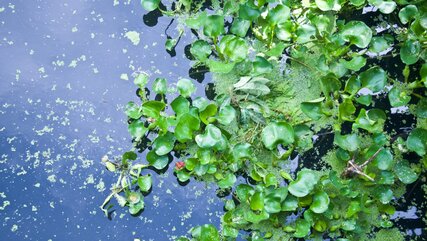

County on brink of losing Sh5bn annual revenue due to pollution, water hyacinth in Lake Baringo
- Created by Jeremiah Choge
- Climate/Environment
The potential of fish production at the world-famous lake has dropped from 482 tonnes in 2023 to 192 tonnes in 2024.
For many years, Lake Baringo has been known for tourism and fish trade which earns Baringo County Government over Sh5 billion in terms of revenue annually.
However, this could soon be lost due to water pollution and hyacinth that is rapidly choking the fresh water lake.
The potential of fish production at the world-famous lake has dropped from 482 tonnes in 2023 to 192 tonnes in 2024.
A fish trader at Kampi Samaki, Ms Esther Talaa, told AVDelta News that the trade is dwindling in the area due to scarcity of fish.
“I have been in this business for over 20 years now, but it is now going down due to shortage of fish at Lake Baringo. We used to buy a tilapia at Sh50 each, but it is now selling at Sh150 which is too high for us," said Ms Talaa.
She added that she used to earn more than Sh50,000 but it has now reduced to a meagre Sh5,000 in a month.
"We used to be more than 30 traders doing the business but most of them have quit,” said Ms Talaa.
Another trader, Ms Zipporah Chelimo, said that she has now been forced to quit the business because she cannot afford to buy the fish for sale due to prices which are skyrocketing each day.
According to Baringo County Director in charge of Fisheries Dickson Ongwae, the shortage of fish in the lake is due to water pollution, climate change and water hyacinth that is spreading quickly from the Southern part of the lake.
Mr Ongwae said the massive growth of water hyacinth which is doubling its mass every month could choke and affect the long-term water availability on the lake.
“The water hyacinth restricts water flow, blocks sunlight from reaching native water plants and depletes the oxygen in the water which often chocks aquatic animals like fish,” said Mr Ongwae.
The director said that efforts by the county government to remove the weed manually which has rapidly grown since 2016 has not borne fruits and is now spreading widely in the Southern part of the lake.
According to the official, if urgent interventions are not put in place, the lake will not be accessible by boats and it would perhaps mean shelving fishing and tourism activities which have been the sole mainstay in the area.
Hotels also like Soi Safari Lodge and Roberts Camp will be forced to close business since they depend on the the lake.
Over Sh5 billion in terms of revenue generated from the lake through tourism annually, will be lost.
“The weed is spreading fast and unless a remedy is found soon, those who depend on it for survival, including fishermen and fish traders, will be condemned to poverty,” added Mr Ongwae.
He said he had also received reports that some flower farms upstream were discharging chemicals in to the lake, saying that the breeding characteristics of some fish species have adversely been affected negatively by pollution.
A spot check by AVDelta News revealed that at several points where tributaries flow into the lake, the invasive water hyacinth is soaking up water and choking the shoreline.