
Digital violence: Kenyan, Nigerian lawyers unite to defend women’s voices online
- Created by Sande Onyango
- Tech
The study in Kenya revealed that WhatsApp is one of the platforms where the perpetration is happening most.
The Federation of Women Lawyers (FIDA) Kenya and Nigeria’s Women Advocates Research and Documentation Centre (WARDC) have teamed up to confront the surge of online abuse targeting women and girls.
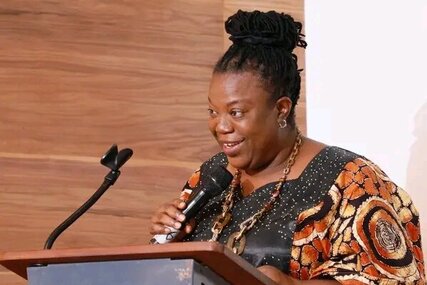
Speaking during a roundtable meeting in Nairobi on Monday, Founder of WARDC, Dr Abiola Akiyode-Afolabi, described how technology, once hailed as an equaliser, is increasingly being twisted into a tool for silencing women and stripping them of dignity.
“We have realised over time that part of what tech is also useful is to shut down women and also to violate women’s rights and dignity,” she said.
She explained that the gathering was not just about discussing statistics but about building unity across generations and borders to defend women’s participation online.
“The essence of this meeting today is to look at the data, talk about the patterns of abuse, and to see how women’s movements can intergenerationally work together to ensure that we protect our voices and our participation,” she said.
The Deputy Executive Director of FIDA Kenya, Janet Anyango, spoke of the relentless harassment women face online, noting that even influential leaders are not spared.
“Unfortunately, it is very rampant and no woman is immune. We are seeing even the most powerful of women going through a lot of trolling, a lot of violations online,” she said.
She insisted that platform owners must be held to account and that survivors need more than laws — they need psychological, humanitarian and legal support.
“We speak up against holding duty bearers accountable, who are the platform owners, and how best can they be able to work better towards protecting women and girls. In the event that they are violated, how best can they be able to be holistically supported,” she added.
Researcher Mercy Kamau presented findings that revealed the online platforms most associated with abuse, painting a grim picture of everyday digital life for women.
“The study in Kenya revealed that WhatsApp is one of the platforms where the perpetration is happening most. Most respondents indicated that violations happened on WhatsApp, followed by Facebook. Then we had the SMSs, also notorious in perpetrating technology-facilitated violence and also the voice recording. Others had Twitter and Instagram with very small percentages,” she said.
She stressed that reforms in policing and the courts, together with public education, are necessary if women are to find safety online.
“We need to look into the systems that we have currently in Kenya. We look at the policies. Are they adequately addressing the issue? Are our police system, the judicial system, up to the level where they can address technology-facilitated violence? We also need to look into the issue of community awareness,” she explained.
Artificial intelligence is compounding the risks. Adekemi Omotubora, an AI expert from Nigeria, warned that many victims cannot even recognise that what is happening to them amounts to abuse.
“We discover that some people who are being victimised by new technology sometimes don’t even understand that this is a problem,” she said.
She argued that Africa must not simply copy frameworks from abroad but build laws and policies rooted in its own realities.
“It’s important for us to use research to drive this understanding. Given emerging technologies, especially artificial intelligence, we need to develop the tools, the policy, the laws that we need to actually combat this emerging phenomenon,” she said.
Activist Aisha Yesufu, Co-convener of the Bring Back Our Girls movement in Nigeria, described a coordinated effort to drive women out of digital spaces where many had finally found their voice.
“Unfortunately, we are in a period where the voices of women are being shut down. And online is one place that a lot of women have been able to find their voices and have been able to speak. And right now there’s an orchestrated attack on ensuring that their voices are taken away,” she said.
She urged governments to understand that silencing women online erodes human rights and weakens entire societies.
“When a woman’s voice is taken away, it’s all our voices that are being taken away. And at the end of the day, we all must ensure that everything possible is done for women to be able to find their voices online, to have safe space, and to be protected,” she said.
The meeting, supported by the United Nations Trust Fund, closed with commitments to push for legal reforms, demand accountability from social media platforms, expand community awareness, and strengthen survivor-centred support services. A training manual will also be developed to guide institutions and communities across Africa.