

Francis Atwoli: From plantation workers' leader to global labour powerhouse
- Created by Juma Namlola
- Profiles
Atwoli wins sixth straight term as COTU Secretary General.
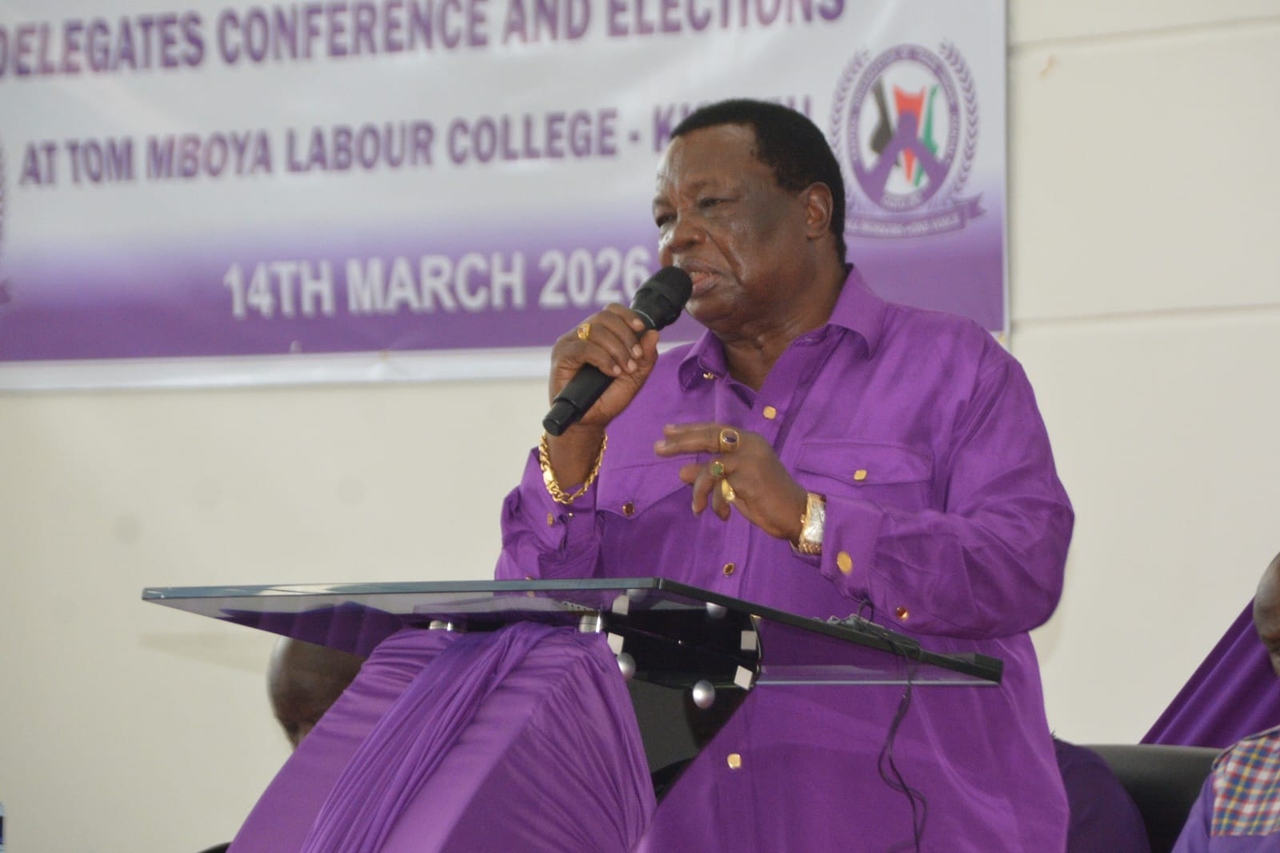
NAIROBI, Kenya - Francis Atwoli on Saturday secured a historic sixth consecutive term as Secretary-General of the Central Organisation of Trade Unions, or COTU, after delegates overwhelmingly re-elected him at the federation’s congress in Kisumu on Saturday.
The result cements Atwoli’s place as the longest-serving leader in the history of Kenya’s national trade union federation.
Atwoli’s victory highlights his enduring influence in Kenya’s labour movement and his journey from grassroots union work to a prominent role in the international labour arena.
From plantation workers to national union leadership
Atwoli’s leadership has deep roots in agricultural labour. Before becoming COTU’s Secretary-General in 2001, he served as General Secretary of the Kenya Plantation and Agricultural Workers’ Union, representing thousands of workers on tea, coffee, and other plantations.
Unlike some of his predecessors, whose unions were largely urban or industrial, Atwoli built his base among workers in rural areas.
This broad and loyal membership has been a key factor in his repeated re-elections.
A look at COTU’s past leaders and their paths
A historical look at COTU leadership shows how trade union roles and political influence have evolved over the years:
Clement Lubembe (1965–1967) was the first Secretary-General of COTU and also served as MP for Ikolomani, helping to consolidate the new federation.
Dennis Akumu (1969–1975) led the Dockworkers Union before heading COTU. He later served as MP for Nyakach and was a founding figure of the Organisation of African Trade Union Unity.
Juma Boy (1975–1983) combined union leadership with a parliamentary role as MP for Kwale Central, now Matuga.
His leadership years were marked by intense factional rivalry with James Karebe, then Secretary-General of the Kenya Local Government Workers’ Union.
The wrangling between the two factions went on until February 1975, when President Jomo Kenyatta summoned both sides and oversaw by-elections for COTU office bearers. Juma Boy’s faction emerged victorious, but in a move to balance interests, Kenyatta appointed Juma Boy Secretary-General and James Karebe as his deputy.
Even with this balancing act, ethnic tensions continued until Kenyatta’s death in 1978 and Vice-President Daniel arap Moi’s succession, after which Juma Boy’s faction gained lasting dominance, and internal rivalries became more political than tribal.
Like Akumu, Juma Boy was also a politician. Elected as MP in 1969, he faced accusations of using COTU funds in his campaigns. In March 1979, Mombasa businessman Yunis Ismail challenged him for the Dockworkers Union secretary-general post, a move that could have ended his COTU leadership because the constitution required the Secretary-General to also head their own union.
Ismail did defeat Juma Boy by 3,217 votes to 1,825, but Juma Boy retained his leadership by becoming Secretary-General of the Kenya Petroleum Oil Workers Union, thanks to an ally stepping aside for him.
In the September 1981 national COTU election, he defeated Karebe’s Labour Front faction, with him and his allies capturing nearly all executive board seats.
Juma Boy’s victory was short-lived. His health deteriorated, and in 1983 he traveled to England for treatment, where he died after heart surgery. His legacy continued through his children: Boy Juma Boy, who served as MP for Matuga and later Kwale Senator, and Issa Juma Boy, the current Senator of Kwale County.
Justus Mulei (1983–1987) served as COTU leader during a politically constrained era but did not hold elected office.
Joseph Jolly Mugalla (1987–2001) was MP for Ikolomani from 1997 to 2002, losing the seat to Dr Boni Khalwale.
In April 1993, Mugalla called for a 100 percent wage increase and the sacking of the Minister for Finance, George Saitoti, whom the workers blamed for the country’s economic woes.
More than 20 unions attended a meeting of secretaries-general and shop stewards at COTU headquarters in Solidarity House, Nairobi, and backed Mugalla’s call for a nationwide strike if their demands were not met.
After serving as secretary general for three terms, Mugalla had announced he would not be seeking re-election in 2001.
His withdrawal left Deputy Secretary-General Boniface Munyao and chairman-general Peter Muthee, who was also secretary- general of the Kenya Railway Workers Union, as the main contenders for the top post.
But also interested were the Kenya Guards and Allied Workers Union chairman Joseph Mujema and the National Chairman of the Kenya Union of Journalists, Ezekiel Mutua. In the end, though, it was Francis Atwoli of the Kenya Plantation and Agricultural Workers Union who got elected COTU secretary general having secured the backing of 26 of the organization’s 29 affiliate unions.
Atwoli on the international stage
While some predecessors engaged with continental and global labour bodies, Atwoli has extended Kenya’s influence even further.
He currently serves as:
- President of the Organisation of African Trade Union Unity
- Vice-President of the International Trade Union Confederation
- Member of the International Labour Organization’s Governing Body
These roles place him among Africa’s most prominent labour leaders and amplify his influence beyond Kenya.
Longevity and influence in perspective
Atwoli’s sixth consecutive term is historic, not just for its length but for what it represents: sustained support across multiple union affiliates, from agriculture to industry.
Unlike earlier leaders who often used union platforms as a springboard into Parliament, Atwoli has shown that union leadership itself can wield enormous influence, especially when paired with international networks and strategic coalition-building.
COTU Secretaries-General by tenure
| Leader | Years in Office |
| Francis Atwoli | 2001-present (~25+ years) |
| Joseph Jolly Mugalla | 1987-2001 (~14 years) |
| Juma Boy | 1975-1983 (~8 years) |
| Dennis Akumu | 1969-1975 (~6 years) |
| Justus Mulei | 1983-1987 (~4 years) |
| Clement Lubembe | 1965-1967 (~2 years) |
From Tom Mboya’s foundational organising to Atwoli’s international prominence, the story of COTU’s Secretaries-General is also a story of labour’s influence on Kenya’s social and political life.