
Voices expose scars of child marriage
- Created by Sande Onyango
- Society
Plan International reports that nearly one in three girls who marry young later divorce
onyangoclara6@gmail.com
Child marriage continues to violate the rights of girls worldwide, despite being outlawed in many countries. New research from Plan International shows its deep impact on education, health and personal freedom.
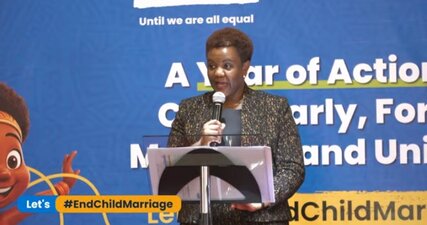
At the Storytelling Forum KE organised by Plan International, leaders from different organisations and regions urged communities to protect childhood and reject harmful cultural practices.
High Court Judge Helene Namisi said cultural excuses cannot justify denying children their rights.
“Childhood must be preserved. No cultural practice, economic hardship or social pressure can justify denying a child the right to safety, education and self-determination,” she said.
Kisii County Woman Representative Dorice Donya said she has tabled amendments to the Sexual Offences Act to strengthen reporting and awareness mechanisms.
“Communities that treat early marriage and female genital mutilation as cultural entitlements must be held accountable,” she said.
Members of the Step by Step Women’s Group in Dukana, Marsabit County, said survivors of early marriage face deep stigma. Interim Safeguarding, Policy and Influencing Manager of Step by Step, Halima Sarah, said their group of seven mothers had been treated as outcasts.
“Our group, all mothers, have been declared outcasts,” she said.
Sabdio, 22, member of Step by Step Women Group, told the forum she abandoned her legal case because travel to Marsabit for court was unaffordable.
“I tried to pursue my case, but travelling to Marsabit was too expensive. I had to give up,” she said.
Plan International’s State of the World’s Girls Report 2025 draws on interviews and focus groups with 251 girls and young women across 15 countries, plus an online survey of 244 youth activists.
The report documents how early marriage curtails education and life chances.
Juna, 24, from Nepal, said early marriage deprived her of study and opportunity.
“I wasn’t allowed to study or progress in life. I was deprived of everything. But I won’t let that happen to my daughter,” she said.
Bupe, 19, from Zambia, who married at 15, described control and violence in marriage.
“He used to intimidate me, and whenever I tried to speak up, he would beat me. I kept quiet because I feared the consequences,” she said.
Plan International reports that nearly one in three girls who marry young later divorce.
Many who leave such unions face stigma, isolation and financial hardship.
Ms Reena Ghelani, chief executive officer of Plan International, said the findings demand urgent action.
“This study shines a stark light on the hidden realities of child marriage, giving voice to girls and young women who are too often silenced,” she said.
“Progress is too slow, and laws are not doing enough to protect girls,” she added.
Plan International defines child, early and forced marriages and unions (CEFMU) as any marriage or informal union where one or both partners are under 18. It is also where full and free consent has not been given.