

Day 5 of Artemis II journey to the moon: You won’t believe what Earth looks like from NASA’s 10-day lunar mission
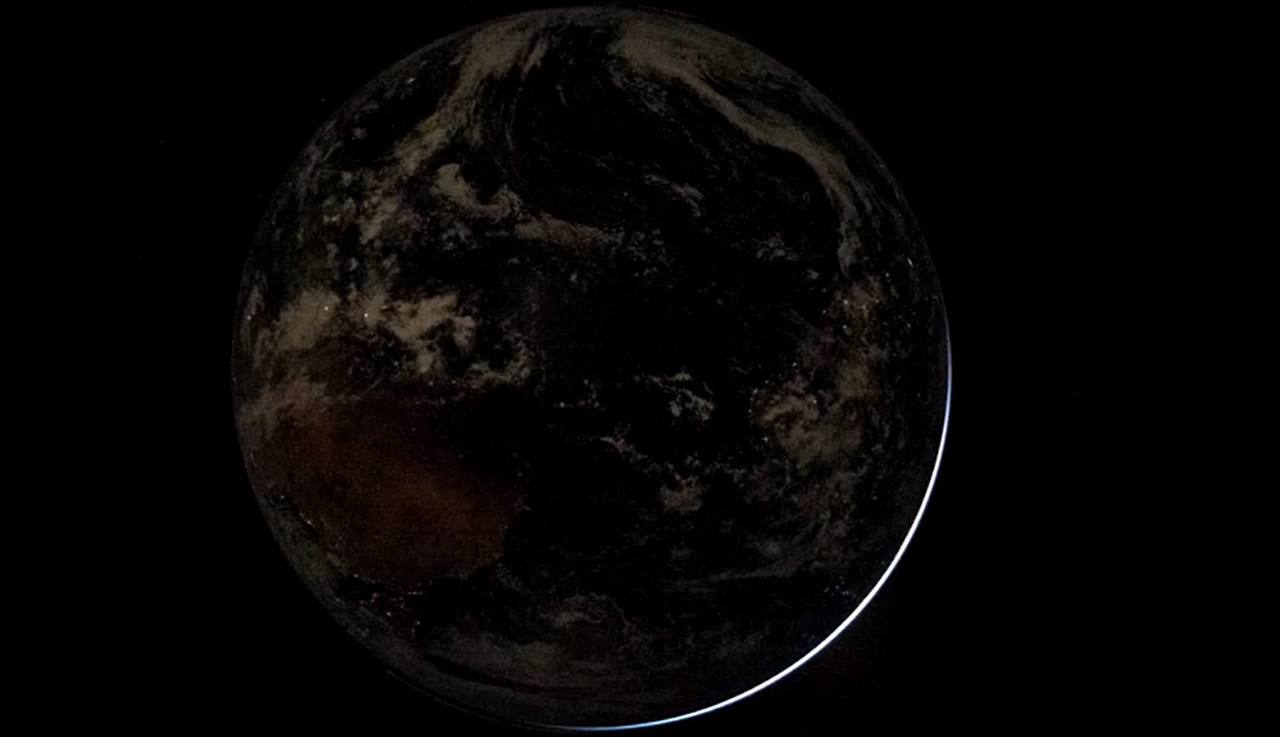
NASA, the United States space agency, has sent four astronauts on a 10-day journey around the Moon, marking one of the most ambitious space missions in recent decades.
The crew--Reid Wiseman, Victor Glover, Christina Koch, and Jeremy Hansen--are aboard the Orion spacecraft, a highly advanced vehicle designed to keep them alive in space.
It provides oxygen, pressure, temperature control, and protection from the harsh radiation that exists beyond Earth’s atmosphere.
The mission is already delivering spectacular views of our planet. Photos sent back from the crew show Earth in unprecedented clarity: vast oceans, sprawling forests, glowing city lights at night, and swirling cloud patterns.
These images allow people on Earth to witness the planet as a tiny, fragile sphere floating in the vastness of space--a perspective that can change how we see our world.
Unlike the Apollo missions of the 1960s and 70s, which were focused on landing astronauts on the Moon, this flight is purely orbital. The astronauts will circle the Moon without touching down, testing spacecraft systems and collecting data to prepare for future Moon landings and extended space travel.
Sunday, April 5 the Artemis II mission is on Day 5 of its 10-day journey. The crew has entered the lunar sphere of influence, with gravity shifting toward the Moon as they prepare for the historic flyby on Monday at approximately 6,000 miles above the surface. The pull of the Moon's gravity is becoming stronger than Earth's. The mission launched on April 1, 2026.
Today’s spacecraft are far more advanced than the Apollo capsules, offering improved life support, navigation, and communication. According to NASA, this makes the journey safer and allows scientists to focus on research rather than survival.
The mission also allows for live sharing of the journey. In the Apollo era, only a handful of people could watch grainy black-and-white footage of astronauts on TV.
Now, NASA shares high-resolution images, videos, and real-time updates online. Millions can follow the crew’s orbit, watch the Moon’s surface glide past, and marvel at Earth from a distance.
The crew faces challenges that Apollo astronauts never had to navigate in the same way. For instance, the vacuum of space means no breathable air and extreme temperatures. The Orion spacecraft supplies everything they need to survive.
Special spacesuits allow the astronauts to perform experiments outside the craft if needed, while the spacecraft itself shields them from solar radiation.
Every system is being tested for future missions that could include astronauts landing on the Moon or even traveling to Mars.
Already, some subtle observations are emerging from the photos. Earth looks smaller and more delicate than ever before, highlighting the planet’s thin atmosphere and its vulnerability.
Scientists are studying these images to better understand climate, weather patterns, and the effects of human activity on the planet. The clarity and detail also surpass anything Apollo astronauts could capture, thanks to modern cameras and communication technology.
While this mission is orbital, it is laying the groundwork for real Moon landings in the near future.
NASA aims to build a sustainable human presence on the Moon, using it as a stepping stone for Mars and beyond. Every orbit, every photo, and every test in this mission provides invaluable insights that could guide space exploration for decades.
For most people, the biggest takeaway might simply be a new appreciation for Earth. Seeing it from space reminds us of its beauty and fragility.
But for scientists and space engineers, it is also a critical exercise in preparing for humanity’s next giant leap.
The astronauts’ 10-day journey around the Moon is more than a historic mission — it is a glimpse of the future of space travel and a reminder of our place in the universe.