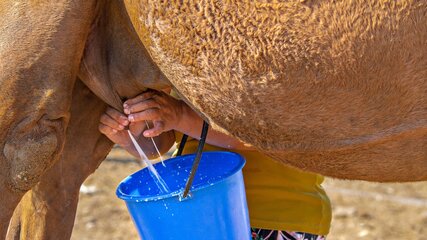

ILO boosts camel milk production in Garissa with Kasha milk collection centre
- Created by Odhiambo David
- Top News
Garissa faces frequent water shortages, relying on boreholes, wells, and water pans for camel herding and milk production.
The International Labour Organisation (ILO), in collaboration with the Kingdom of the Netherlands, has spearheaded a transformation in Kenya's camel milk industry, specifically in Garissa County.
Through their Integrated Market Systems Approach, the initiative has revitalized the camel milk value chain by improving infrastructure and promoting entrepreneurship within both host and refugee communities.
Garissa, located in Kenya’s arid northern region, faces frequent water shortages, relying on boreholes, wells, and water pans for camel herding and milk production.
However, the region's water infrastructure has been plagued by breakdowns, hindering the livelihoods of camel herders and traders.
To tackle these challenges, the ILO worked to restore water systems and train the community in maintenance and technical skills.
Their efforts also focused on empowering local women involved in camel milk production, leading to the creation of the Kasha Camel Milk Collection Centre in Saka Ward, near the Tana River.
Prior to the establishment of this centre, women traders sold camel milk in unsanitary conditions, often under trees, with no access to proper storage facilities.
"It was tough maintaining hygiene," shared Ms Isinino Hussein, Chairlady of the Kasha Camel Milk Centre.
“But now, with a dedicated facility, our business has grown significantly.”
The impact has been striking.
In 2022, the Kasha women’s group consisted of just 15 members. Following training in milk hygiene and entrepreneurship, the group expanded to 45 members, and milk production skyrocketed from 300 litres to over 6,000 litres a day by September 2023.
The centre now houses a 750,000-litre milk cooler, allowing the group to store and bulk milk more effectively, transforming the local camel milk industry.
The Kasha centre supports a network of 155 members, including herders, traders, and transporters, ensuring efficient production and processing of camel milk.
The group now serves 86 bulk buyers in Garissa town and beyond, and their operations generate Sh600,000 (approximately US$4,000) in daily revenue.
The project has also created 379 jobs, 326 of which are held by women, significantly boosting the local economy.
“The ILO’s approach to addressing barriers like water scarcity, poor milk handling, and market access has been essential in helping these women grow their business and improve their livelihoods,” said Elizabeth Katuba, Programme Manager at SITE Enterprise Promotion.
Garissa County’s Director of Livestock Development, Dr Haret Hambe, noted the initiative’s broader impact on camel milk production in the region.
With an estimated 840,000 camels in Garissa, around 190 million litres of milk are produced annually.
“The ILO’s efforts have not only improved livelihoods but also enhanced the county’s overall milk output,” said Dr Hambe.
Looking to the future, the Kasha Camel Milk Collection Centre aims to diversify its products by producing camel milk yoghurt, chocolates, and sweets.
This move is expected to create even more job opportunities and increase income for the community.
“We dream of seeing Kasha camel milk products on supermarket shelves throughout Garissa and beyond,” added Ms Hussein.