

KEMRI pushes Kenya to the forefront of Africa’s vaccine self-reliance
Kenya is accelerating efforts to strengthen vaccine research and manufacturing as African health leaders push for greater self-reliance in preparing for future pandemics.
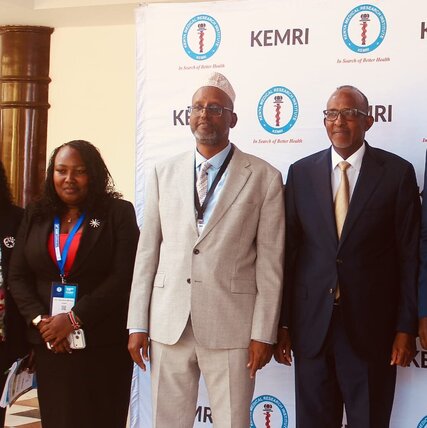
The focus has taken centre stage in Nairobi during the 16th Kenya Medical Research Institute (KEMRI) Annual Scientific and Health Research Conference, where scientists, policymakers and industry partners are discussing how Africa can move from importing vaccines to discovering, developing and producing them locally.
Health Cabinet Secretary Aden Duale, who officiated at the meeting, said the discussions reflect long-term national priorities rather than academic debate.
“These discussions are not academic, but are very strategic investments in our future,” Duale said.
KEMRI Board Chair Dr Abdullahi Ali Ibrahim said the institute remains committed to supporting research that responds directly to Kenya’s health priorities while strengthening the country’s contribution to regional health security.
He noted that the conference provides a platform for partnerships that can translate innovation into practical solutions for universal health coverage.
Scientific, Research and Innovations Committee Chair Dr Damaris Maweu said the growing urgency of linking science, innovation and policy is central to building sustainable health systems.
“This is about ensuring research does not remain in laboratories, but delivers real impact for our people,” she said.
Acting KEMRI Director General Prof Elijah Songok stressed that vaccine manufacturing must be backed by the full pipeline, from discovery and clinical trials to licensing and global qualification.
“If you have to have a vaccine that has to go to the market, it has to go through the entire process, from discovery, all the way to WHO,” Prof Songok said.
He pointed to progress already being made through African-led research, including vaccines developed internally.
“One of the vaccines we’ve been able to develop is the oral cholera vaccine, which was developed in-house,” he said.
The Founding Chief Executive Officer of the Science for Africa Foundation, Dr Tom Kariuki, said Africa must take charge of its own innovation agenda rather than remain dependent on external supply chains.
“The dependency on others is not going to go away. It’s not just about manufacturing here, we need to discover them here,” Kariuki said.
Industry leaders have also echoed the urgency of building local capacity. Wesley Ronoh, CEO of the Kenya BioVax Institute, warned that Kenya cannot remain vulnerable to global supply shocks.
“We cannot continue importing 99 per cent of our vaccines and expect to be secure,” Ronoh said.
Speakers also raised concern over vaccine misinformation, urging stronger public engagement to counter conspiracy narratives and rebuild trust in immunisation programmes.
Experts say the push for local vaccine production has become even more urgent after COVID-19 exposed deep global inequalities in access, leaving many African countries dependent on delayed external supply chains.
The 16th KEMRI Annual Scientific and Health Research Conference begins Tuesday, February 10, and will run until Friday, 13 February 2026.
To advertise with us, send an email to advert@avdeltanews.world