

Malawi’s move to abandon school fees sparks reflections in Kenya
Malawi’s announcement this week to abolish school fees for public primary and secondary education has drawn attention from education stakeholders in Kenya, prompting a re-examination of the country’s own commitment to free education.
On October 20, 2025, President Arthur Peter Mutharika declared that starting January 2026, no parent will be asked to pay tuition fees in Malawi.
“Parents will now have no excuse for failing to send their children to school. We want our children to be educated because without education, there can be no development,” President Mutharika said.
The policy covers both primary and secondary levels, though Malawi’s Ministry of Education clarified that boarding fees will still apply in boarding institutions.
In Kenya, the move has been met with mixed reflection. The Kenya Union of Post‑Primary Education Teachers (KUPPET) welcomed President William Ruto’s decision in August 2025 to restore full capitation for Free Day Secondary Education (FDSE) and to cut university fees by between 15 and 40 per cent.
Still, concerns linger. Legally, access to free basic education is supported by the Kenyan Constitution, and in 2024 the High Court suspended a directive that parents must pay school fees through the e-Citizen platform, citing lack of legal basis.
Why Malawi’s decision is resonating in Kenya
- Competitive Benchmarking – With Kenya’s education reforms ongoing, Malawi’s bold step gives Kenyan policymakers and civil society a comparative reference point in Africa for free education.
- Fiscal Implications – Observers note that Kenya’s own budget for school capitation and exam-fee waivers is under strain. In June 2025 the Treasury cut funds for free primary and secondary education, raising questions about long-term sustainability.
- Quality Concerns – Just as Malawi’s reform was cautioned by the European Union for possible negative impact if infrastructure and staffing aren’t upgraded, Kenyan teachers’ unions warn that full access must be paired with resources.
KUPPET Secretary-General Akelo Misori applauded the Kenyan government’s action and urged full implementation for the “hundreds of thousands” affected.
“This action reflects the President’s renewed willingness to listen to Kenyans and address the challenges they face,” Mr Misori said.
Meanwhile, education-budget analysts say Kenya must not only protect the mandate of “free” education but also ensure quality, or risk increased dropout rates and overcrowded classrooms — issues cited in both Kenyan and Malawian contexts.
The Malawi case poses questions Kenyan policymakers must answer: Will Kenya deepen its own reforms to reduce indirect costs (uniforms, development charges, transport)? How will Kenya fund and sustain access while preserving quality? And what safeguards ensure that “free” truly means affordable and inclusive?
As Kenya continues to tweak its education finances and policies, the Malawi example offers both inspiration and caution.
The path to greater access is clear, but so is the need for careful planning, funding, and implementation to prevent unintended consequences.
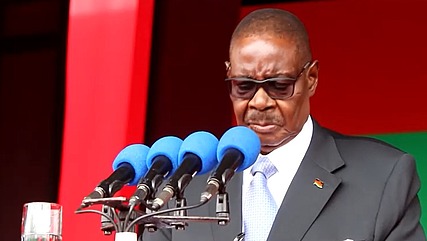
Photo/Videograb
To advertise with us, send an email to advert@avdeltanews.world