

NGEC sounds alarm over rising cases of sexual abuse in schools
The National Gender and Equality Commission (NGEC) has raised alarm over the increasing cases of sexual abuse and harassment in schools, with most of the incidents reportedly involving teachers as the main perpetrators.
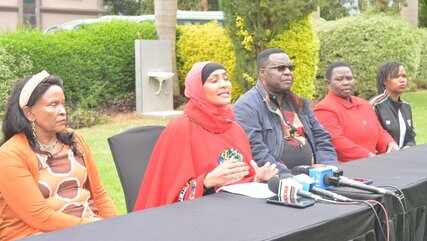
Speaking during the Commission’s staff summit at FK Resort in Nyeri, NGEC Chairperson Rehema Jaldesa emphasized that protecting learners from such violations is a shared responsibility among all stakeholders in the education sector.
“While we commend the Ministry of Education and the Teachers Service Commission (TSC) for their initial and ongoing efforts, more must be done to safeguard students,” said Ms Jaldesa.
She revealed that the Commission had formally written to the TSC urging it to enhance oversight on teacher conduct, take firm disciplinary action in reported cases, and strengthen reporting systems within schools.
NGEC also wants the TSC to incorporate gender-based violence prevention in teacher appraisals, increase awareness of such issues in the school curriculum, and hold consultative talks with the Commission to agree on lasting measures.
Ms Jaldesa welcomed recent assurances by Education Cabinet Secretary Migos Ogamba that the government’s policy on school capitation remains unchanged.
However, she warned that any delays or gaps in disbursing funds may indirectly push some learners out of the education system, violating their constitutional right to free and compulsory basic education.
To address this, the Commission announced several planned interventions.
Among them is a rapid assessment of challenges affecting girls’ education in several historically marginalized counties.
NGEC has also established the National Gender and Education Research Committee (NGERC) to generate evidence that will guide future interventions promoting gender equality in learning institutions.
Within the Commission itself, efforts are underway to review internal systems and align them with gender-transformative standards to improve institutional effectiveness and accountability.
The summit, held under the theme “Becoming Gender-Transformative: Tools, People, and Purpose,” is part of the Commission’s broader strategy to strengthen its mandate as outlined in its recently launched five-year strategic plan.
A key concern raised at the event is the persistent inequality in education outcomes for girls.
According to Ms Jaldesa, a significant number of girls in some regions are pregnant or already parenting while still of school-going age, an issue that continues to undermine their ability to stay in school and complete their education.
She attributed these challenges to early pregnancies, deep-rooted poverty, and cultural practices that limit girls’ access to education.
“These outcomes are closely tied to how education is funded and supported at the grassroots level. Without adequate incentives and protection, many girls are at risk of dropping out,” she said.
Ms Jaldesa reaffirmed the Commission’s commitment to working with all education stakeholders to ensure that schools are safe, inclusive, and respectful of every learner’s rights.
To advertise with us, send an email to advert@avdeltanews.world