

Opposition rejects proposed National Infrastructure Fund
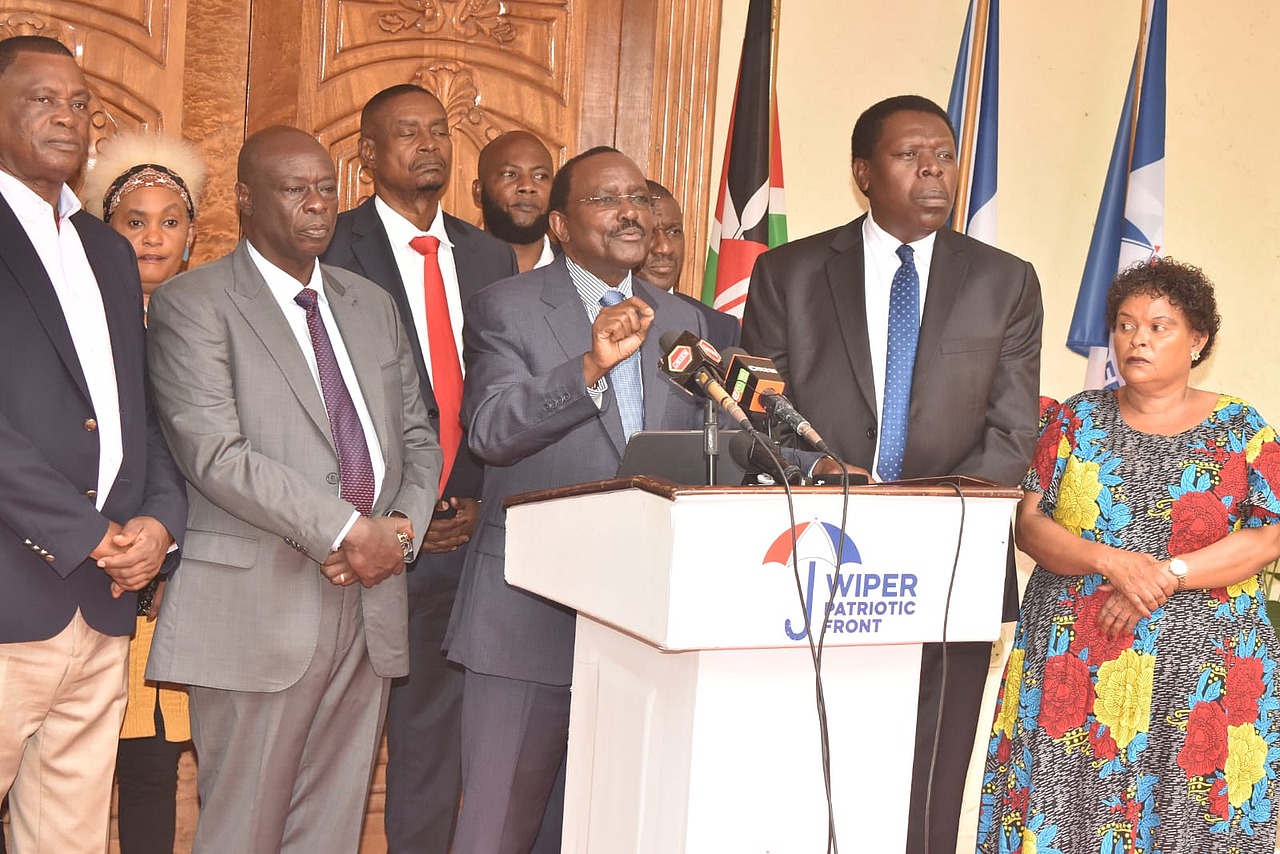
Opposition leaders under the umbrella of the United Alternative Government have opposed the proposed National Infrastructure Fund Bill, 2026, warning that the plan threatens public finance accountability and weakens parliamentary oversight.
Speaking during a media briefing, Wiper Party leader Kalonzo Musyoka said Kenya’s infrastructure challenges stem mainly from governance failures rather than a lack of financing mechanisms.
“Kenya’s infrastructure deficit is not a product of institutional scarcity. It is a product of execution failure, procurement corruption, and fiscal opacity. Adding a new fund to broken systems adds another layer of dysfunction with reduced oversight,” Kalonzo said.
The coalition highlighted that Treasury Cabinet Secretary John Mbadi had sworn in a court affidavit that the Sh5 trillion infrastructure vehicle is a private company, contradicting previous assurances to Parliament that it was a public fund subject to constitutional oversight.
“A Cabinet Secretary who assures Parliament of a Sh5 trillion vehicle’s constitutional status, then swears under oath to its private, unincorporated nature, has not made a technical error, he has misled the legislature on a matter of the highest fiscal and constitutional consequence,” Kalonzo said.
According to the coalition, the proposed partial divestiture of the government’s shareholding in Safaricom PLC would reduce state ownership in a company that underpins M-PESA, eCitizen, Huduma Namba, and other critical government systems.
“Safaricom is not simply a telecommunications company. It is a national infrastructure utility, the backbone of Kenya’s digital payments architecture and host of critical government service delivery channels,” said DAP-Kenya party leader Eugene Wamalwa.
The recent initial public offering of Kenya Pipeline Company was overvalued, involved advisors selected without competitive process, and failed to attract meaningful retail investor participation, raising doubts about government capacity to conduct major asset sales.
“The KPC IPO stands as one of the most instructive object lessons in how not to conduct a government asset divestiture,” said DCP party leader Rigathi Gachagua.
Parliament was called on to reject the National Infrastructure Fund Bill and withdraw Sessional Paper No. 3 of 2025 on the proposed Safaricom stake sale. Lawmakers were urged to prioritise stronger oversight of public funds, require full publication of all transaction terms, and ensure public participation before any strategic state assets are divested.
To advertise with us, send an email to advert@avdeltanews.world