

Ruto launches Kisumu-Malaba SGR extension in distinguished presence of Museveni
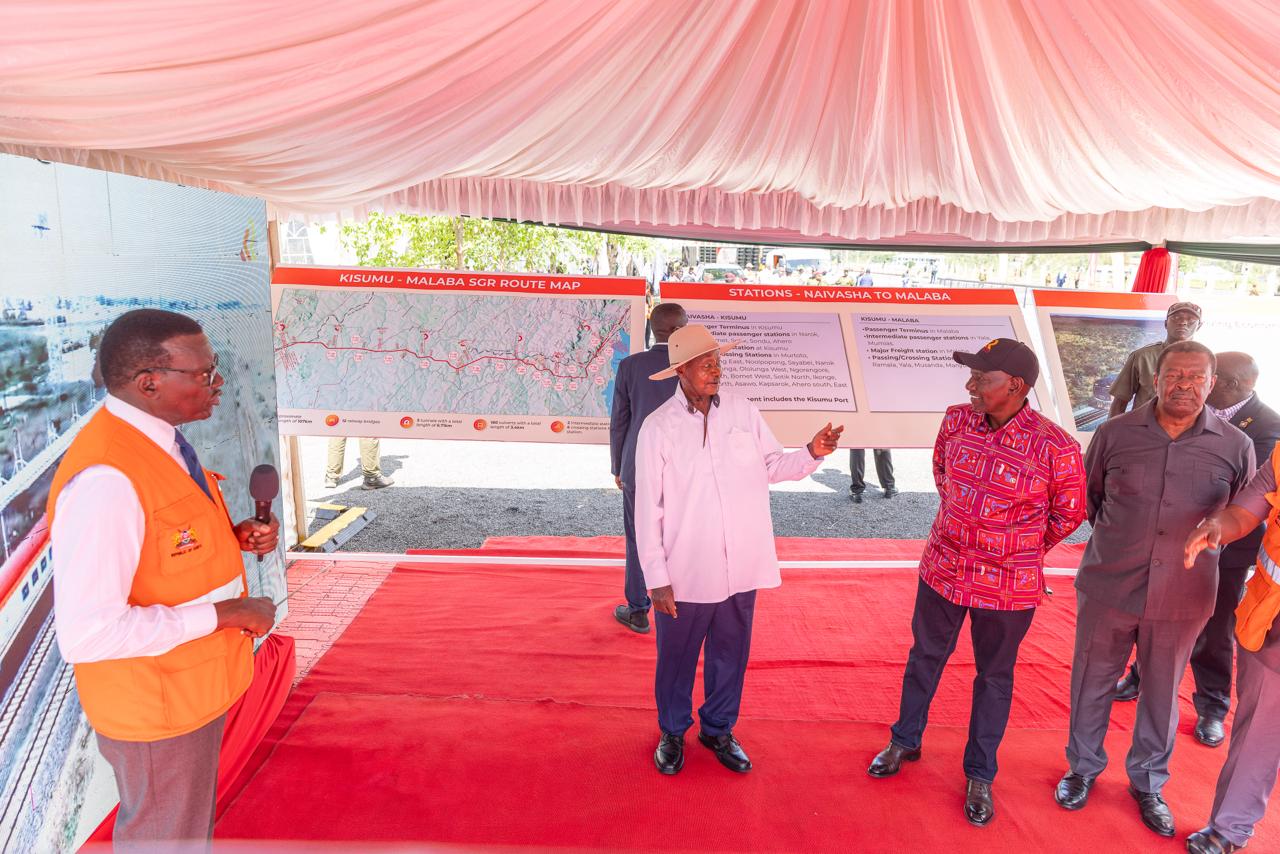
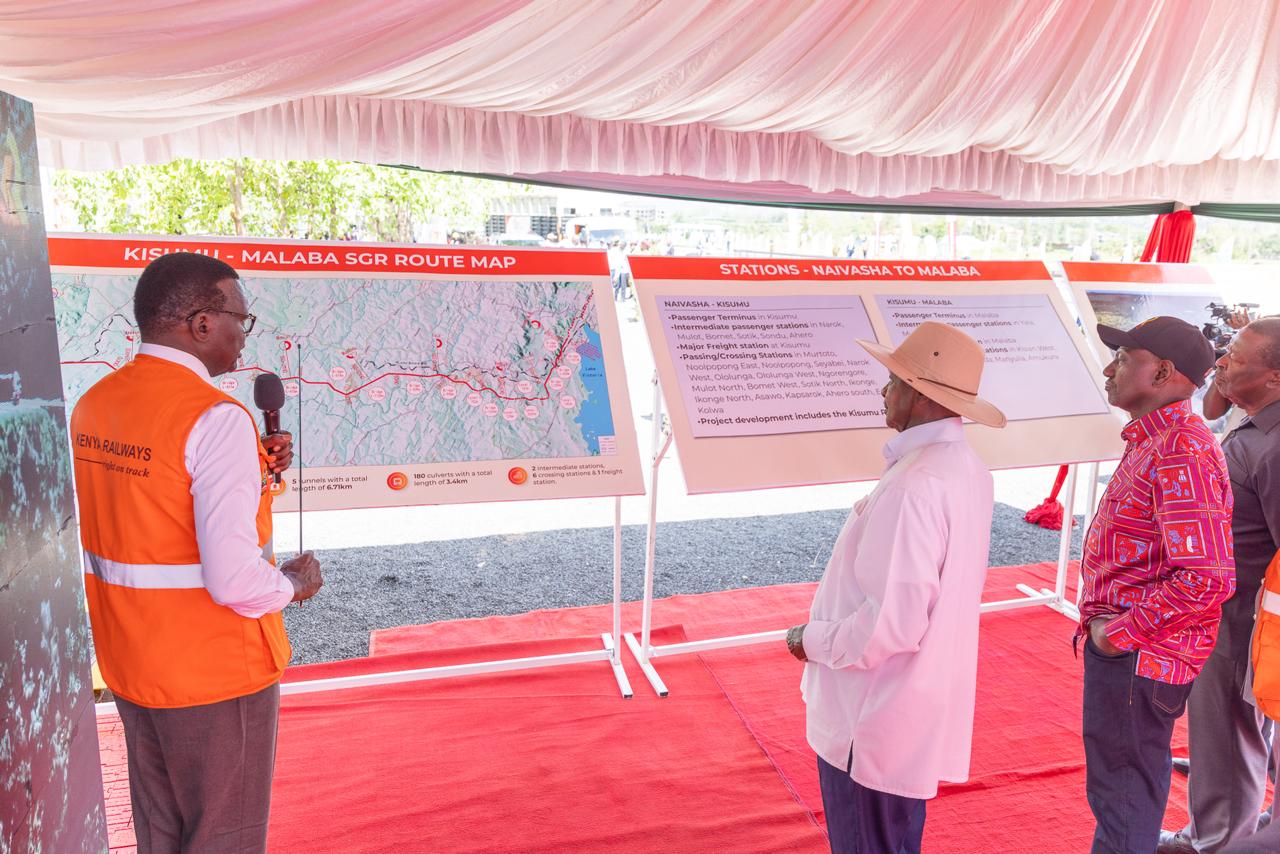
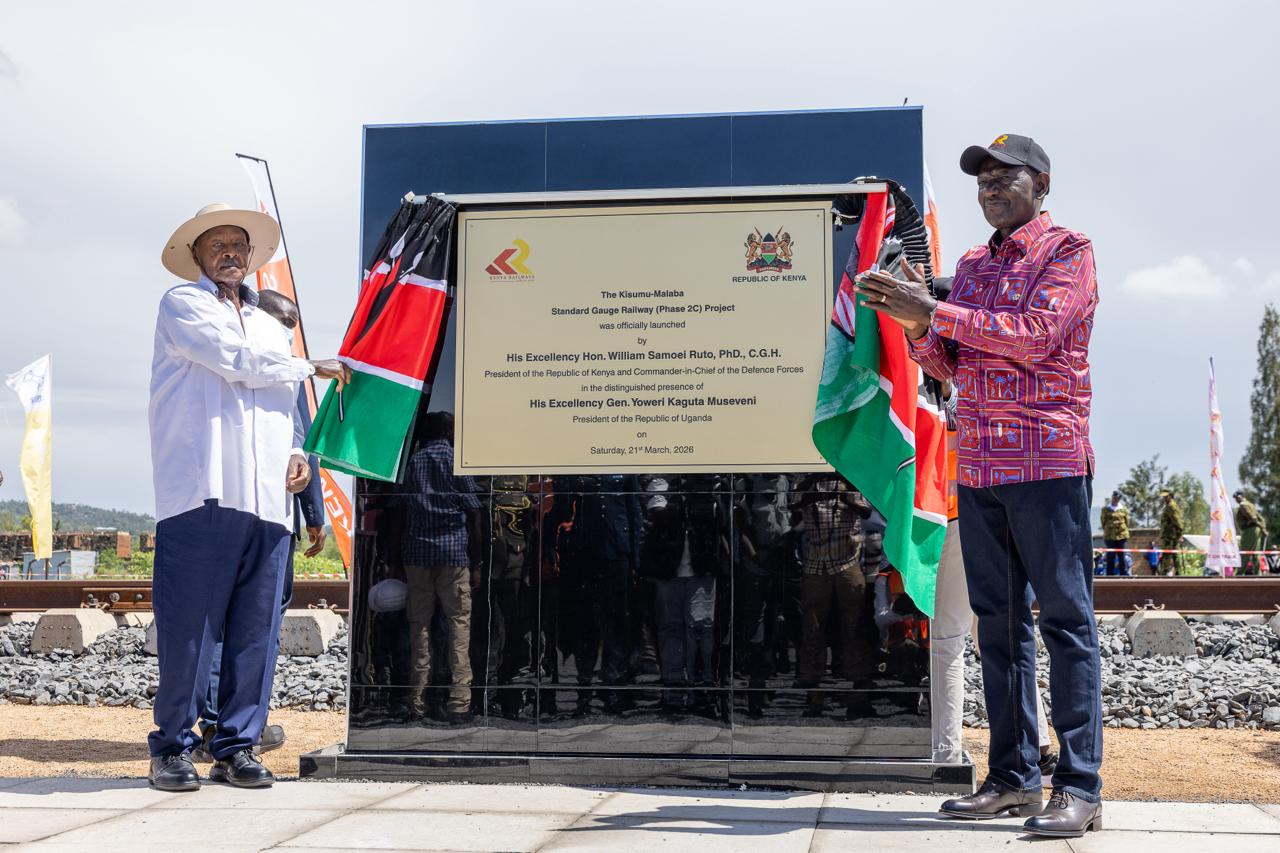
President William Ruto and his Ugandan counterpart Yoweri Museveni on Saturday launched the Kisumu–Malaba railway extension, as the ‘missing backbone’ of the Northern Corridor takes shape.
Over the past eight years, the Standard Gauge Railway (SGR) has transported more than 15 million passengers and over 45 million tonnes of freight.
It has reduced transport costs, improved efficiency and contributed significantly to the growth of the economy.
President Ruto said the expansion of the SGR will have a greater impact on regional growth in terms of economic development and integration.
“Freight costs are projected to decline by at least 40 percent per tonne-kilometre, while transit times for freight will reduce by nearly 30 percent. The share of cargo moved by rail will increase, easing pressure on our roads and reducing wear and tear,” President Ruto said.
He noted that close to 130 years ago, along the same corridor, the British colonial administration conceived what was then known as the Uganda Railway.
The British intended to link the Indian Ocean at Mombasa to the interior of East Africa, thereby securing territory, controlling movement and extracting value from the hinterland for the colonial administration.
Although the original plan was for the railway line to run through Mombasa, Nairobi and end at Kisumu, modern-day realities have shown the need to extend the line to the Malaba border with Uganda.
Kenya’s Prime Cabinet Secretary Musalia Mudavadi said the extended SGR will help solve the challenges of road haulage from Mombasa to Kisumu and onward to neighbouring Uganda.
He revealed that the new SGR will move up to 4,000 tonnes per round trip from Kisumu to Uganda, which would otherwise have required nearly 200 trailer trucks on the road.
Road transportation by cargo trucks takes up to 80 hours from Mombasa to Kisumu, while journeys to Malaba and onward to Uganda have stretched beyond 100 hours.
Kenya’s SGR ambition was funded by a loan facility from China, and international media reported concerns that the original plan to reach Malaba had been delayed.
Sources claimed China had been hesitant to provide another loan facility until the original project is implemented to fruition.Railways have been instrumental in helping towns emerge and grow.
President Ruto said Nairobi, which was once a swampy area, would not have emerged had it not lain along the railway line.
Leaders present during the Saturday event are Orange Democratic Movement (ODM) Party Leader Oburu Oginga, Cabinet Secretaries Davis Chirchir (Transport), Opiyo Wandayi (Energy), and John Mbadi (Treasury), Interior Principal Secretary Dr Raymond Omollo, and Principal Secretary for Blue Economy Betsy Njagi.
Governors Gladys Wanga (Homa Bay), Ochillo Ayacko (Migori), Prof Anyang Nyong'o (Kisumu), Paul Otuoma (Busia), and Wilbeforce Ottichillo among other host of leaders were present.
On Friday, President Ruto said the new Standard Gauge Railway (SGR) line from Narok to Kisumu and Malaba will substantially change the fortunes of Kisumu City, western Kenya and, eventually, Uganda.
The President said the new line will boost trade within and beyond the lakeside city, leading to accelerated growth and development across the East African region.
Just as the old railway built by the colonial authorities led to the founding of Kisumu in the late 1890s, the SGR line will define the city’s fortunes in the future.
“As we develop the Railways City in Nairobi, we shall also do the same here in Kisumu,” he said on Friday during a luncheon he hosted for the Muslim community to celebrate Eid ul-Fitr at State Lodge, Kisumu.
On Thursday, President Ruto launched the construction of the Naivasha–Kisumu SGR section in Narok, an important step in completing a line that had stalled for years.
President Ruto pointed out that the new railway would traverse and catalyse economic activity in nine counties--Narok, Bomet, Nyamira, Kericho, Kisumu, Siaya, Vihiga, Kakamega and Busia--before helping to improve trade across the region.
Kenya and Uganda enjoy close ties.
To advertise with us, send an email to advert@avdeltanews.world