

Ruto: ‘They called me Zakayo, judge me by results’
- Created by Juma Namlola
- Top News
The president argued that difficult decisions taken early in his tenure helped stabilise the economy and avert crisis.
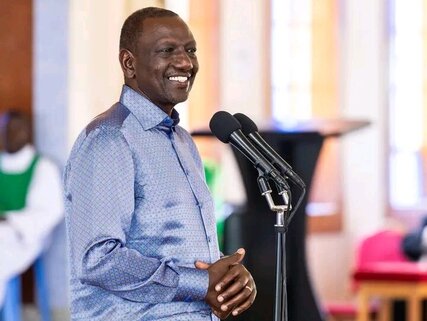
President William Ruto on Friday used a church gathering at State House Nairobi to defend his administration’s record, telling critics who branded him “Zakayo” to assess his leadership based on outcomes.
“They called me Zakayo — but go anywhere in Kenya and see what is happening,” he said.
Dr Ruto said he assumed office when Kenya was emerging from the Covid-19 pandemic, facing the risk of debt default and grappling with heavy subsidies and fiscal strain.
He argued that difficult decisions taken early in his tenure helped stabilise the economy and avert crisis.
According to the President, Kenya avoided default despite being among African nations considered at risk.
The President said foreign exchange reserves have risen to $12.3 billion — the highest in the country’s history — while Treasury bill interest rates have dropped to below eight percent.
"Ending fuel subsidies, though unpopular, was necessary to restore fiscal discipline," he added, noting that national savings have improved.
Dr Ruto described education as his administration’s biggest budget commitment, saying nearly 30 per cent of tax revenue — about KSh 700 billion annually — goes to the sector.
He cited the hiring of 100,000 teachers and construction of 23,000 classrooms, alongside alignment of the Competency-Based Education.
On employment, he said 1.8 million young people who were jobless in 2022 are now working, while 540,000 Kenyans have secured jobs abroad through structured labour mobility programmes.
He rejected claims of brain drain, terming the trend “brain gain” that equips youth with global skills.
He pointed to $4 billion in contracts signed under the Affordable Housing Programme, saying the projects — which include homes, markets and hostels — are stimulating economic activity without unsustainable borrowing.
The President added that 6,000 kilometres of roads are under completion, with 28,000 kilometres prioritised over the next seven years.
In agriculture, he said the government shifted from subsidising consumption to subsidising production, lowering fertilizer costs and boosting farmer earnings, with plans to build 50 mega dams to enhance irrigation.
Ruto said Kenya currently generates 3,000 megawatts of electricity and aims to expand to 10,000 megawatts to support industrial growth, an effort he estimated would require $10 billion.
On health, he said reforms under the Social Health Authority are helping settle major hospital bills in rural areas, with further equipment support planned for oncology and faith-based hospitals.
Throughout his remarks, Ruto blended policy statistics with biblical references, portraying economic discipline and national development as both fiscal responsibility and moral duty.
To advertise with us, send an email to advert@avdeltanews.world