

Sakaja clashes with Senators over Nairobi deal with the national government
- Created by Juma Namlola
- Top News
Senators pressed hard, raising concerns about constitutional safeguards, oversight, and whether Nairobi risks ceding autonomy once again.
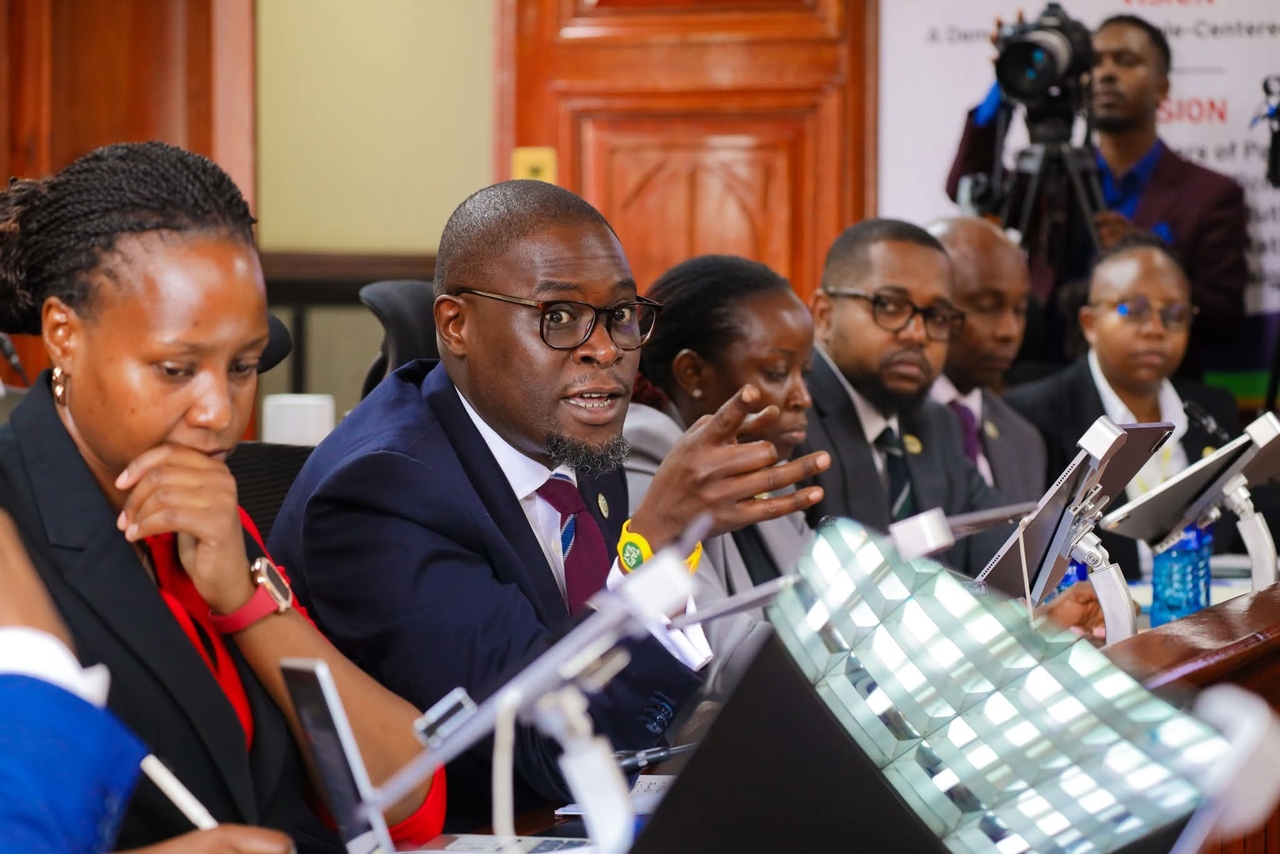
Nairobi Governor Johnson Sakaja on Thursday mounted a firm defence of Nairobi City County’s cooperation agreement with the National Government, pushing back against claims that it mirrors the controversial Nairobi Metropolitan Services (NMS) model.
Appearing before the Senate Standing Committee on Devolution and Intergovernmental Relations, Mr Sakaja framed the deal as a strategic financial partnership — not a transfer of county functions.
But Senators pressed hard, raising concerns about constitutional safeguards, oversight, and whether Nairobi risks ceding autonomy once again.
At stake is a financial arrangement designed to unlock major infrastructure funding for the capital.
Mr Sakaja argued that Nairobi is structurally underfunded, noting that the combined Kshs 40 billion in shareable revenue and own-source collections is insufficient for a city that hosts the country’s political and diplomatic core and supports a daytime population of nearly seven million.
“Nairobi City carries 60 percent of the country’s GDP,” he told Senators, adding that global capitals operate on far larger budgets.
Paris, he noted, runs on roughly Sh1.4 trillion for two million residents.
Without additional coordination and resources, Governor Sakaja warned, Nairobi cannot match its economic weight with service delivery.
Is this another NMS?
The shadow of NMS loomed large over the session.
Lawmakers questioned whether the new cooperation framework resembles the 2020 arrangement under former Governor Mike Sonko, which transferred key county functions to a national government entity.
Mr Sakaja rejected the comparison.
“No new institution is being created,” he said, insisting that the county retains its mandate while the National Government injects funds for specific projects.
He described lingering anxiety around the deal as “post-traumatic stress” from the NMS era, which he said demoralised staff and left pending bills.
The proposed partnership would support:
- A Sh50 billion Nairobi River sanitation project
- Expansion of classrooms across the city
- A Sh6 billion end-to-end waste management system
- Procurement of 90 garbage tippers and 320 tricycles
Mr Sakaja said the county cannot meet the annual Sh6 billion waste management cost alone and requires a Sh2 billion national contribution to modernise equipment.
He also defended his school feeding programme, claiming it has already increased enrollment by 40 percent, particularly in informal settlements.
Senators demand legal clarity
Despite acknowledging Nairobi’s funding pressures, Senators insisted the agreement must not dilute devolution principles.
Committee Chair Mohamed Abbas asked where the County Assembly fits within the cooperation framework, warning that oversight powers must remain intact.
Nairobi Senator Edwin Sifuna delivered a pointed reminder:
“This is an opportunity for those who promise to take Kenya to Singapore to demonstrate what they can do with one city first.”
Lawmakers emphasized that:
- Budget integrity must be preserved
- Public participation must be genuine
- Implementation structures must not sideline county officers
Confident in the agreement, Mr Sakaja said Nairobi residents would soon see tangible improvements in cleanliness, lighting and road networks.
He declared he was ready to stake his political career on its success.
Whether the deal becomes a model for cooperative governance--or a fresh constitutional flashpoint--now depends on how it is structured, funded and implemented.
For Nairobi, the test is simple: will billions translate into better services, or revive old fears about control?
To advertise with us, send an email to advert@avdeltanews.world