

Senate resumes with push to end supremacy battles through constitutional amendments
The Senate returns to full sittings on Tuesday, September 23, 2025, with a bold agenda aimed at reversing years of weakening influence.
Topping the list is the Constitution of Kenya (Amendment) Bill, 2025, which seeks to clarify and strengthen the Senate’s mandate—especially in areas where conflict with the National Assembly has long eroded its power.
One of the central proposals of the Bill is to expand the Senate’s legislative role. Currently, senators can only legislate on matters “concerning counties.”
The amendment aims to allow the Senate to engage in all legislation, which many regard as essential to resolving power struggles with the National Assembly.
It also seeks to grant the Senate equal footing in reviewing and approving the national budget, spending estimates, and appropriation laws—areas previously dominated by the National Assembly.
Senate Majority Leader Aaron Cheruiyot has publicly called for an end to the rivalry.
“We are at an advanced stage of the conversation on these issues. We really want to end this issue of sibling rivalry,” he said, referring to tensions between the two Houses.
Former Prime Minister Raila Odinga, in May also weighed in, calling for distinct powers for the Senate.
“Senate need to play its role, just as the National Assembly has also resumed playing,” Raila said. “[W]e have got countries with a similar constitutional structure, and it worked very well.”
The long history of supremacy battles between the Senate and the National Assembly is rooted in the 2010 Constitution, which created Kenya’s bicameral Parliament.
The architects intended a system of checks and balances between the two Houses, but the current setup limits the Senate’s participation to legislation deemed to concern county governments.
Disputes arise when bills are labelled by the National Assembly as “Money Bills” or non-county bills, thereby excluding the Senate from meaningful participation.
In many cases, the Senate has challenged the National Assembly in court, arguing that certain bills affect counties or financial oversight, but has been denied participation.
The Amendment Bill proposes stronger financial oversight. It would allow both Houses to review, amend and approve budget estimates together.
It also seeks powers for the Senate in vetting of top state officers—entities like the Auditor General, Controller of Budget, and others typically approved solely by the National Assembly.
The courts have previously ruled that Bills which do not concern counties or which are clearly Money Bills may be legitimately passed by the National Assembly alone (without Senate involvement), under Article 110(3) of the Constitution.
Civil society and legal experts have raised concerns about parts of the Bill. The Kenya Law Reform Commission (KLRC) has cautioned that granting senators authority over the national government’s budget and Money Bills should consider maintaining clarity in definitions and avoiding overlapping powers.
The Law Society of Kenya (LSK) has supported the Bill for removing restrictions on what the Senate can originate and for encouraging balance—but has warned that constitutional safeguards must ensure coordination and avoid legal ambiguity.
For counties, the Bill introduces proposals to establish a County Assembly Fund managed independently of county executives.
This fund would cater for the operations of county assemblies—staff salaries, office operations, oversight functions—without financial dependency on governors.
Senate leaders argue this change would enhance the ability of county assemblies to perform their watchdog role without interference.
Preparation for public participation on the Bill across all 47 counties has been announced.
The Senate also plans its Mashinani programme in Busia County, where Senators will move outside Nairobi and meet directly with communities.
This will enable them to gather feedback, and test how the proposed reforms align with the on-ground realities of devolution.
With the Amendment Bill resuming its readings this week, the Senate aims to settle some of the most contentious inter-house battles that have held back legislative efficiency and contributed to frustration among devolved governments.
Whether the reforms will pass without significant compromise remains to be seen, but they represent Kenya’s most serious attempt yet to balance parliamentary power since 2010.
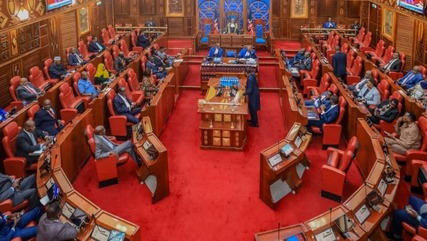
Photo/PBU
To advertise with us, send an email to advert@avdeltanews.world