
Uganda cracks down on civil society, restricts internet before Thursday polls
- Created by AVDelta News Reporter
- Top News
Campaigns over the past week brought out large crowds across the country.
KAMPALA, Uganda
With just 48 hours before Uganda’s general election on Thursday, January 15, 2026, authorities have taken a series of repressive actions that critics say threaten democratic space and may undermine the credibility of the vote.
In a move that drew sharp criticism from opposition leaders and rights advocates, the National NGO Bureau ordered several major civil society organisations to suspend operations just days before polling.
The affected groups include Chapter Four Uganda, the Alliance for Election Finance Monitoring (ACFIM), the Human Rights Network for Journalists–Uganda (HRNJ‑U), the National NGO Forum, and the National Coalition of Human Rights Defenders.
Some of the organisations had been actively involved in election monitoring, human rights reporting, and civic education.
HRNJ‑U Executive Director Robert Ssempala said the directive came as a surprise.
“We don’t know what wrongdoing they believe we have committed,” Mr Ssempala said.
Opposition presidential candidate Robert Kyagulanyi Ssentamu (Bobi Wine) condemned the closures, calling them an attack on democracy and independent oversight just days before the polls.
At the same time, reports circulated of mobile internet disruptions and restricted access to online platforms.
The Uganda Communications Commission (UCC) said it was monitoring online activity to prevent misinformation and threats to public order, though government officials denied a formal internet shutdown had been ordered.
These measures come amid wider restrictions on civic space and media freedom, with rights groups documenting arrests of opposition supporters, intimidation of journalists, and limits on independent coverage in recent weeks.
Political campaigns officially ended on Tuesday, as the country turns to one of the most important and controversial elections in decades.
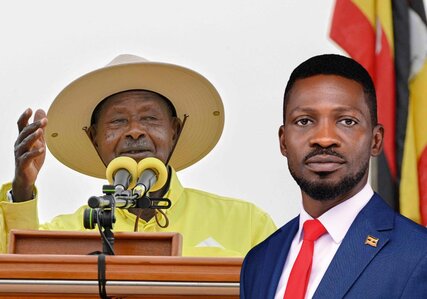
President Yoweri Museveni, 81, who has ruled Uganda since 1986, is seeking a seventh term in office. His main challenger is opposition leader Robert Kyagulanyi Ssentamu (Bobi Wine).
Other candidates include:
- Elton Joseph Mabirizi — Conservative Party (CP)
- Robert Kasibante — National Peasants Party (NPP)
- Nathan Nandala Mafabi — Forum for Democratic Change (FDC)
- Mugisha Muntu — Alliance for National Transformation (ANT)
- Munyagwa Mubarak Sserunga (“Mugati gwa Butter”) — Common Man’s Party (CMP)
- Frank Bulira Kabinga — Revolutionary People’s Party (RPP)
Campaigns over the past week brought out large crowds across the country.
Museveni’s campaign focused on stability, economic growth, infrastructure development, youth employment, and agricultural expansion, while Bobi Wine emphasised political freedoms, anti‑corruption, and youth empowerment, warning of possible manipulation if the polls are not fair.
The campaign period was also marked by confrontations and repression.
Bobi Wine and his supporters faced teargas, arrests, and violence at rallies, while human rights groups documented intimidation of opposition figures and civil society.
The UN Human Rights Office has highlighted “widespread repression” ahead of the vote.
Despite tensions, millions of Ugandans are registered to vote, and authorities and candidates continue to appeal for peaceful conduct as polling day approaches.
Observers say the outcome will have major implications for Uganda’s political future and democratic institutions.
To advertise with us, send an email to advert@avdeltanews.world