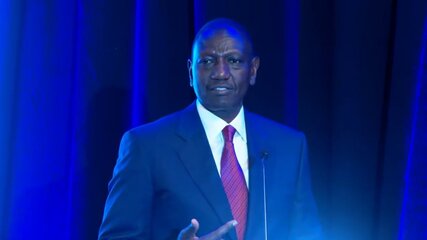

BWOMANGA: What President Ruto's address missed
- Created by Nyangenya Bwomanga
- Opinion
» One of the most pressing issues that was not adequately addressed is the transition from the National Hospital Insurance Fund (NHIF) to the Social Health Insurance Fund (SHIF).
As a concerned citizen, I would like to begin by acknowledging President William Ruto's dedication to leading our nation.
His efforts in stabilizing the economy and supporting agricultural productivity are commendable.
The appreciation of the Kenyan shilling and the reduction in inflation are positive steps forward.
Additionally, the Hustler Fund has provided crucial support to small business owners, which is a significant achievement.
However, despite these accomplishments, there are several critical areas where the president's address fell short.
While the president highlighted economic improvements, the reality for many Kenyans remains challenging.
High taxes and a struggling job market continue to burden the average citizen. The positive economic indicators mentioned in the address do not seem to translate into tangible benefits for the majority of Kenyans who are still grappling with daily economic hardships.
One of the most pressing issues that was not adequately addressed is the transition from the National Hospital Insurance Fund (NHIF) to the Social Health Insurance Fund (SHIF). This transition has been fraught with challenges, leaving many patients in a state of uncertainty. The new system has faced implementation issues, causing delays and confusion among health care providers and patients alike.
Many Kenyans are struggling to access the health care services they need, and this transition has only added to their woes.
Another critical issue that was overlooked in the president's address is the strikes by lecturers and doctors. These strikes have severely impacted the education and health care sectors, causing significant disruptions.
The grievances of these essential workers need to be addressed urgently to ensure that our education and health care systems can function effectively.
Ignoring these strikes only exacerbates the problems faced by students and patients who rely on these services.
While efforts to manage the national debt were mentioned, the measures taken so far appear insufficient. The country's debt continues to be a looming issue, and more robust strategies are needed to address this problem effectively.
Reducing expenditure and mobilizing domestic resources are steps in the right direction, but they must be part of a more comprehensive plan to ensure long-term financial stability.
Transparency and accountability are crucial for good governance, yet these aspects were not sufficiently addressed in the president's speech. There is a need for more concrete actions to combat corruption and ensure that government operations are transparent. Citizens deserve to know how public funds are being utilized and to see real efforts to eliminate corruption at all levels.
The varied responses from Members of Parliament reflect the mixed feelings among the populace. While some praised the president's vision, others criticized him for not addressing the immediate concerns of the common people.
This division highlights the need for the government to listen more closely to the voices of all citizens and to take their concerns seriously.
Finally, while President Ruto's address showcased some achievements, it also highlighted areas that require urgent attention.
As a concerned citizen, I urge the government to focus on the everyday struggles of Kenyans and to take more decisive actions to improve the quality of life for all. Only then can we truly move forward as a nation.
By Nyangenya Bwomanga – Eminent Peace Ambassador UN