
BWOMANGA: Why Raila Odinga was loved, feared, but never ignored!
- Created by Job Nyangenya Bwomanga
- Opinion
Detained without trial for nearly a decade under President Daniel arap Moi's regime, he emerged not broken, but emboldened.
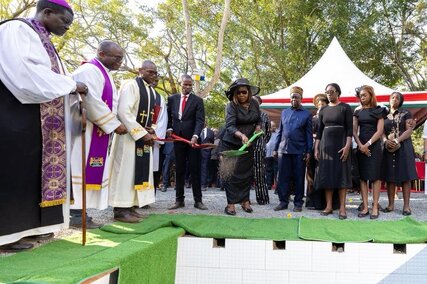
Kenya has buried its gallant son, who passed away on October 15, 2025.
Raila Amolo Odinga, affectionately known as "Baba" breathed his last in Kochi, India, closing a chapter that spanned over four decades of relentless political engagement, principled resistance, and visionary leadership.
His death has triggered a wave of mourning across the nation and the continent, not merely because he was a public figure, but because he was a symbol. A symbol of defiance. Of possibility. Of a Kenya that dared to dream.
Raila's journey was forged in fire. Detained without trial for nearly a decade under President Moi's regime, he emerged not broken but emboldened. He became the face of Kenya's push for multiparty democracy in the 1990s, challenging the one-party state with unmatched tenacity.
In 2001, he joined KANU, gaining insight into the machinery of power. But when Moi bypassed him to endorse Uhuru Kenyatta, Raila chose principle over patronage.
His declaration — "Kibaki Tosha!" — united opposition forces and ended KANU's 40-year dominance. It was a moment that redefined Kenya's political landscape.
His engagements with successive presidents reveal a man who could adapt without compromising his core convictions.
With President Kibaki, Raila entered an uneasy power-sharing agreement after the disputed 2007 election, becoming Prime Minister in a Grand Coalition Government.
It was a delicate co-leadership, but Raila's presence helped stabilise a wounded nation and shepherd the birth of the 2010 Constitution — a transformative document that remains his most enduring legacy.
With President Uhuru Kenyatta, Raila transitioned from fierce rivalry to reconciliation through the 2018 "Handshake," calming political tensions and reshaping national discourse. And with President William Ruto, Raila remained in opposition, but never in retreat challenging governance excesses, defending devolution, and amplifying the voice of the people.
Raila Odinga was not just a politician; he was a constitutionalist. The 2010 Constitution, which he championed through years of resistance and negotiation, decentralised power, enshrined civil liberties, and gave voice to communities long ignored.
It is the reason governors exist, why courts can nullify elections, and why Kenyans can speak truth to power without fear.
Raila understood that true democracy is not built in rallies it is built in law. His fingerprints are on every clause that defends the vulnerable and checks executive excess.
Beyond Kenya, Raila was a continental statesman. As the African Union High Representative for Infrastructure Development, he championed transcontinental railways, energy corridors, and digital integration.
In 2023, he vied for the Chairperson of the African Union Commission, signaling his readiness to serve Africa at the highest level. Though he did not clinch the seat, his candidacy was a statement: Raila Odinga was not just Kenya's leader, he was Africa's son. His voice echoed in AU summits, regional forums, and diplomatic corridors. Africa listened, because Raila spoke with clarity, courage, and conviction.
Raila Odinga was loved and feared in equal measure.
His supporters called him "Baba" a father figure, a liberator, a symbol of hope. His critics feared his ability to tilt political tides.
Even in 2025, as Kenya looked toward the 2027 elections, all eyes were on Raila. His endorsement, his silence, his tilt each could shift the nation's trajectory.
In death, the outpouring of grief has revealed a deeper truth: Kenya loved Raila Odinga. Fierce, fearless, and unyielding, he was the heartbeat of opposition, the conscience of reform, and the architect of possibility.
He leaves behind more than memories. He leaves behind a Constitution that protects the weak, ensuring that power is decentralised and rights are enshrined. He leaves behind a political culture that values dissent, where opposition is not treason but patriotism.
And he leaves behind a continent that remembers his voice a voice that spoke for justice, for unity, and for the dignity of all Africans. His legacy is not static. It is a living call to action. To defend the Constitution. To protect dissent. To build coalitions rooted in principle. To lead with empathy and resolve.
"I have fought for democracy, not for myself, but for generations to come. Kenya must never go back." These were his words. They must now be our mission.
Raila Odinga did not just walk the journey he paved it. He did not just speak truth to power, he redefined power. He did not just contest elections, he contested injustice.
Farewell, Baba. You ran the race. You kept the faith. Now, the baton is in our hands.