
New Mombasa Port road fuels trade, cuts congestion
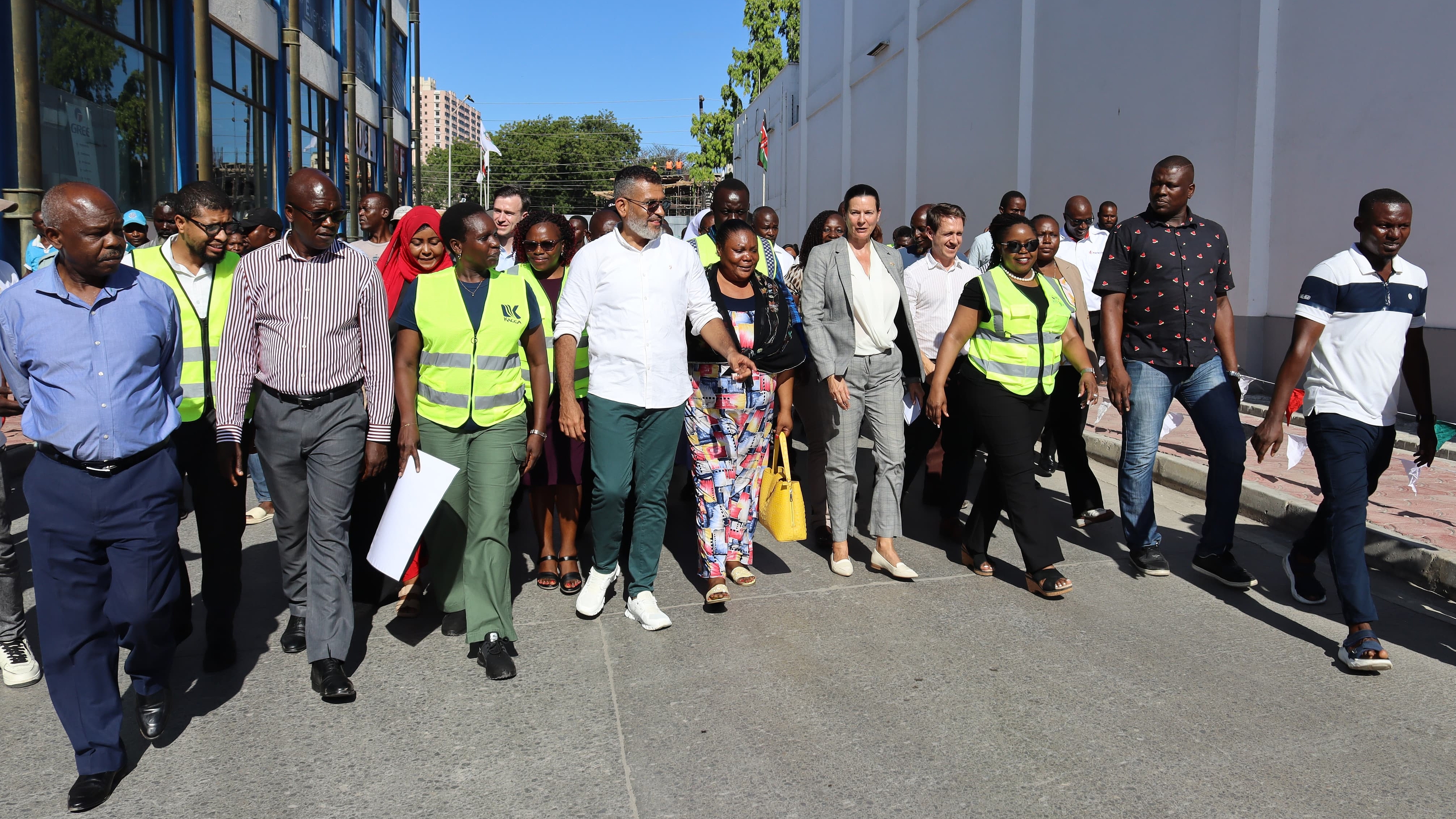
Mombasa Governor Abdulswammad Sheriff Nassir (centre) with Deputy British High Commissioner to Kenya Leigh Stubblefield and other officials at Mombasa Port. Photo/Governor's Press
The official opening of upgraded Mbaraki-Nyerere Road and Bamburi Drainage Outfall, is poised to reshape Mombasa’s trade operations and significantly improve the locals’ quality of life.
This milestone development is as a result of joint efforts of the UK, Denmark, and Kenya.
Previously a murram road, the 1.2 km route has been transformed into a high-quality bitumen road, drastically reducing traffic congestion, boosting trade efficiency, and enhancing public safety in the region.
Supported by the County Government of Mombasa, the UK Government, and the Royal Danish Embassy, the road project was delivered by TradeMark Africa (TMA), a pan-African organisation committed to advancing trade infrastructure.
The project has been operational since July 2022, easing the flow of Heavy Goods Vehicles (HGVs) at Mombasa Port and reducing cargo clearance times from 11.2 to 3.4 days.
Additionally, the project has cut cargo transit times by 16.5 percent along the Northern Corridor, linking Mombasa to Bujumbura in Burundi.
“Today marks a pivotal step towards realising our vision of a modern, efficient, and resilient Mombasa,” said Mombasa Governor Abdulswammad Sheriff Nassir.
“This road is not just an infrastructural improvement. It is a transformative investment that will catalyse trade, enhance mobility, and foster economic growth for our people. We are committed to continuing our collaboration with international partners to uplift our communities, support sustainable development, and strengthen Mombasa’s role as a regional trade hub.”
The new road has alleviated long-standing traffic bottlenecks caused by heavy truck activity, boosting HGV utilisation and reducing turnaround times for cargo at the Mbaraki Terminal. The reduction in congestion has also improved air quality for local residents, contributing to better living conditions and environmental health.
According to Chief Executive Officer (CEO) of BossFreight Mohammed Ali, the improved road infrastructure has been a game changer, allowing the company to transport more cargo with greater efficiency and leading to improved client satisfaction.
Complementing the road, a 100-metre-long drainage system funded by the Royal Danish Embassy has tackled persistent flooding issues.
The Bamburi Drainage Outfall now channels water safely to the Indian Ocean, preventing floods that previously disrupted nearby schools and neighbourhoods.
At Star of the Sea School, students had faced frequent flooding, sometimes having to be carried across floodwaters.
“This small intervention is having a big impact on the lives of our students,” said the school principal.
“Our girls can now learn without interruption and access school safely.”
Designed with sustainability and accessibility in mind, the road features solar-powered streetlights, wide pedestrian-friendly pavements, and wheelchair-accessible pathways.
“The UK is proud to have helped deliver a project considerate of local needs, supporting smooth trade without adding to Kenya’s debt,” said Leigh Stubblefield, Deputy British High Commissioner to Kenya.
She praised the collaborative spirit behind the project, quoting a Swahili proverb Umoja ni nguvu to mean “Unity is strength.”
Regional Manager at the Royal Danish Embassy Elma Adwa also underscored Denmark’s commitment to enhancing trade in East Africa, emphasizing the project’s benefits for Mombasa and the wider region.
“We look forward to more projects that enable the smooth flow of trade in Kenya,” she said.
TMA Deputy CEO and Chief of Programmes Allen Asiimwe highlighted the broader significance of resilient infrastructure.
“This road is more than a logistical upgrade; it is an investment in the economic future of Mombasa and Kenya. With our partners, we are committed to creating trade routes that empower local industries and uplift communities," Asiimwe said.
The project is a major component of the UK-Kenya Strategic Partnership, which has focused on infrastructure, climate resilience, and education since 2020.
The partnership aims to drive mutual prosperity through sustainable development, green infrastructure, and enhanced trade connectivity across East Africa.
The Mbaraki-Nyerere Road and Bamburi Drainage Outfall stand as a testament to the power of international collaboration in advancing Kenya’s economic and community welfare goals.