Over 1,000 Kenyans jailed abroad, says Mudavadi after Stevo escapes hangman's noose
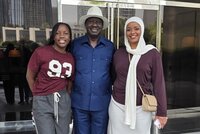
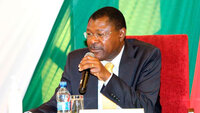
Prime Cabinet Secretary and Foreign & Diaspora Affairs CS Musalia Mudavadi addressing the media at his office in Nairobi. He is accompanied by Stephen Munyakho popularly known as Stevo (left) and Stevo's mother, Dorothy Kweyu (right). Photo/Sande Onyango
More than 1,000 Kenyans are currently imprisoned in foreign countries, Prime Cabinet Secretary Musalia Mudavadi revealed on Wednesday, as the country welcomed back Stephen Munyakho, popularly known as Stevo, after 14 years in a Saudi Arabian prison.
“These are different jurisdictions with different challenges. Sometimes we succeed, sometimes we don’t. But we keep trying through diplomatic channels,” said Mr Mudavadi during a press briefing in Nairobi on Thursday.
His remarks came just two(2) days after Stevo landed at Jomo Kenyatta International Airport, ending a 14-year ordeal that began with a fatal altercation in April 2011 at a warehouse in Saudi Arabia.
Stevo was initially convicted of manslaughter by a civil court in October 2011 and sentenced to five(5) years in prison. However, in June 2014, a Sharia court upgraded the charge to murder, making him eligible for the death penalty.
The court also granted the victim’s family the right to demand diya (blood money) as an alternative to execution.
From then on, Stevo’s life hung in the balance as execution deadlines approached and were repeatedly extended.
The most recent deadline — November 26, 2024 — sparked a renewed push by Kenyan diplomats, civil society groups, and well-wishers.
“The case reached my office, and I wrote to the Saudi Foreign Minister,” said Mr Mudavadi. “President William Ruto also personally appealed to Crown Prince Mohammed bin Salman.”
The breakthrough came when the Muslim World League stepped in and paid the full KSh129 million diya.
This followed months of mobilisation by the Bring Back Stevo campaign, which had raised an additional KSh20 million locally.
Joseph Odindo, who chaired the campaign, said the journey had tested their resolve.
“We wrote letters, made calls, knocked on doors — we even wrote to the Pope,” he said. “In the end, help came from an unexpected source. We are deeply grateful.”
Stevo’s mother, veteran journalist Dorothy Kweyu, described the process as confusing and emotionally draining.
“There was no roadmap. No clear office to guide us. We relied on goodwill,” she said.
Now back in the country, Stevo’s release has reignited debate about Kenya’s lack of a structured legal aid and consular support system for migrant workers facing legal trouble abroad.
While his case drew attention due to media coverage and high-level intervention, many others remain unnoticed.
“Stevo’s case ended well, but many others are still locked up — forgotten and without support,” said a campaigner involved in the effort.
Stevo, visibly overwhelmed at the airport, thanked all those who stood by him:
“I can’t explain how I feel. I thank everyone. One day, I’ll say more.”
The Ministry of Foreign and Diaspora Affairs said it would continue pursuing diplomatic solutions for Kenyans detained overseas.
But families and civil society organisations say a more proactive, well-funded migrant protection framework is urgently needed — one that doesn’t depend on luck, media pressure, or miracles.