Raila backs Sifuna, risks straining Ruto pact as ODM battles internal revolt
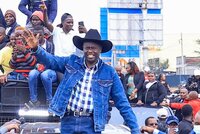
ODM Leader Raila Odinga. File photo
Orange Democratic Movement (ODM) leader Raila Odinga’s latest defence of Secretary-General Edwin Sifuna may complicate his relationship with President William Ruto and deepen internal divisions in the Orange party.
Speaking at an ODM delegates’ forum in Kakamega, Mr Odinga publicly backed Sifuna and called for an end to attacks against him.
“Sifuna is our Secretary-General. Let him speak. This is a democratic party,” said Mr Odinga.
He cautioned against party members airing their frustrations through media headlines, urging internal dialogue instead.
But his remarks have added fresh tension to an already strained party. Key ODM figures are split over the controversial MoU with the Kenya Kwanza government--an agreement many believe Mr Sifuna is right to question.
Mr Sifuna recently declared the ODM–Kenya Kwanza MoU “dead on arrival,” accusing the government of betrayal.
He cited failure to honour promised reforms and blamed police brutality for the death of blogger Albert Ojwang.
“The government has not honoured even a single clause. There’s nothing left of that MoU,” Mr Sifuna said.
His bold stance has been praised by younger leaders but triggered a backlash from party loyalists allied to Raila’s inner circle.
ODM Chair Gladys Wanga accused Sifuna of undermining Raila, saying the SG should “stop conflicting the party leader.”
Suna East MP Junet Mohamed echoed the rebuke. “We don’t run the party through headlines and emotions,” he said.
But Vihiga Senator Godfrey Osotsi and Kakamega Governor Fernandes Barasa came to Mr Sifuna’s defence, insisting he is speaking the truth.
This public division has left Raila in a difficult position--forced to balance party unity with rising generational dissent.
Mr Odinga’s statement in support of Mr Sifuna may signal a turning point in his post-handshake relationship with President Ruto.
Though not a formal coalition partner, Raila had been seen as warming up to Ruto in the wake of last year’s bipartisan talks.
Insiders believe this soft détente was anchored on a ten-point understanding that was never formally published, but widely discussed in political circles.
Mr Sifuna’s claim that the deal “died on arrival” may reflect deeper frustrations within ODM ranks over unmet promises.
If Mr Odinga is now leaning towards Mr Sifuna’s line, it could mark a subtle but significant pullback from Ruto’s government.
It could also embolden other opposition figures who feel betrayed by the so-called “broad-based” governance push.
What was in the MoU?
Although the MoU was never gazetted, political insiders say it had 10 central promises:
- Electoral Justice – Agreement on the structure and mandate of the IEBC selection panel.
- Audit of 2022 Elections – A proposed forensic audit of the presidential results transmission.
- Constitutional Reforms – Discussions around a hybrid executive and restructured devolution funding.
- Two-thirds Gender Rule – Legal commitment to ensure gender representation in elective and appointive posts.
- Fighting Corruption – Independent probes into high-profile scandals and shielding of anti-graft bodies from political interference.
- Cost of Living – Government action on food prices, subsidies, and social protection.
- Police Reforms – Restructuring police funding and accountability, especially on use of force.
- Inclusivity in Appointments – A balanced sharing of public positions across regions and communities.
- Justice for Protest Victims – Reparations for families affected by police brutality during protests.
- Bipartisan Oversight Committees – Joint committees to monitor progress of agreed reforms.
But Mr Sifuna argues none of these items have been fulfilled—and some, like electoral reform and police brutality, have worsened.
Mr Odinga’s backing of Mr Sifuna puts older ODM loyalists on the defensive.
It leaves figures like Ms Wanga and Mr Junet appearing out of step with younger leaders who are demanding change.
For many in ODM, the real debate is not just about the MoU. It is about the soul of the party.
Should ODM remain loyal to Mr Odinga’s quiet diplomacy with Ruto, or should it reclaim its firebrand opposition roots?
Mr Sifuna represents a younger, restless wing of the party that wants bolder action and clearer ideological direction.
His message is resonating with supporters frustrated by the silence of ODM during recent crises—including rising taxes, police crackdowns, and the Gen Z protests.
By defending his Secretary General, Mr Odinga may be trying to preserve unity while allowing internal reform.
But he also risks sending mixed signals on ODM’s posture towards government.
If the MoU is indeed dead, Mr Odinga must choose whether to walk away or continue playing nice.
Silence could erode ODM’s credibility and alienate its traditional base.
But full confrontation may shut the door on future deals—and further polarise the party.
The Kakamega conference showed that ODM is now walking a tightrope. The next few months could define Odinga’s political legacy.
Is he building a new, inclusive future for ODM or merely postponing a generational rebellion?
That answer may lie in whether the party continues to suppress or embrace voices like Edwin Sifuna’s.