

Revolutionising health care: The impact of Integrating Lab Information Management Systems with ARTMR in Malawi
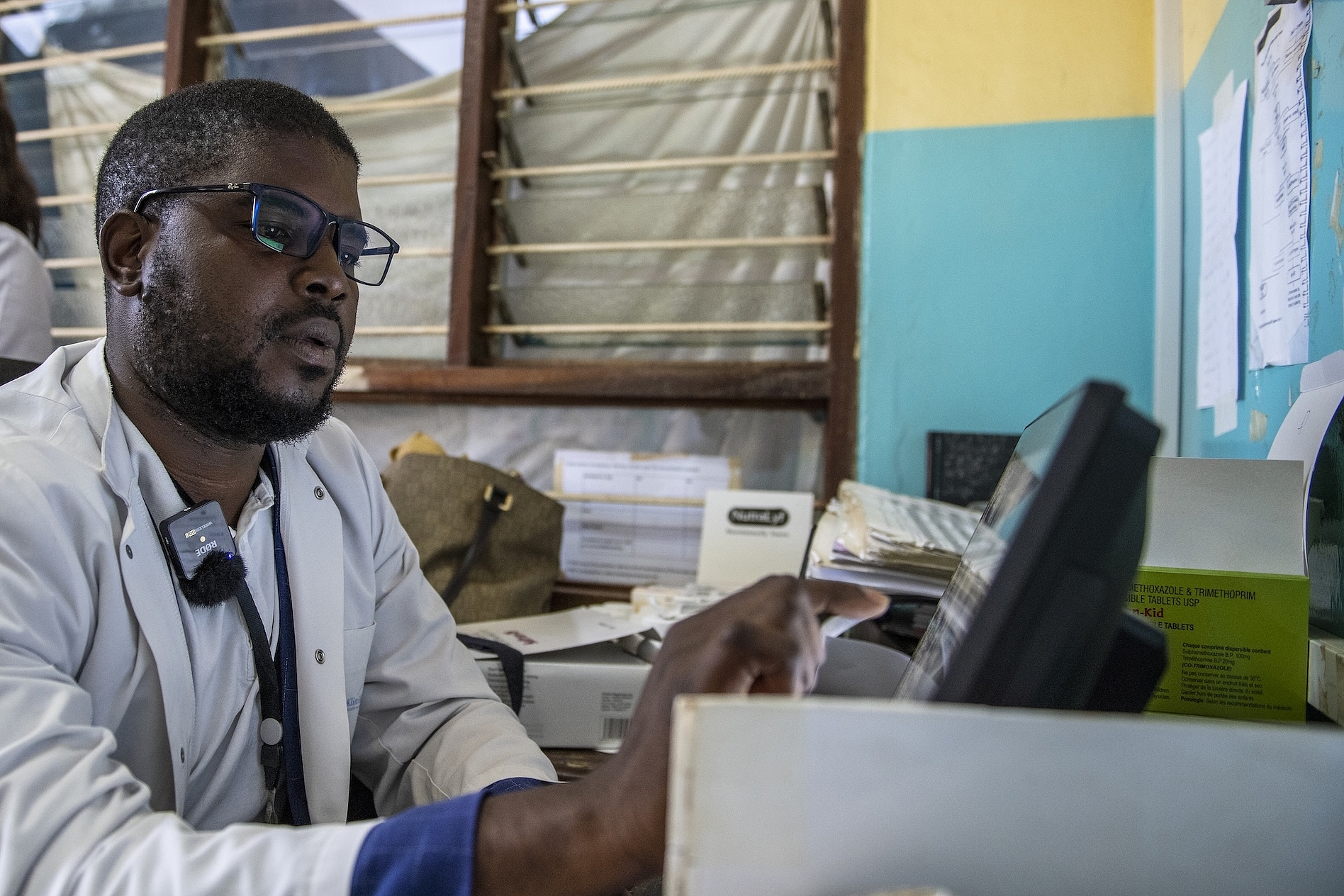
A medical practitioner operates a technological gadget. Photo/Elizabeth Glaser Pediatric AIDS Foundation
In the ever-evolving world of health care, the speed at which critical data is transmitted often determines the difference between life and death.
In Malawi, the integration of Lab Information Management Systems (LIMS) with Antiretroviral Therapy Management and Reporting (ARTMR) has become a game-changer, revolutionising the efficiency of health care delivery.
This breakthrough system is helping to drastically reduce turnaround times for vital lab results, which, in turn, enhances decision-making and improves patient outcomes.
Precious Ulemu Bondwe: A driving force behind health care innovation
At the heart of this technological transformation is Precious Ulemu Bondwe, a seasoned professional with a deep background in Computing and Information Systems.
As the Quality Assurance Manager at Malawi’s health systems, Precious has played a pivotal role in driving the integration of LIMS with ARTMR.
With years of experience in information management and technology, he has successfully bridged the gap between healthcare management and technology, bringing about one of the most significant changes in the country’s healthcare infrastructure.
“Combining technology and healthcare management is not just about implementing systems; it’s about improving the quality of care and making the healthcare process more efficient,” says Precious.
With his expertise and vision, Precious has helped lay the foundation for a more responsive healthcare system in Malawi, one where technology is harnessed to streamline workflows and improve patient outcomes.
Before the integration of LIMS and ARTMR, the time it took for critical lab results to reach healthcare providers in Malawi could take up to 70 days.
This delay often made it difficult for healthcare professionals to intervene promptly, leaving many patients vulnerable to deteriorating health conditions.
However, with the new integrated system, the turnaround time has been drastically reduced, with lab results now reaching their destination within two weeks. Precious and his team have set an ambitious goal to further reduce this turnaround time to a mere 24 hours, ensuring that critical results are available to healthcare workers as quickly as possible.
The key features of the integration: Real-time data flow and automated alerts
The integration of LIMS with ARTMR represents a significant leap forward in how healthcare data is processed and communicated in Malawi. The system’s ability to enable real-time data flow between laboratories, healthcare facilities, and couriers has revolutionized the speed and accuracy with which healthcare workers receive critical information.
“The system has transformed the workflow,” says Precious.
“By reducing the time it takes to get results, we are giving health care workers the information they need to make informed decisions more quickly.”
One of the most significant features of this integration is the real-time monitoring of sample movement. Previously, health care workers would often lose valuable time tracking samples manually, with no way of knowing where a sample was at any given moment.
Now, with integrated tracking, every sample is scanned and its location is updated in real-time.
This ensures that the healthcare workers involved in the process have full visibility of the sample's movement, from collection to laboratory testing and finally to the health care facility for result processing.
The system also incorporates automated alerts for high viral results. When a sample reveals a high viral load, the system sends an immediate notification to the healthcare provider.
This allows the health care worker to reach out to the patient and intervene promptly, ensuring that patients with high viral loads receive the necessary treatment without unnecessary delays. This feature not only helps in managing urgent cases more effectively but also streamlines the overall testing process, minimising errors that can arise from manual data entry.
A step toward greater accountability and efficiency
In addition to reducing turnaround times and improving patient care, the integration of LIMS and ARTMR has helped build a culture of accountability and transparency within Malawi’s healthcare system.
Before the system's implementation, human error was a significant challenge, with samples sometimes being misplaced or lost during the transportation process. These errors could lead to significant delays in diagnosis and treatment, causing a ripple effect that affected the quality of care across health care facilities.
“With the integration of this system, we’ve built accountability into the entire process,” says Precious.
“Everyone involved in the sample’s journey whether it’s in the lab, during transportation, or at the health care facility—knows where the sample is at all times. If there’s an issue, we can trace exactly where things went wrong.”
This level of transparency ensures that no sample is lost or misplaced, which drastically reduces the chances of errors.
With each sample being tracked throughout its journey, healthcare workers can rest assured that the results will be processed in a timely manner.
Additionally, the system eliminates the need for manual transportation of results, further reducing the risk of human error and delays.
In the past, couriers often made mistakes, such as delivering results to the wrong facility. Now, results are transmitted electronically, ensuring that healthcare workers receive the correct results directly, without the uncertainty of whether they have been misplaced or delayed.
Reducing human error and streamlining administrative tasks
The impact of the LIMS and ARTMR integration goes beyond simply improving the speed and accuracy of test results—it also streamlines administrative tasks. In the past, health care workers had to manually input data into multiple systems, a time-consuming and error-prone process.
With the new system, much of this work is automated, allowing healthcare professionals to focus more on patient care rather than administrative duties.
“The system has significantly reduced the burden on healthcare workers,” Precious explains.
“By automating key aspects of the process, healthcare providers are able to spend more time with patients, focusing on delivering quality care instead of handling administrative tasks.”
This reduction in manual data entry has not only saved time but also reduced the likelihood of errors that can occur when data is entered manually.
By improving the overall efficiency of healthcare delivery, the integration of LIMS and ARTMR has empowered healthcare workers to provide better care to their patients, enhancing both patient outcomes and the overall healthcare experience.
Looking ahead: A vision for the future
While the integration of LIMS and ARTMR has already yielded impressive results, Precious and his team are far from finished. As he prepares to present the outcomes of the integration, he remains focused on the future and the continued evolution of the healthcare system in Malawi.
“We’ve made incredible progress, but we’re always looking for ways to improve,” says Precious.
“Our goal is to expand this system to all healthcare facilities in Malawi, ensuring that every healthcare worker across the country can benefit from this technology. Ultimately, we want to improve patient outcomes and ensure that people receive the care they need, when they need it.”
As Malawi’s health care system continues to embrace the integration of technology, the potential for even greater improvements in patient care is immense.
With professionals like Precious Ulemu Bondwe leading the way, the future of healthcare in Malawi looks brighter, more efficient, and more responsive than ever before.
A more efficient and responsive health care system
The integration of LIMS with ARTMR represents a significant milestone in Malawi’s health care system.
By improving the speed and accuracy of lab result transmission, reducing human error, and streamlining administrative tasks, this innovative system is transforming healthcare delivery across the country.
Through the dedication and expertise of professionals like Precious Ulemu Bondwe, Malawi is well on its way to achieving a more efficient, accountable, and responsive healthcare system--one that can better meet the needs of its people and improve health outcomes for all.