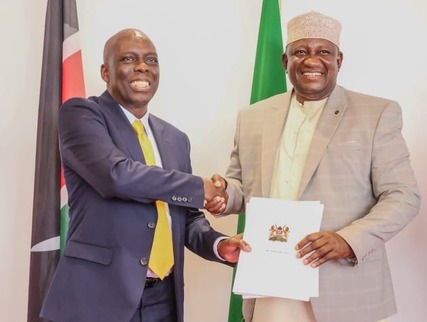

Draft Sports Bill 2026 unveiled to transform Kenya's sports sector
Kenya’s sports sector is on the brink of a major transformation following the unveiling of the draft Sports Bill 2026 and the National Sports Policy 2025 on January 30, 2026, which the government has described as game changers in sports management.
The two documents are being positioned as twin pillars that will overhaul the country’s sports ecosystem and reposition sports from a recreational pastime into a fully-fledged economic industry.
Speaking at Talanta Plaza in Nairobi on Friday while receiving the draft proposals from the Sports Law and Policy Review Taskforce, Cabinet Secretary for Youth Affairs, Creative Economy and Sports Salim Mvurya said the reforms signal a new dawn for Kenyan sports. He noted that the proposed laws introduce radical yet practical changes that touch every aspect of the sporting architecture.
According to Mvurya, the most significant shift is the transition of sports into an industry capable of supporting livelihoods, transforming communities and contributing meaningfully to national development. He said the proposals address current realities in the sector, with strong emphasis on athletes’ welfare, integrity in sports, infrastructure development and structured talent nurturing.
Accompanied by Principal Secretary for Sports Elijah Mwangi, the CS described the proposals as progressive and well aligned with the government’s broader economic transformation agenda, where sports is viewed as a key development anchor. The new law tackles a wide range of issues including governance and leadership in federations, use of technology and data, sports science, management of facilities, and talent development particularly within schools.
Notably, the proposals also seek formal recognition of fans’ associations to instill discipline and curb hooliganism. Mvurya stressed the importance of inter-ministerial collaboration to ensure effective implementation, citing the Ministry of Education’s role in talent development and the Ministry of Health’s role in anti-doping initiatives. He said alignment across government would prevent gaps and strengthen the ministry’s operational capacity.
The taskforce reviewing the Sports Act 2013 and the existing policy was formed in November 2024 and chaired by Senior Counsel John Ohaga.
It has recommended far-reaching reforms, including the creation of a National Sports Development Fund and a National Sports Regulatory Authority to address financing and governance challenges.
Ohaga said the draft law introduces clear term limits for federation officials and bars individuals from holding multiple roles that compromise effectiveness. He noted that these measures are designed to cure long-standing governance issues in sports federations.
The proposals will now undergo stakeholder consultations and scrutiny by parliamentary committees before being submitted to Cabinet. Given that sports is a devolved function under the Constitution, the Senate will also consider the law.
Mvurya urged stakeholders to engage with the drafts and submit suggestions to ensure a more inclusive and robust final framework.