

Kenya assumes leadership of Continental Youth Employment Initiative
- Created by Jeff Olubuyi
- Roundup
Cabinet Secretary for Youth Affairs, Creative Economy and Sports, Salim Mvurya, formally accepted the mantle on behalf of the Government of Kenya.
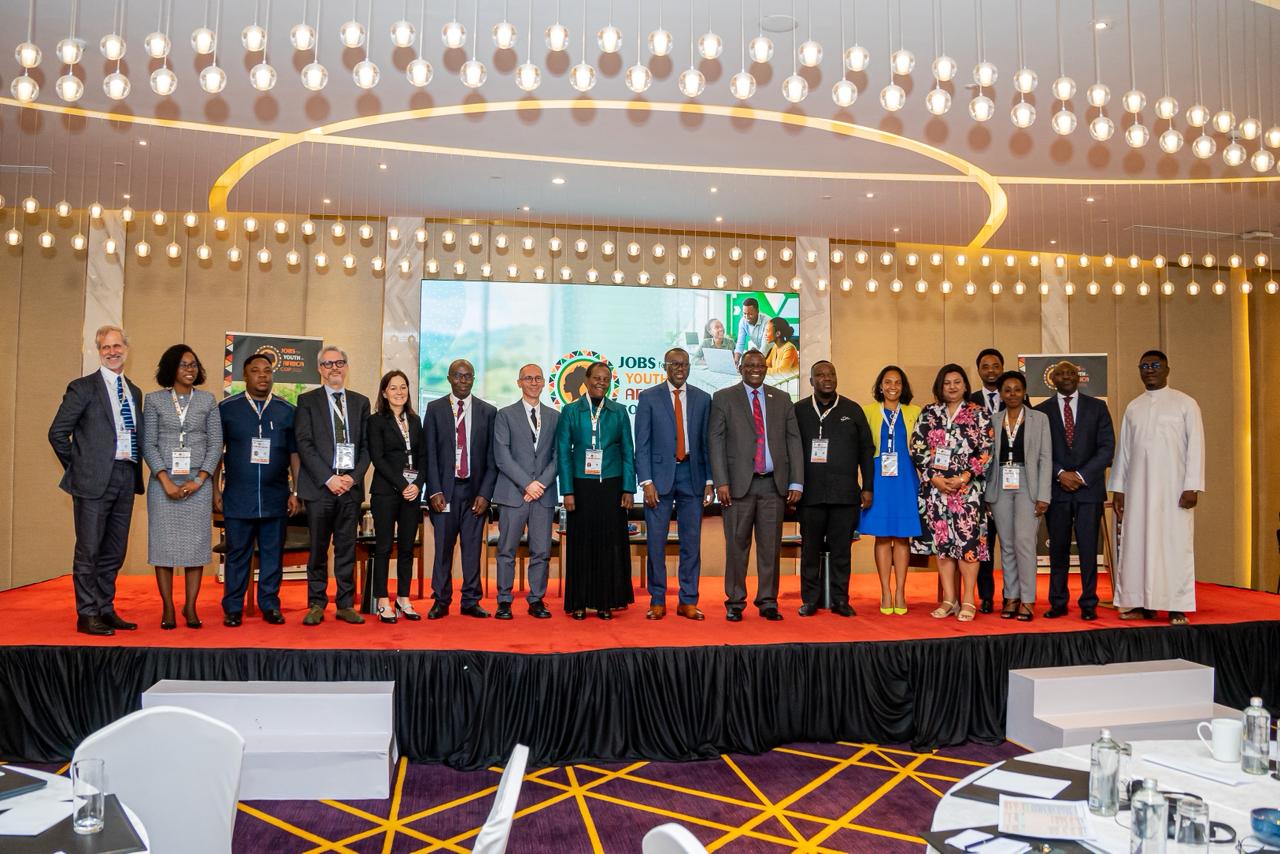
Kenya has officially assumed the Chairmanship of the Jobs for Youth in Africa (JfYA) Community of Practice (CoP) from the Republic of Rwanda, marking a significant milestone in continental efforts to accelerate youth employment and economic inclusion across Africa.
The handover took place during the Jobs for Youth in Africa Community of Practice Knowledge Exchange Summit held in Nairobi. Cabinet Secretary for Youth Affairs, Creative Economy and Sports, Salim Mvurya, formally accepted the mantle on behalf of the Government of Kenya, pledging to prioritise implementation, accountability, and measurable impact across Member States.
“On behalf of the Government of Kenya, I am deeply honoured to formally accept the Chairmanship of the Jobs for Youth in Africa Community of Practice,” said Mvurya.
“Kenya assumes this responsibility with humility, clarity of purpose, and unwavering commitment. We pledge to shift our collective focus firmly toward delivery, accountability, and results.”
The Community of Practice, spearheaded by 20 African Member States and supported by the World Bank and other development partners, serves as a continental platform for peer learning, knowledge exchange, and scaling evidence-based solutions to youth unemployment and underemployment.
During its one-year tenure, Kenya will guide the CoP through three strategic priorities: market-responsive skills development, enterprise growth as a driver of job creation, and strengthened data-driven accountability systems.
Mvurya underscored the urgency of co-ordinated action, noting that more than 60 percent of Africa’s population is under 25 years old. With an estimated annual youth employment gap exceeding 10 million jobs, he described the demographic reality as both an opportunity and a responsibility for governments.
“Investment in Africa’s young people is not merely a social intervention. It is the engine of economic growth, the anchor of stability, and the foundation of long-term cohesion across our continent,” he said. “When we empower youth with skills, opportunity, and access to markets, we unlock Africa’s demographic dividend and transform it into productive capital.”
Kenya highlighted its domestic youth employment initiatives as models for scaling across the continent. Through programs such as the NYOTA initiative, the Digital Jobs Agenda (Kazi Mtandaoni), Affordable Housing, and Climate X, the government reports that thousands of young people have been trained, mentored, and integrated into public sector roles, online work, business process outsourcing, and digital entrepreneurship. These interventions have contributed to approximately 1,807,000 jobs created through public sector expansion and flagship programs, according to the Cabinet Secretary.
As incoming Chair, Kenya reaffirmed its commitment to stewarding the Community of Practice with transparency and inclusivity, while emphasizing a transition from dialogue to measurable action. The country also pledged to strengthen peer learning, harmonize standards, scale proven interventions, and embed data-driven accountability in policy and implementation frameworks across Member States.
The high-level summit was attended by Mr. Ndiamé Diop, Regional Vice President of the World Bank for Eastern and Southern Africa; Fikirini Jacobs, Principal Secretary for Youth Affairs and Creative Economy; representatives from participating Member States; development partners; private sector leaders; and youth delegates.
Kenya’s leadership of the CoP signals renewed continental momentum to address one of Africa’s most pressing development challenges: creating sustainable, dignified employment pathways for its rapidly growing youth population.