
Maluki leads launch of NOCK commissions as Kenya eyes sporting growth
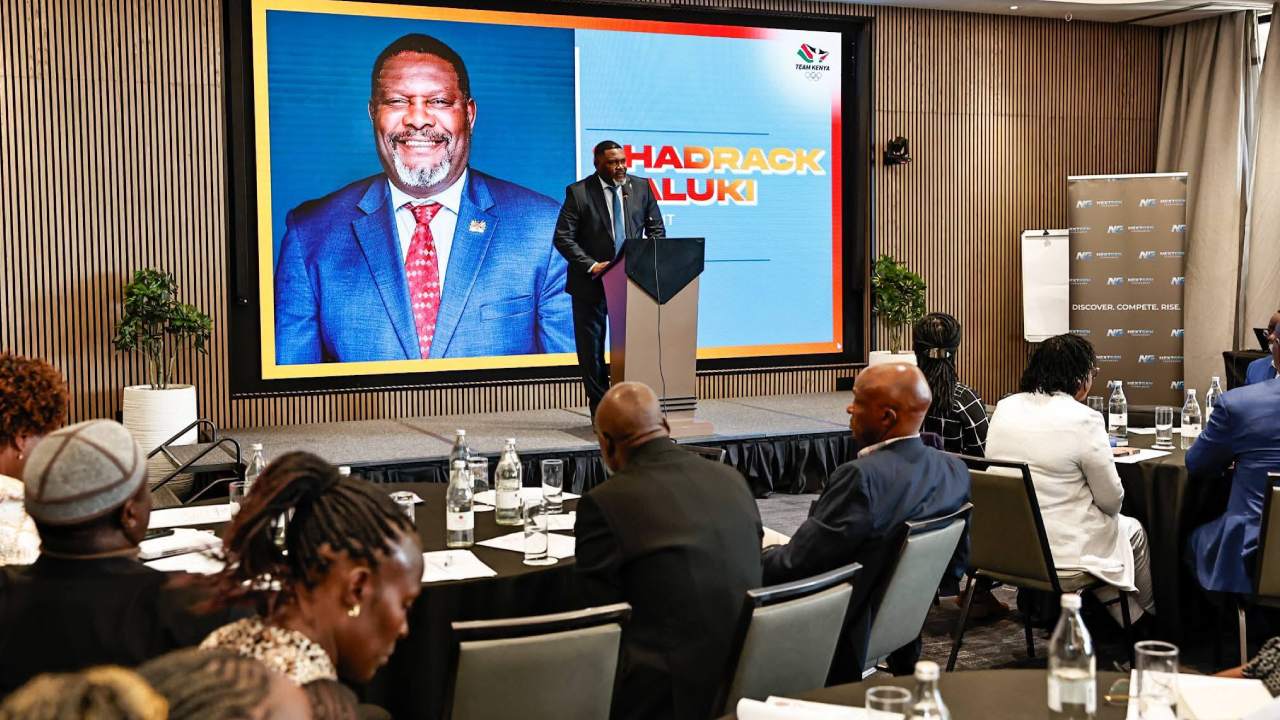
The National Olympic Committee of Kenya (NOCK) marked a significant milestone on Friday, April 10, 2026, as it officially launched its commissions for the 2025-2028 cycle, in a ceremony in Nairobi that blended reflection, structure, and bold ambition for the future of sports in the country.
The event began on a solemn note, with NOCK President Shadrack Maluki leading members in observing a minute of silence in honour of the late NOCK vice president Waithaka Kioni, whose legacy continues to shape the Olympic movement in Kenya.
The tribute underscored the institution’s respect for its past even as it charts a new path forward.
Maluki then turned to the business of the day, warmly welcoming newly appointed commissioners, whom he described as the “backbone” of NOCK’s vision. The commissioners will serve in Appeals Commission, Sports, Environment and Sustainability Commission, Sports for All Commission, NOCK Institute/National Olympic Academy - Kenya, Mecical and Scientific Research Commission, Technical/Elite Performance Commission, Athletes Commission, Gender Commission, Media Commission, and Safeguarding and Safe Sports Commission. Maluki outlined the structure of the executive board, which includes key offices such as the first deputy president, secretary-general, assistant secretary-general, women’s representative, and additional members who collectively steer the organization’s agenda.
He lauded the executive team for their commitment, emphasizing that their role goes beyond occupying office to delivering tangible results within their constitutional mandate. To ensure efficiency and accountability, Maluki highlighted the critical role of specialised committees within NOCK. The Finance Committee, chaired by Barnabas Korir, is tasked with safeguarding financial discipline, while the Procurement Committee, led by Jocelyn Nyambura, ensures strict adherence to procurement laws.
Equally vital is the Human Resources Committee, headed by Nahashon Randiek, which focuses on merit-based recruitment and performance standards. Maluki stressed that the appointment of commissioners followed a rigorous process, affirming that their inclusion was based on competence and the value they bring to the Olympic movement.
Secretary-General John Ogola was described as the chief executive responsible for the day-to-day operations, ensuring that decisions are not only made, but effectively implemented.
Looking ahead, Maluki revealed that NOCK has already set its sights on major international assignments, including the upcoming Commonwealth Games. He reiterated that Kenya’s participation would not be ceremonial, but competitive, with a clear target of winning medals. “The era of treating sports as recreation is gone,” he said, noting the urgent need to position sports as a viable economic industry capable of providing livelihoods for young athletes.
He called for unity and collective responsibility, urging commissioners to actively contribute ideas and solutions rather than merely attending meetings. According to Maluki, NOCK must be seen as a transformative institution capable of nurturing talent across all regions of Kenya.
The president also emphasized close collaboration with the Government of Kenya, including President William Ruto, noting that meaningful sports development cannot be achieved in isolation. He reaffirmed that NOCK’s primary mandate is to grow talent and expand opportunities for young Kenyans.
A key pillar of Maluki’s vision is investment in youth development. Drawing from his background in judo, he highlighted the importance of early talent identification, citing missed opportunities where athletes are discovered too late to maximize their Olympic potential. To address this, NOCK is spearheading the introduction of a National Sports Day, a nationwide initiative aimed at identifying and nurturing talent from the grassroots.
Maluki also called for diversification beyond athletics, encouraging investment in infrastructure to support multiple disciplines. He pointed to football development as a priority, with experienced figures like former Harambee Stars head coach Francis Kimanzi expected to play a key role in talent identification and growth.
In his remarks, Randiek outlined the guiding principles for the commissions, including transparency, integrity, inclusivity, and evidence-based decision-making. He stressed that while the commissions serve in an advisory capacity, their work will significantly influence governance and athlete performance.
Korir echoed these sentiments, describing the launch as a “new dawn” for Kenyan sports. He emphasized that the commissions are not mere committees, but engines of innovation tasked with strengthening accountability and supporting athletes.
As the ceremony concluded, Maluki officially welcomed the commissioners into the Olympic family, urging them to embrace unity, dedication, and a shared vision. He challenged them to measure their impact not by attendance, but by their contribution to the growth of sports in Kenya.
With clear structures, ambitious programs, and renewed leadership focus, NOCK’s latest move signals a determined push to transform Kenya’s sporting landscape into a thriving and inclusive industry.