

No manipulation in 2025 KJSEA results, Education CS Julius Ogamba tells Senate
- Created by Juma Namlola
- Education
Government defends decision to keep Junior Schools within primary institutions.
NAIROBI, Kenya
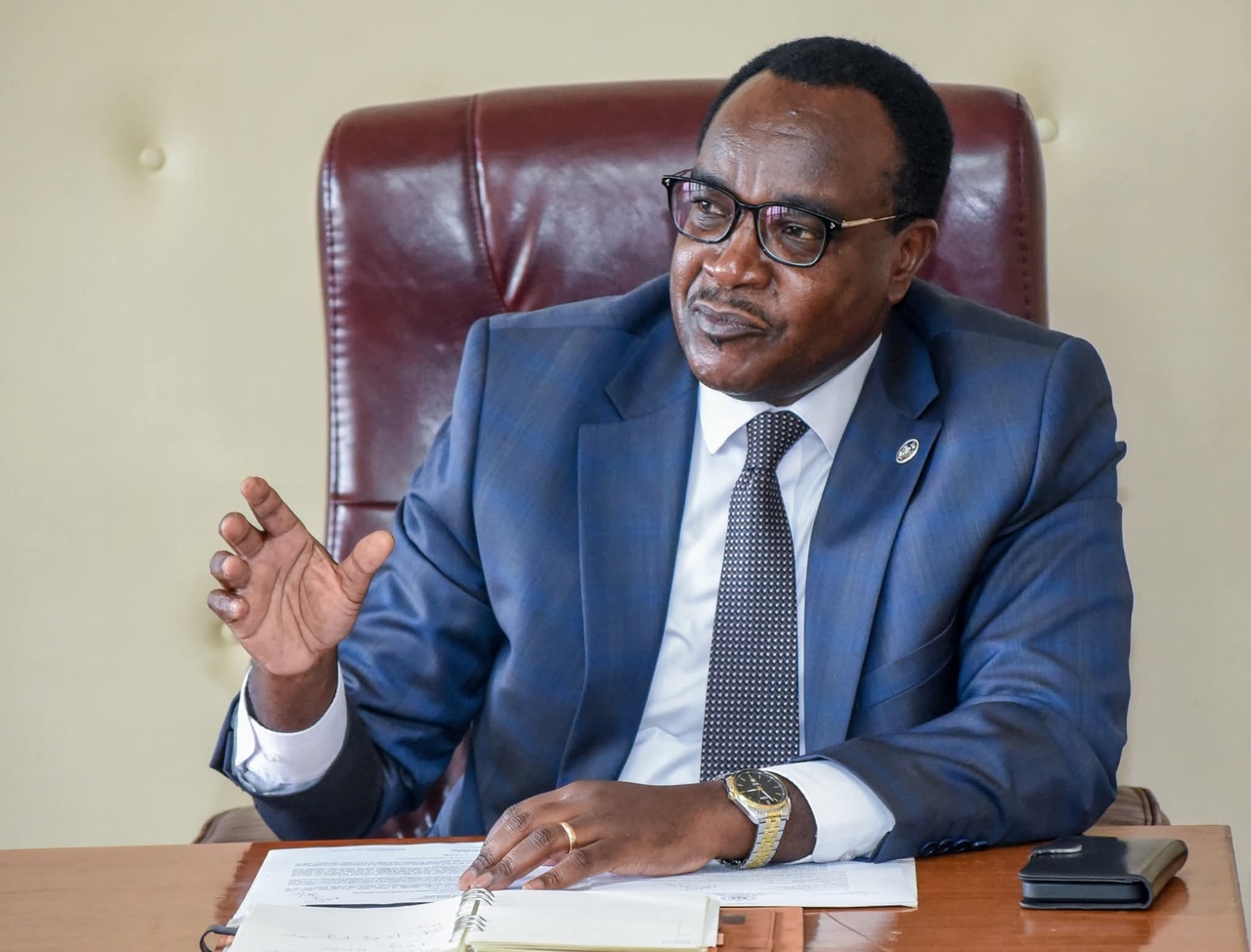
Education Cabinet Secretary Julius Migos Ogamba has dismissed claims that the 2025 Kenya Junior School Education Assessment (KJSEA) results were manipulated.
Appearing before the Senate plenary on Wednesday, Mr Ogamba told lawmakers that the Ministry of Education is not aware of any cases of misreporting or tampering with the results released by the Kenya National Examinations Council (KNEC).
The CS said the results were credible and had already been used to guide placement of learners into Grade 10 under the Competency-Based Education (CBE) system.
“The Ministry is not aware of any cases of manipulation or misreporting of the 2025 KJSEA results,” Mr Ogamba told senators.
Concerns about the integrity of the results had been raised in the Senate by Nairobi Senator Edwin Sifuna and Kisumu Senator Prof Tom Ojienda, who sought clarification from the Ministry over alleged irregularities in the assessment.
The CS said the assessment system has several quality assurance mechanisms designed to safeguard the integrity of national examinations.
He said the process includes pilot testing of exam papers, deployment of trained supervisors and invigilators, automated scoring systems, and verification of results before release.
Mr Ogamba added that the Competency-Based Assessment Portal also plays a key role in ensuring transparency.
The portal enables schools to manage School-Based Assessments and provides digital reporting tools supported by scoring rubrics and verification mechanisms.
According to the CS, the structure of learner assessment under the Competency-Based Education framework also reduces the risk of manipulation.
He explained that KJSEA accounts for 60 per cent of the final learner performance, while 20 percent comes from the Kenya Primary School Education Assessment (KPSEA) conducted in Grade Six.
Another 20 percent is drawn from School-Based Assessments carried out in Grades Seven and Eight, providing a cumulative evaluation of a learner’s performance over time.
Mr Ogamba noted that KJSEA is designed to identify learners’ strengths, interests and aptitudes rather than rank them through aggregate scores.
Performance is categorised into levels such as:
- Exceeding Expectations,
- Meeting Expectations,
- Approaching Expectations and
- Below Expectations
There are further subdivisions to give a more precise evaluation of learners’ abilities.
The CS was responding to questions from senators during a session that also examined broader issues surrounding the implementation of Junior Schools under the Competency-Based Education system.
On the management of Junior Schools, Mr Ogamba said the government adopted recommendations by the Presidential Working Party on Education Reform, which proposed that Junior Schools be hosted within existing primary schools.
He said 93 per cent of stakeholders who submitted views supported the arrangement, citing psychosocial, logistical and cost considerations.
“Younger learners could face integration challenges if placed in secondary school environments,” Mr Ogamba said.
He explained that using existing primary school infrastructure--particularly classrooms previously used by Standard Seven and Eight learners--is also more cost-effective than constructing new facilities across the country.
Under the arrangement, primary and Junior Schools operate under one Head of Institution and one Board of Management, he said.
However, the CS clarified that separate financial accounts are maintained because the capitation allocations differ.
Primary school learners receive Sh1,420 per learner annually, while Junior School learners receive Sh15,042 per learner annually.
Mr Ogamba also told senators that teachers deployed to Junior Schools are graduate teachers trained to handle the secondary-level curriculum under the Competency-Based Education system.
Junior School teachers fall under the Secondary School Career Progression Framework established through the Career Progression Guidelines of 2018, he added.
The CS also highlighted government efforts to support talent development programmes in schools, particularly through co-curricular activities.
In Kisumu County, he said 617 public primary schools and 232 secondary schools participate in structured activities coordinated through organisations such as the Kenya Secondary Schools Sports Association, the Kenya Primary and Junior Schools Sports Association, the Kenya Music Festival, and national science and drama competitions.
Between 2022 and 2025, more than 500 students from Kisumu County took part in regional sports training camps organised by the Kenya Academy of Sports, he said.
Some learners have also secured sports scholarships at Masinde Muliro University of Science and Technology.
Mr Ogamba acknowledged that challenges remain, including limited sports infrastructure, unequal access to opportunities for learners in remote areas, and coordination gaps among stakeholders.
To strengthen oversight, he said the Ministry has introduced digital athlete registration systems linked to the Kenya Education Management Information System (KEMIS) to address integrity issues previously associated with manual registration processes.