
Pressure mounts for deeper probe into Kenya’s drug networks
- Created by Lomenen Kevin
- Top News
Six(6) foreign nationals were arrested and remain in custody as the DCI continues its probe.
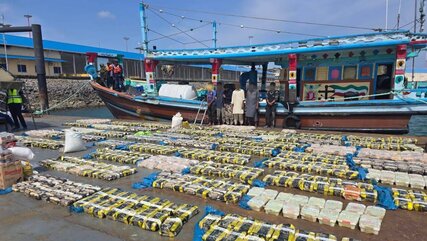
Kenya’s latest multi-agency anti-narcotics operation--which led to the seizure of methamphetamine valued at more than Sh8.2 billion--has sparked renewed calls for stronger accountability and intelligence coordination as investigators trace how the vessel slipped into Kenyan waters.
The stateless vessel, intercepted by the Kenya Navy about 630 kilometres off the coast of Mombasa, was found carrying over a tonne of crystal meth.
Six(6) foreign nationals were arrested and remain in custody as the Directorate of Criminal Investigations (DCI) continues its probe.
Sources close to the investigation said the suspects are being questioned about their possible links to a wider transnational syndicate using deep-sea routes to evade mainland surveillance.
Forensic analysis confirmed the cargo as methamphetamine, making the seizure one of Kenya’s largest in recent years.
The operation, carried out jointly by the Kenya Navy, DCI Anti-Narcotics Unit and Kenya Coast Guard Service, signals growing vigilance at sea.
However, it also exposes the continuing sophistication of drug traffickers adapting to tighter airport and border controls.
Security analysts note that the smugglers’ use of deep-sea transfer points — where drugs are off-loaded to smaller boats for coastal entry — demonstrates a shift in tactics, demanding stronger maritime intelligence sharing across the Indian Ocean region.
The bust has reignited public debate about Kenya’s fight against narcotics and the need to move beyond periodic seizures to systemic reforms.
The case also draws comparisons to the 2004 MV Natalya cocaine seizure in Malindi, which laid bare serious institutional weaknesses.
Nyali MP Mohammed Ali, a former investigative journalist, welcomed the interception but urged authorities to focus on dismantling the financial and logistical networks behind such shipments.
“This is a major win, but the war is far from over,” he said. “We cannot keep celebrating seizures without convictions. Drugs worth billions don’t move themselves — there are always enablers and facilitators.”
Analysts warn that unless Kenya strengthens inter-agency coordination, surveillance technology, and prosecution follow-through, the country risks remaining a key transit point in global drug routes.
They also point to the need for greater transparency in asset-tracing and financial investigations targeting those who bankroll trafficking networks.
“The war on drugs must move from the ocean to the offices,” said a maritime security expert familiar with the operation.
“Seizing cargo is only half the battle — cutting the money supply is the real victory.”
As the suspects await arraignment, security agencies are tracking possible collaborators and financiers.
Anti-narcotics officials say this case could become a test of Kenya’s resolve to go beyond arrests and seize the proceeds of organised crime.