

From throne to screen: How Prof Laz Ekwueme brought dignity and depth to Nollywood
- Created by Juma Namlola
- Profiles
Once dismissed as a vagabond's trade, acting in Africa has evolved, with scholars like Prof Laz Ekwueme, Sam Dede, and others bringing depth and cultural authority to Nollywood roles.
In many parts of Africa, acting was once looked down upon--seen as a pastime for vagabonds, a wayward trade for those without steady jobs.
But when Nollywood emerged in the early 1990s and later Bongo Movies swept East Africa, the perception began to change.
What was once dismissed as entertainment for the masses grew into an industry of storytellers, poets and cultural narrators.
In Nigeria, acting is not only for the downtrodden or the desperate — it has become a platform for educated voices, cultural custodians, and voices shaped by scholarship.
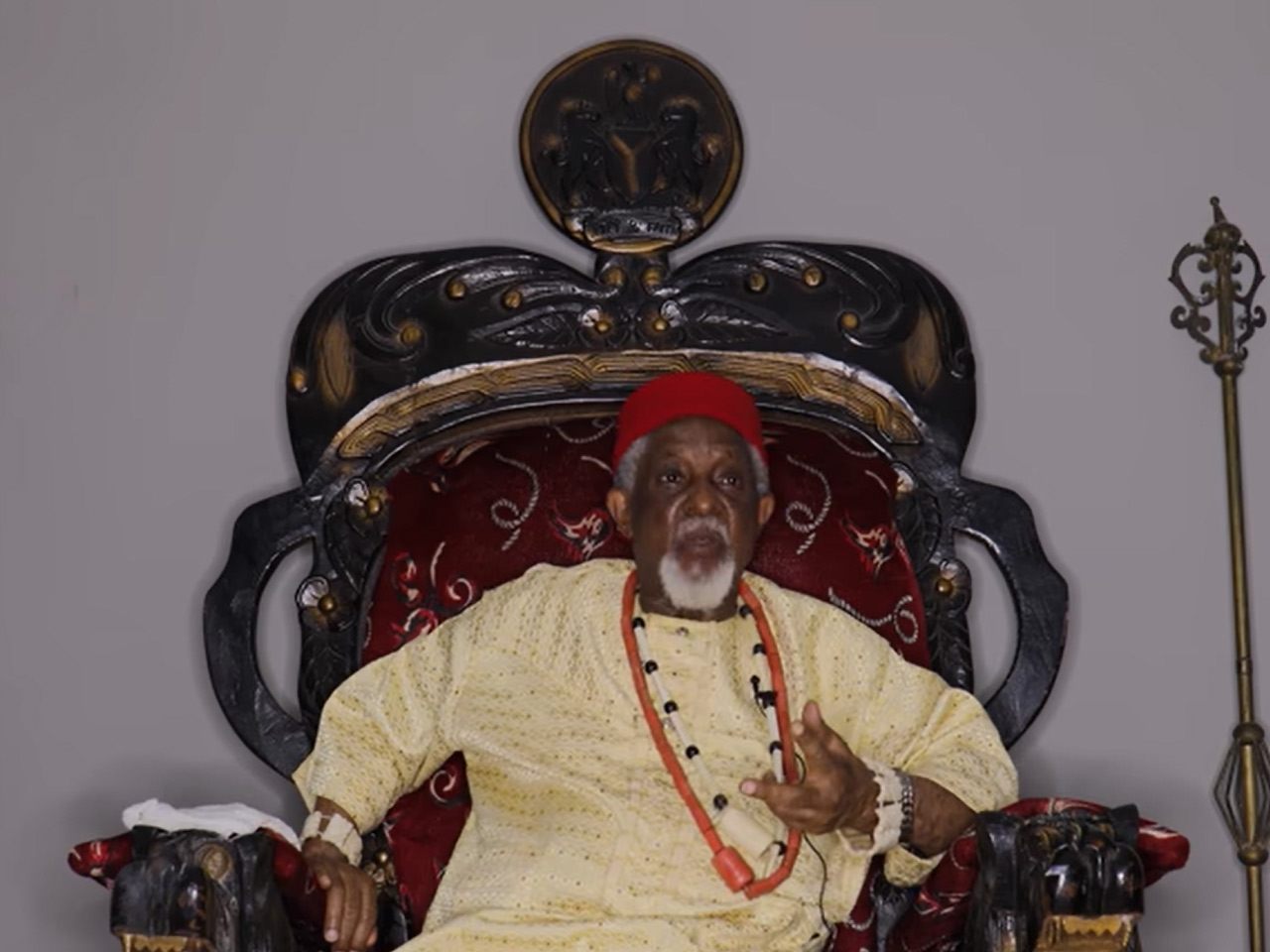
None exemplifies this better than Professor Lazarus Edward Nnanyelu “Laz” Ekwueme.
A life steeped in scholarship and cultural rhythm
Born in 1935 in Oko, Anambra State, Prof Ekwueme’s life unfolded like the pages of a novel written in three languages at once — scholarship, tradition and artistic expression. He studied music and drama across the world, from the Royal College of Music in London to Yale University in the United States, where he refined an artistic sensibility rooted in African cultural expression.
He later became a professor of music and drama in Nigeria, shaping minds and hearts through performance theory long before he stepped in front of a camera.
But long before Nollywood became a cultural force, Prof Ekwueme had already established himself as a custodian of history and spirit — not only in lecture halls but also among the people who would later celebrate his work on film screens.
In 1999, his community crowned him Igwe (traditional ruler) of Oko — a role that carries moral weight, cultural gravitas and the responsibility of being a living link between history and the present.
When an Igwe becomes an actor
It would be easy to imagine someone of his stature standing apart from popular culture. Yet the bridge between a throne and the screen is narrower than most expect — especially in worlds where storytelling is a sacred craft.
One of his most memorable screen roles came in the Nollywood film World Apart (2004). In a tale about love, identity and class divides, Prof Ekwueme portrayed King Idoto, a ruler whose presence on screen carried the same authority he held in real life. Far from a cameo, his performance provided the moral and emotional anchor of the story.
In World Apart, Kenneth Okonkwo played Prince Promise, a young man born into privilege whose heart was captured by a village girl named Uli — tenderly and sensitively played by Ini Edo. Their love, born in a world of simplicity, clashed with the expectations of royalty.
Enter the queen.
The drama of tradition — Queen Mirabel
Portrayed by Liz Benson, Queen Mirabel was not just another supporting character. She stood as the embodiment of tradition, duty and royal expectation — a figure whose heart mirrored the complexity of a culture grappling with change. She was regal, resolute and unyielding at first, the mother whose hopes for her son’s future weighed as heavily on the screen as the crown weighed on her head.
King Idoto, played by Prof Ekwueme, did not speak merely as an actor delivering lines. When he rose to declare judgment or mercy, his voice carried the depth of a man who had spent lifetimes teaching others about culture, harmony and the power of music to bind a community together. His gaze toward Queen Mirabel was a conversation between two authorities — one shaped by tradition, the other by ancestral wisdom — and both bound by the same human longing for peace in a divided world.
Nollywood’s learned voices
Prof Ekwueme’s journey from concert halls to film sets illustrates how deeply intertwined culture and cinema can be. He is not alone in navigating that path — Nollywood has long welcomed creative figures whose intellectual or professional backgrounds enrich their screen presence.
Sam Dede — lecturer and screen presence
One of the most recognisable faces from the lecture hall to the film set is Sam Dede, a veteran actor and lecturer in Theatre Arts at the University of Port Harcourt.
Dede’s performances in films such as Igodo and Issakaba reflect a blend of academic acting technique and raw screen charisma that few performers master.
Students who once walked into his classroom found themselves watching him command large screens, proving that the craft of performance thrives where study meets instinct.
The late Columbus Irosanga — professor and villain
Another poignant figure was Columbus Irosanga, a senior lecturer in the Department of Theatre Arts at the University of Port Harcourt whose film persona often charted the darker corridors of human character.
Irosanga’s most memorable role was as Igbudu in the Nollywood classic Issakaba, a character whose presence was feared and whose actions drew audiences into the moral consequences of power and vengeance.
Irosanga’s towering voice and intense delivery made him perfect for roles that demanded menacing authority — not through caricature, but through the quiet dread of someone whose wisdom had been surrendered to fear.
His death in early 2025 was felt across Nollywood and academia alike, as both worlds lost a figure who stood firmly in the intersection of study and performance.
Actors with professional training
Nollywood has also nurtured actors with formal training outside performing arts, whose educational backgrounds add texture to their performances:
Kenneth Okonkwo — studied law and holds a master’s in International Law & Diplomacy. His early roles in Living in Bondage and in World Apart cemented his status as a dramatic lead comfortable with moral and supernatural themes.
Richard Mofe‑Damijo (RMD) — law graduate whose screen gravitas helped define Nollywood’s golden‑era leading men.
Eso Dike — lawyer and screen actor whose roles in series such as The Smart Money Woman blend legal sharpness with performance nuance.
Funke Akindele and Femi Adebayo — law graduates whose creative versatility showcase Nollywood’s blend of professional and artistic achievement.
Why the learned spice up theatre
In Nollywood, as in all great cinemas, acting is not just a craft. It is a blend of intuition and insight, heart and heritage, emotion and education.
What Prof Ekwueme and others like him remind us is that the stage and the screen are not just places for spectacle — they are theatres of reflection, identity and community memory.
In a continent where storytelling carries the weight of history and the promise of tomorrow, their voices — grounded in scholarship and expressed through performance — are not anomalies. They are anchors.