

How Kenya is losing ground to sophisticated organised crime networks
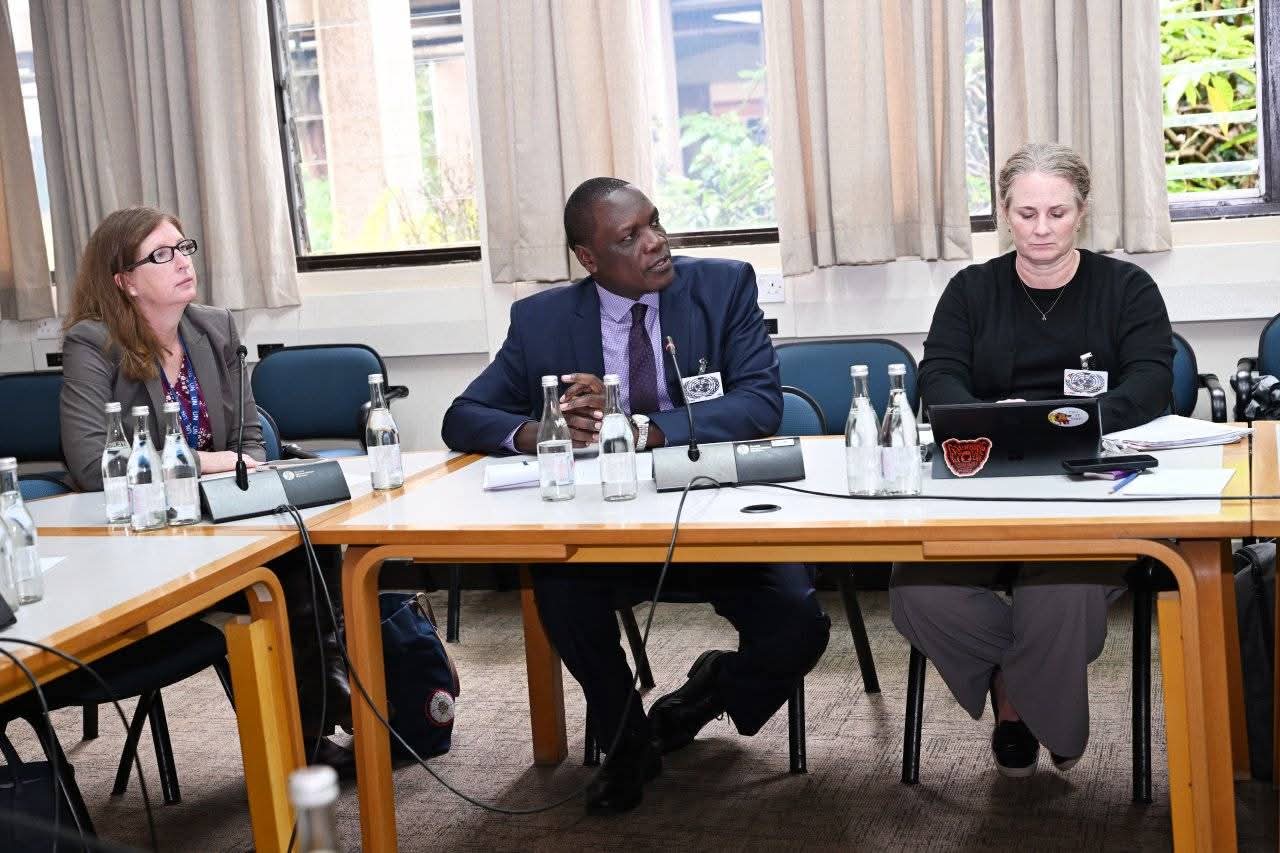
Criminal networks are evolving faster than Kenya’s justice system can adapt, with prosecutors warning that gaps in coordination, forensic capacity and institutional readiness are weakening the country’s ability to respond.
At a high-level United Nations Office on Drugs and Crime (UNODC) meeting held at the United Nations Office at Nairobi (UNON), the Secretary for Prosecution Services at the Office of the Director of Public Prosecutions (ODPP), Mr Alloys Kemo, said modern crime is increasingly transnational, digital and highly organised.
“Criminal activity is now transnational, technologically enabled and highly organised, yet parts of our response system are still operating under traditional models,” Mr Kemo said.
Weak links in the justice chain
Mr Kemo warned that fragmentation across the justice system is creating delays that organised networks are quick to exploit.
He said poor coordination between investigative and prosecutorial agencies remains a major setback.
“Where coordination is weak and forensic support is delayed, the entire justice process slows down—and that delay becomes a gap criminals take advantage of,” he said.
Forensics under pressure
He also pointed to limited forensic capacity as one of the most critical bottlenecks in criminal prosecutions.
“In many cases, prosecutions are not failing in court—they are being slowed at the investigative and forensic stages,” he noted.
He added that specialised expertise is unevenly distributed, leaving some regions more vulnerable than others.
Criminal networks moving faster than systems
International partners said criminal organisations are now leveraging global systems faster than enforcement agencies can respond.
Mr Ali El-Bereir, Regional Representative for the U.S. Bureau of International Narcotics and Law Enforcement Affairs (INL), said trafficking networks are exploiting multiple channels.
“Criminal networks are exploiting trade corridors, aviation routes, maritime systems and digital platforms to move illicit goods and money,” he said.
He warned that gaps in coordination and outdated legal frameworks continue to widen the enforcement gap.
The reform race
The UNODC-backed programme aims to strengthen Kenya’s response through improved forensic systems, border detection capacity, inter-agency coordination and legal reforms aligned with international standards.
But officials cautioned that implementation remains the real test.
Agencies at the meeting included the ODPP, Directorate of Criminal Investigations (DCI), NACADA, Kenya Revenue Authority (KRA), Kenya Coast Guard Service, Pharmacy and Poisons Board, Government Chemist Department, Jomo Kenyatta International Airport and Kenya Airports Authority.
To advertise with us, send an email to advert@avdeltanews.world