

Kenya, Uganda, South Sudan commit to speed up regional railway project
- Created by Sande Onyango
- Top News
CS Davis Chirchir said the three countries are aligning construction timelines and financing models to ensure the railway network operates seamlessly across borders.
Kenya, Uganda, and South Sudan have reaffirmed their commitment to accelerate the completion of the Standard Gauge Railway (SGR) along the Northern Corridor to enhance regional trade and reduce transport costs.
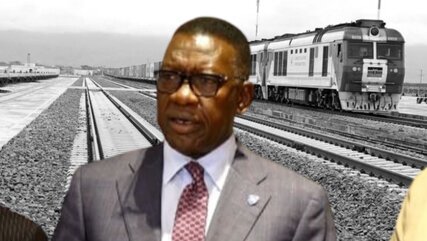
Speaking in Nairobi during a media briefing, Kenya’s Cabinet Secretary for Roads and Transport, Dr Davis Chirchir, said the three countries are aligning construction timelines and financing models to ensure the railway network operates seamlessly across borders.
Dr Chirchir explained that Kenya is extending the SGR from Naivasha to Kisumu, covering 262 kilometres, and a further 107 kilometres from Kisumu to Malaba, noting that regional coordination is key to achieving connectivity.
“Because it’s a regional project, we work closely with Uganda and South Sudan to ensure that the network is built in sync. A disjointed system cannot be optimised,” he said.
He revealed that Kenya intends to leverage the 2 percent Railway Development Levy to support funding for the remaining SGR sections while seeking partnerships with development financiers.
“It’s not a cheap infrastructure project, but we have the Railway Development Levy Fund generating about Sh40 billion annually, which provides a good revenue stream to support the investment,” he said.
Uganda’s State Minister for Transport, Fred Byamukama, said the three countries are turning their discussions into business opportunities that will transform the region’s economies.
“We are here to confirm the business potential that exists in rail transport. Most of our cargo has been moving by road, congesting highways and raising transport costs. If we move cargo by rail from Mombasa through Nairobi, Kisumu, Uganda and up to South Sudan, the cost of transportation will greatly reduce,” Byamukama said.
He expressed optimism that once completed, the project will stimulate trade and improve the economic status of all participating countries.
Dr Chirchir added that discussions also touched on long-term financing mechanisms and the environmental benefits of shifting more cargo from roads to railways.
“We want to reduce pressure on our roads, lower accidents, and improve our carbon footprint. Rail transport is more efficient and sustainable,” he said.
He noted that Kenya recently recorded its highest cargo volume on the railway--about 640 million tonnes--and emphasized the need to expand capacity to serve Uganda, South Sudan and the DRC.
The ministers said technical teams from the three countries have been given nine weeks to finalise feasibility updates and cargo volume data before construction begins.
“The sooner we agree with lenders, the sooner we can begin construction of the Naivasha–Kisumu–Malaba section,” Dr Chirchir said.
To advertise with us, send an email to advert@avdeltanews.world