
ODM succession race: Babu Owino leads in Infotrak survey
- Created by Juma Namlola
- Politics
ODM’s internal landscape has increasingly been defined by three broad interlocutory camps, reflecting contrasting approaches to leadership.
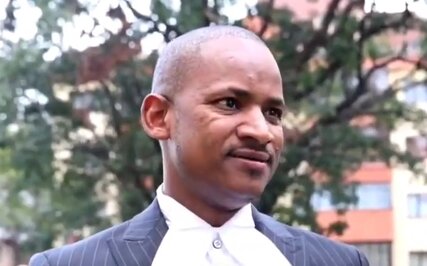
As Kenya’s Orange Democratic Movement (ODM) navigates one of the most consequential transitions in its 20 year history, a new Infotrak poll released on Sunday, has placed Embakasi East MP Babu Owino at the forefront of public preference to succeed the late Raila Odinga as the dominant political figure within the Luo community and broader ODM influence sphere.
According to the survey, 33 percent of respondents identified Mr Owino as the leading successor, significantly higher than other ODM figures in the wake of Raila’s death in October.
Siaya Senator and current ODM leader Dr Oburu Oginga followed at 10 percent, with Homa Bay Governor Gladys Wanga at 7pc and Siaya Governor James Orengo at 4pc.
The passing of Raila Odinga, a towering figure in Kenyan politics and ODM’s most influential leader, left a leadership vacuum that has triggered intense discussions within the party over its future direction and the identity of his political heir.
Mr Odinga had served as ODM’s ideological anchor, campaign strategist and de facto arbiter of internal differences for decades. His absence has exposed deepening rifts over the party’s strategy and leadership path forward.
Ever since Dr Oburu--Raila’s elder brother--took over the leadership of the ODM party to provide continuity through the transition period, pending formal internal elections, debates have multiplied as members articulate divergent visions for ODM’s political future.
ODM’s internal landscape has increasingly been defined by three broad interlocutory camps, reflecting contrasting approaches to leadership and the party’s political orientation ahead of the 2027 general election:
Continuity and broader engagement camp
This camp, led by Dr Oburu and supported by key party executives such as ODM Chairperson Gladys Wanga and others in the National Governing Council, advocates for continuity of Raila’s last strategic alignment — keeping ODM within the broad based government with President William Ruto’s administration. It emphasises engagement and negotiation over adversarial opposition politics.
Supporters of this view argue that sustained cooperation positions ODM to secure influence within the national agenda.
Youthful reformist and identity camp
A distinct cohort within ODM--including Babu Owino, Nairobi Senator Edwin Sifuna, and other younger party foot soldiers--has voiced unease with enduring alignment to the broad based government.
They argue that ODM risks losing its distinct reformist identity if it continues to blur its oppositional distinctiveness, especially now that Raila’s unifying presence is absent. Mr Sifuna has publicly advocated for party unity and democratic processes but also emphasised the importance of preserving ODM’s ideological clarity.
Calls for democratic renewal within ODM
A complementary but separate thrust, championed by figures like Winnie Odinga (Raila’s daughter and an East African Legislative Assembly member), calls for an urgent National Delegates Conference (NDC) to democratically renew party leadership and strategy.
Winnie’s intervention publicly challenged the legitimacy of the current interim leadership, arguing that Raila’s personalised stewardship of party alliances, especially the broad based government arrangement, cannot simply be inherited without broader member affirmation.
The succession conversation has at times intersected with high profile personal gestures.
During the burial of Raila Odinga’s sister in early December, Winnie introduced Babu Owino as “her friend”, a moment interpreted by political observers as enhancing his visibility in a period of transition.
The Embakasi East MP later acknowledged the gesture publicly, affirming his respect for the Odinga family.
That public moment appears to have dovetailed with broader sentiment captured by Infotrak, where 37 percent of respondents remain unsure who should succeed Raila, pointing to both fluidity and uncertainty in leadership perceptions.
This suggests that while Babu Owino leads in current preference, the field remains contested and dynamic.
ODM’s constitution stipulates that the National Delegates Conference is the supreme body for electing party leadership and ratifying strategic direction.
Although the next NDC is scheduled for October 2026, many within the party contend that extraordinary circumstances following Raila’s death justify an earlier convening to settle leadership and policy direction for the 2027 electoral cycle.
Failure to reconcile these debates risks deepening intra party tensions.
As ODM continues its internal deliberations, the emerging contest between continuity, reformist fervour, and democratic renewal will shape not only the party’s internal dynamics but also its national political positioning — whether as a cooperative force within the broad based government or as a distinct opposition alternative in the 2027 electoral contest.
To advertise with us, send an email to advert@avdeltanews.world