
BWOMANGA: How Kenya's reputation sealed the AUC election outcome
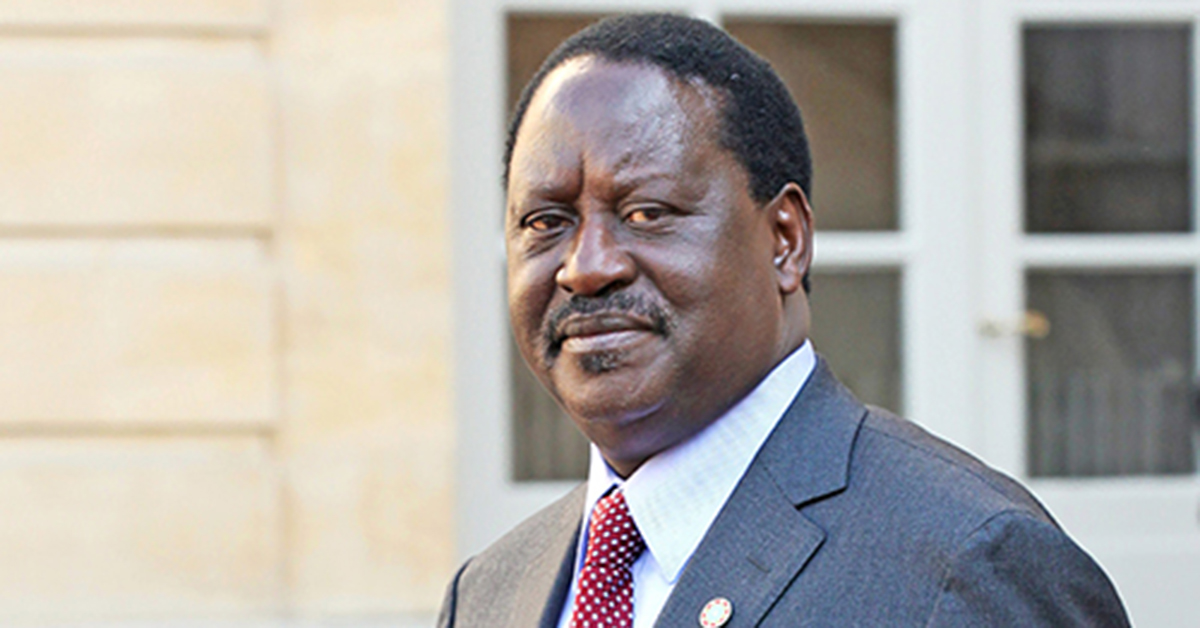
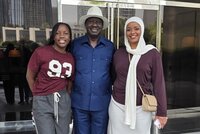
Raila Odinga. File photo
The just concluded African Union Commission (AUC) chairmanship election, where Raila Odinga was a prominent candidate, has sparked significant discussion.
While the focus has largely been on Raila's campaign, it is crucial to recognize that the outcome was influenced by broader perceptions of Kenya on the international stage, as presented by President William Ruto.
Several factors affected how African presidents voted on Saturday.
They include Dr Ruto's unequivocal public support for Israel during the conflict with Palestine, his approach to the Democratic Republic of Congo (DRC) conflict as the chair of EAC, the last-minute tensions in Kenya's relationship with SADC, the Anglophone-Francophone dynamics, and internal issues such as the abduction of prominent figures. In essence, it was Kenya that was on the ballot, not just Raila Odinga.
Kenya's stance on Israel
President Ruto's firm support for Israel during the conflict with Palestine significantly influenced the election outcome. In October 2023, his clear statement of Kenya's solidarity with Israel alienated several pro-Palestinian African countries.
"Kenya joins the rest of the world in solidarity with the State of Israel and unequivocally condemns terrorism and attacks on innocent civilians in the country. The people of Kenya and their government hereby express deepest sympathy and send condolences to the families of all victims. We also wish a speedy recovery to the injured," Dr Ruto declared.
"Kenya strongly maintains that there exists no justification whatsoever for terrorism, which constitutes a serious threat to international peace and security. All acts of terrorism and violent extremism are abhorrent, criminal and unjustifiable, regardless of the perpetrator or their motivations," he added.
Kenya further backed the controversial relocation of Israel's capital from Tel Aviv to Jerusalem—a city claimed by both Palestine and Israel.
The country also supported Israel's bid for observer status in the African Union (AU), though this remains pending due to opposition from Algeria and South Africa. Additionally, Kenya deployed troops to Haiti without AU endorsement.
At the AUC summit where the new AUC chairperson was elected, Palestinian Authority President Mahmoud Abbas's presence signaled the pro-Palestinian stance of most African countries. Attorney Migai Akech told a local TV station, “Most African states are pro-Palestine, which is why the President of Palestine is usually given time to make a speech on the day of the summit. Kenya has taken a position that is contra-Palestine.”
Mukhisa Kituyi shared similar sentiments.
Approach to the DRC conflict
Kenya's approach to the Democratic Republic of Congo (DRC) conflict, under President Ruto's leadership as the chair of the East African Community (EAC), raised concerns.
Foreign affairs experts widely criticized the President for what they considered a diplomatic misstep when he contacted French President Emmanuel Macron regarding the escalating crisis in the DRC.
In his statement, Ruto reported that President Macron expressed support for regional efforts to address the volatile situation. "President Macron also committed his country's support for the interventions being carried out, and for Kenya's participation in other peace initiatives in Somalia, Sudan and South Sudan," he said.
Critics faulted the head of state for not promoting a pan-Africanism agenda in resolving the DRC conflict, while other African nations advocated for local solutions.
In a statement to a local TV station, Professor Migai observed, “Kenya has not been seen to be advancing a Pan-African position in DRC and if you look at it globally, Kenya has not been seen to be advancing a pan-Africanism position.”
This perceived departure from a Pan-African approach may have cost Kenya's candidate Raila Odinga crucial votes.
Last-minute tussle with SADC and the Anglophone factor
Kenya faced a last-minute challenge when the Southern African Development Community (SADC) threw its weight behind Madagascar's candidate, Richard Randriamandrato.
Over nine(9) months of intense campaigning, Raila visited numerous countries to gain presidential support for his AUC chairmanship candidature.
He built a strong foundation among the Anglophone (English-speaking) nations majorly from SADC.
However, Kenya's Foreign Affairs PS Dr Koris Sing'oei made a pointed statement against SADC and Madagascar on Friday last week, less than 24 hours before the poll—a move that sources indicated did not sit well with the bloc and Antananarivo.
The PS called for reforms within the African Union to address challenges, particularly Madagascar's dual representation of both Eastern and Southern regions.
"This is the turn of a member of the Eastern region to be elected. Madagascar straddles both the Eastern and Southern regions," Dr Sing'oei asserted.
"From a technical standpoint, Madagascar should not be on the ballot for the Eastern region because if it was the Southern region's turn, they could still contest," he continued.
The PS then criticized the SADC Secretariat's Executive Secretary, stating: “The letter is written by the SADC Secretary General, a bureaucrat, and dated February 12—barely five(5) days before the elections.”
This exchange preceded SADC's last-minute letter supporting Madagascar's Foreign Minister Richard James Randriamandrato.
During the first round of voting, Raila split votes with Randriamandrato. After Randriamandrato's elimination, Raila gained only two(2) additional votes while Ali Youssouf secured victory.
Uganda's President Yoweri Kaguta Museveni's absence from the session, despite twice endorsing Raila, was notable. Kenya's position on the DRC conflict, where SADC is also involved, likely influenced the shift in support from Raila to Djibouti, who was perceived as a neutral candidate.
Despite a strong base among English-speaking nations, the SADC's support for Randriamandrato split the vote, ultimately benefiting Djibouti's candidate, Mahmoud Ali Youssouf. This last-minute shift complicated Kenya's bid and highlighted the delicate balance of regional alliances.
Francophone Influence
The strong voting bloc of French-speaking African nations played a decisive role in the election.
During the first two(2) rounds, Raila led in the vote count until Madagascar's candidate Richard Randriamandrato was eliminated. Since Djibouti is a member of French-speaking nations in Africa, Ali Youssouf gained momentum after Randriamandrato's elimination and ultimately won in the sixth round with 33 votes.
Djibouti belongs to the National Ozone Officers Network for French-Speaking Africa, established at the 12th Executive Committee Meeting in March 1994. This network includes 26 members--22 French-speaking nations and three(3) Portuguese-speaking African countries.
In a previous interview with a local TV station, former United Nations Conference on Trade and Development (UNCTAD) Secretary General Mukhisa Kituyi had predicted this outcome. He explained that Raila's chances of winning the AUC seat were limited because Ali Youssouf, as a French-speaking candidate, would naturally appeal to Francophone countries.
"Normally it is extremely difficult for the bloc to vote for a non-francophone speaker if there is a French speaker among the candidates," Kituyi stated.
Internal factors and perception of Kenya
Kenya's internal challenges, particularly high-profile abductions and safety concerns, raised questions about the country's ability to lead the continent effectively.
The abduction of Ugandan opposition politician Kizza Besigye in Nairobi, along with other similar incidents, cast Kenya in a negative light and diminished support for its candidate. Besigye,68, a doctor and critic of President Yoweri Museveni, was seized in Nairobi and taken to Uganda, where he was presented before a military court.
The case garnered global attention, raising concerns about Kenya's status as a safe haven for asylum seekers.
The situation worsened with the brief abduction of Tanzanian journalist Sarungi Tsehai in Nairobi. Additional cases of missing persons further damaged the reputation of Ruto's administration.
Despite Raila's condemnation of the abductions, global observers questioned his capability to address these issues happening within Kenya. Sophie Mokoena, an international news editor for the South African Broadcasting Corporation (SABC), challenged Raila in a viral post on X: “You are campaigning for the position of the AU Commission Chair. Why must Africa consider you when your country can't provide answers on the abduction cases in Kenya? You want to lead the continent when you are failing to lead in your own country?”
It is clear that Kenya's image is not particularly favorable, indicating that President Ruto is not well-liked by other African leaders. This situation had little to do with Raila Odinga himself.
The reputation of Kenya seems to be sinking, and it was Kenya that was effectively on the AUC Chairperson ballot, not just Raila. Therefore, I conclude that in my opinion, it was Kenya that lost, not Raila.
In light of these events, it is imperative for President Ruto to reconsider Kenya's foreign policy.
A more balanced and inclusive approach could help rebuild Kenya's reputation and strengthen its position on the international stage.
I wish Mahmoud Ali Youssouf the best as the new AUC Chairperson and hope he leads the African Union towards greater unity and progress.
Additionally, I extend my best wishes to Raila Odinga in his future endeavors, as his dedication and passion for the continent's transformation remain evident.
By Nyangenya Bwomanga – Eminent Peace Ambassador - UN