

Fighting for an AIDS-free generation: World AIDS Day and EGPAF's unwavering mission
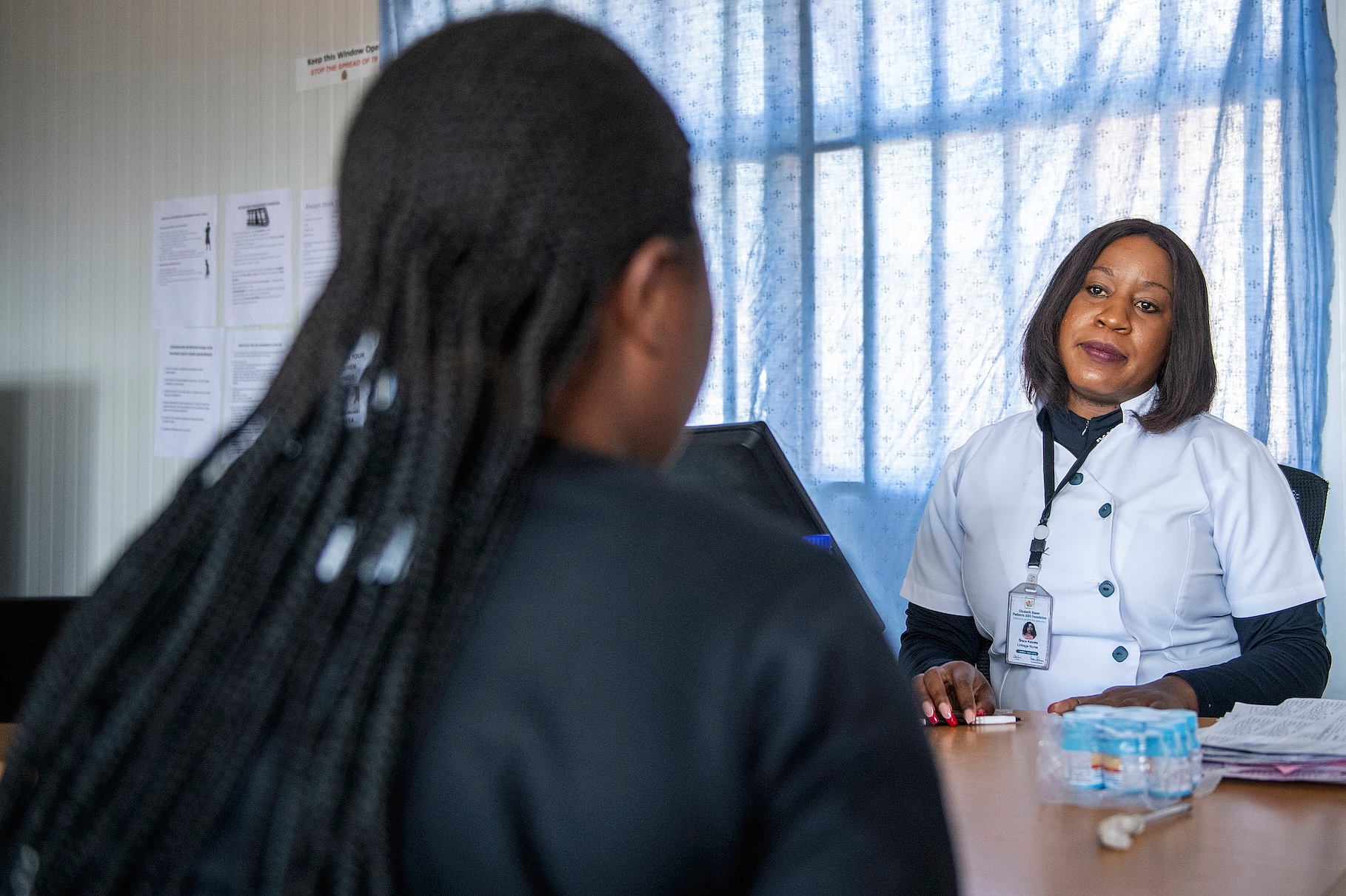
Grace Kalua, EGPAF linkage nurse at Ndriande Health Center in Blantyre, Malawi. Photo by Eric Bond/Elizabeth Glaser Pediatric AIDS Foundation, 2022
Each year on December 1, the world marks World AIDS Day with reflections, commitments, and calls for action.
For the Elizabeth Glaser Pediatric AIDS Foundation (EGPAF), World AIDS Day is not merely a commemoration, it is a powerful reminder of the rights of children to live free from the impact of HIV.
Under the year 2024 theme, Take the Rights Path: My Health, My Right!, EGPAF continues its fight to ensure children worldwide can live free of HIV, highlighting the enormous need to protect vulnerable young lives.
“This day represents a global moment to ask, ‘Have we done enough?’” says Catherine Connor, Vice President of Public Policy and Advocacy at EGPAF. “For children, the answer is simple: no. There is still much more to do.”
A Crisis of Invisible Children
Globally, nearly 300 children are newly infected with HIV every day. Despite advances in treatment, children remain the age group least likely to access life-saving antiretroviral therapy (ART). Even though progress has been made, the fight against pediatric HIV is far from over. As Connor points out, “Children have a right to an AIDS-free generation, something that Elizabeth Glaser believed deeply and fought for until her last breath. That belief still drives our work today.”
Though the fight against HIV/AIDS has gained significant ground over the past few decades, children continue to fall through the cracks. With nearly 90% of children living with HIV residing in Africa, the situation is even more dire, given the limited healthcare resources and the systemic barriers to accessing care. In many parts of Africa, stigma and a lack of resources further complicate treatment efforts, preventing children from receiving the care they so desperately need.
EGPAF’s mission is clear: children must be given access to treatment, care, and the support they need to grow up free from HIV. “It’s easy to forget that children have rights when we focus so much on adults in the HIV response,” says Connor. “But children are often the most vulnerable, and it’s our duty to fight for their health, their dignity, and their future.”
Spotlighting Advocacy and Policy Progress
World AIDS Day presents a unique opportunity for EGPAF to focus the global spotlight on pediatric HIV. For the foundation, this is a day to engage with policymakers and rally support for the needs of children affected by HIV. EGPAF has used World AIDS Day to successfully secure commitments from governments, urging them to prioritize pediatric HIV care in national health strategies and budgets.
Connor recalls how World AIDS Day helped secure commitments from African leaders to prioritize the elimination of mother-to-child transmission of HIV. “World AIDS Day is a reminder that we still need champions at the government level and in civil society to ensure the most vulnerable, particularly children, are not left behind,” she says.
Through these efforts, EGPAF has made it possible for governments to take actionable steps, utilizing World AIDS Day to announce national commitments. Civil society organizations use these announcements as leverage, holding policymakers accountable for implementing their promises.
The Power of Storytelling: Turning Advocacy into Action
At the heart of EGPAF’s World AIDS Day activities is its commitment to storytelling—specifically, amplifying the voices of those most affected by HIV. The foundation shares the real stories of children, families, and healthcare workers to show the human side of the epidemic. “Our work is about real people with real stories. We are focused on giving those who are living with HIV a platform to tell their stories,” Connor explains.
These stories are shared through EGPAF’s communications channels, social media platforms, and even through podcasts like Beyond+, a new initiative launched this year.
“The Beyond+ podcast is all about raising the voices of those living with HIV, especially young people who are growing up with the virus,” says Connor. “It’s about listening to their experiences, whether it’s about the challenges they face, their dreams, or how they navigate life with HIV. These stories are powerful and can inspire action on a global scale.”
For EGPAF, World AIDS Day is an opportunity to humanize the epidemic, moving beyond statistics to highlight the real lives behind the numbers. “We want people to understand that each statistic represents a child with hopes and dreams,” Connor says. “This is not just a health issue it’s a human rights issue.”
The Reality of HIV Care in the Field: A Glimpse into Dareda Hospital
From a recent blog post by the Elizabeth Glaser Pediatric AIDS Foundation (EGPAF), the fieldwork at Dareda Hospital in Tanzania provides a powerful example of the foundation’s impact. At Dareda, healthcare professionals and community health workers (CHWs) collaborate to ensure that children and families affected by HIV receive essential care and support.
A key innovation in this effort is the B-Ok Kit, developed through a partnership between EGPAF and the USAID Afya Yangu Northern Project. This tool uses visual aids to simplify complex concepts like viral suppression, helping patients understand the critical importance of adhering to antiretroviral therapy (ART), especially for those with limited literacy skills.
This approach has been key in re-engaging patients who had previously fallen out of care, rebuilding trust, and supporting long-term adherence to treatment in rural communities.
Breaking Down Stigma, One Story at a Time
While the B-Ok Kit is a powerful tool for medical education, EGPAF understands that the fight against pediatric HIV is not only a matter of treatment, it's also about tackling stigma. “Stigma is a huge barrier to care,” Connor acknowledges. “Fear of judgment can prevent people from coming forward for treatment, especially in communities where HIV is misunderstood or feared.”
EGPAF tackles stigma head-on by ensuring that children and families affected by HIV are not only treated for their health but also supported emotionally. “Our work is about offering hope and support, not just medication,” Connor says. “We need to ensure that families feel loved and supported throughout their journey.”
A Rights-Based Approach to Ending HIV
Looking toward the future, EGPAF continues to evolve, focusing on the rights of children as the cornerstone of their work. As Connor explains, “We have to keep advocating for a rights-based approach to care. It’s not just about treating HIV it’s about ensuring children have access to education, to protection, to mental health support, and to the basic human rights that every child deserves.”
One of EGPAF’s key initiatives moving forward is the “triple elimination” advocacy, which focuses on eliminating mother-to-child transmission of HIV, syphilis, and hepatitis B. “This approach is simple yet incredibly effective,” says Connor. “If we can eliminate these three diseases, we can ensure a healthier future for all children.”
In addition to prevention, EGPAF is pushing for more innovative treatments, including long-acting HIV medications and broadly neutralizing antibodies. “We’re on the brink of breakthroughs in treatment, and this could radically change the trajectory of pediatric HIV care,” Connor says. “But we need more leaders, more champions, to step up and make pediatric HIV a priority.”
World AIDS Day: A Moment for Reflection, a Call for Action
For Connor, World AIDS Day is more than just an event; it's a personal reminder of the work that still needs to be done. “Every World AIDS Day is a chance to reflect on those we’ve lost and to honor their memory by continuing the fight,” she says. “But it’s also about celebrating those who are living with HIV and pushing forward for a better future.”
As EGPAF leads the charge for children’s rights on World AIDS Day, their message is clear: the fight against pediatric HIV is far from over, and it is critical that the rights of children take center stage in global HIV efforts. Through advocacy, education, and innovation, EGPAF is lighting the path for a future where no child is left behind.
Credit :This article draws on information shared by the Elizabeth Glaser Pediatric AIDS Foundation in their blog and an interview with Catherine Connors, Vice President of Public Policy and Advocacy at EGPAF.