

Murang'a's love for meat that fears not anthrax
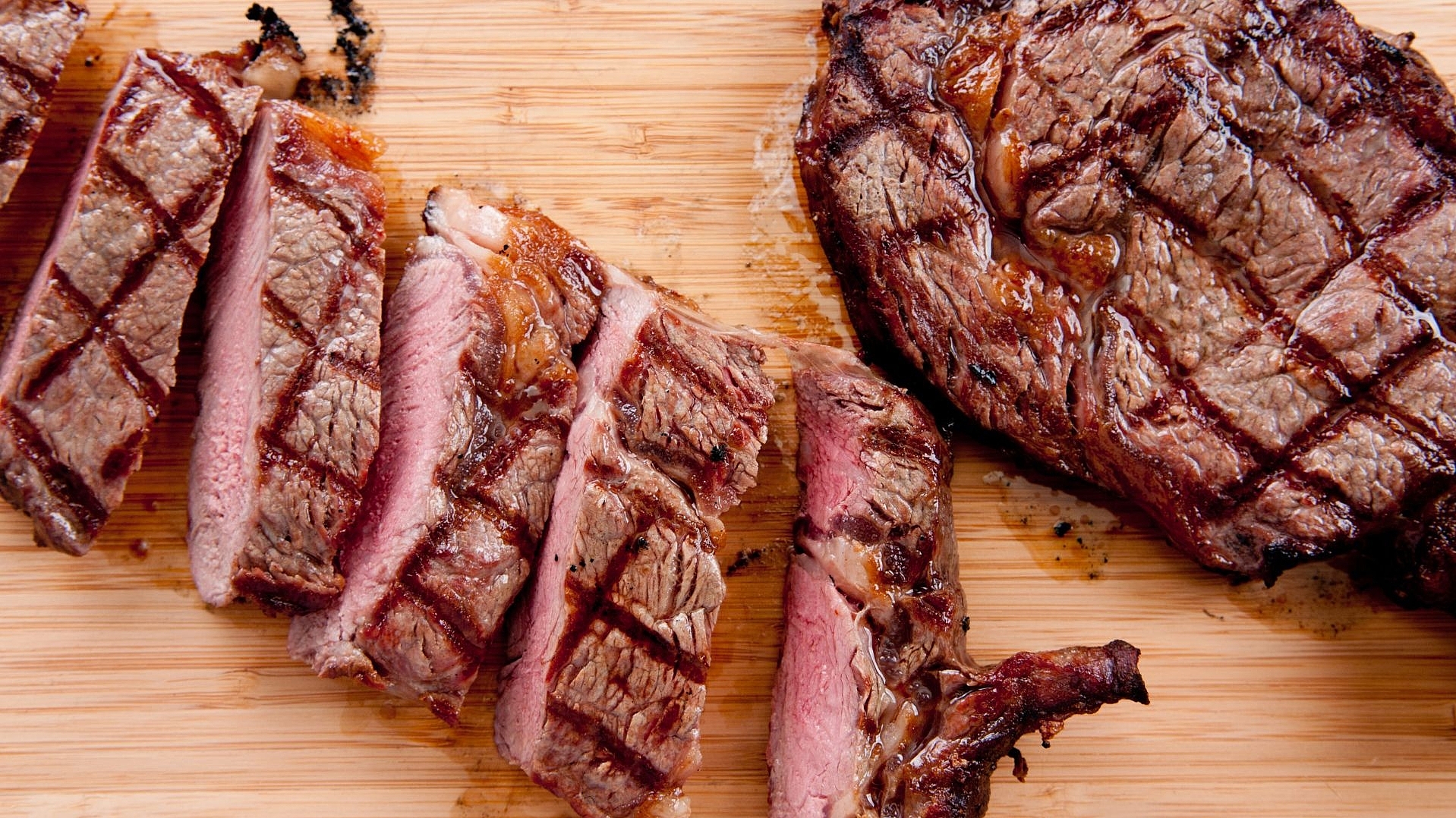
Roasted meat on a chop board. Courtesy photo
According to County Disease Tracking and Control data 2024, Murang'a has reported 76 cases of anthrax in the past 10 years that have occasioned three(3) deaths.
In all the recorded cases, each started like a joke where a farmer's cow died and neighbours defied expert advise that it be buried, insisting to eat the carcass.
According to 2019 data from the Kenya Market Trust, an average Kenyan consumes about 15 kilogrammes of meat annually, beef being the most popular followed by chicken, goat, mutton, fish, and even pork.
Muslims are forbidden to eat pork and other pig products.
It is perhaps Murang'a residents' pursuit of observing that love for beef that a good number of them have continued to refuse suspiciously dead cows getting buried in graves, opting to do it in their tummies, courting anthrax attacks.
Take a case of Mr James Njoroge from Gikingi village in Gatanga constituency who on April 11, 2025, noticed his grade cow showing signs of a fever.
"The cow was shivering and within hours, it dropped dead. A veterinary officer recommended that the cow be buried," Mr Njoroge said.
But area youths moved in and took control of the carcass, even threatening to assault anyone who dared interfere with their intention to share it among themselves.
"Look at it this way...The last time I had good money to afford me a proper treat for my family was in 2018 when I had been employed as a school watchman at a pay of Sh3,000 per month," said Mr Peter Njogu,38, who was among those who demanded that Mr Njoroge's cow be shared among neighbours.
He added that "it has been my desire to show up at my house to face my three(3) children carrying goodies like good fathers do".
He added that "there is this old trick of first giving the meat to the cat...a cat will never touch anything poisonous...so when my cat took the meat without any hesitation, I knew the veterinary who had recommended that the cow be buried wanted to deny us a good feast out of professional malice".
Today, Mr Njogu's cat is dead and together with his wife and children are among those the Murang'a County government health officials have placed under mandatory anthrax treatment.
Murang'a Director of Health Dr James Mburu said preliminary investigations indicate that majority of those who developed anthrax symptoms in the recent crisis were aged below 12 years.
"This is a case where adults grabbed dead cow's meat and took it to their children. Thank God that we've always been ready as a county to deal with anthrax. We always make sure we are ready to respond at short notice," Dr Mburu said.
The adventure of eating suspicious meat is baffling to the authorities.
"It's a very interesting scenario whereby the residents openly say they are aware of the grave dangers of eating uninspected and suspect meat. But they hilariously say it is hard to bury meat...risking a little bit for meat," says Murang'a County Health Chief officer Mr Eliud Maina.
Mr Maina said that the greatest meat risk blessing in Murang'a is that anthrax hits out through ingestion.
"Ingested anthrax is easily treatable as opposed to the one inhaled. The latter is hard to treat and can be fatal. Fortunately, we are not undergoing an unmanageable crisis and we've managed to keep fatalities very low. We usually remain in the ground conducting surveillance since anthrax might hit out between one(1) and seven(7) days after exposure, but prolonged periods up to between 42 and 60 days for associated strains," Mr Maina explained.
Mr Maina says that eating meat is considered a major happening in the society and sometimes villagers apply ridiculous adventure that is daredevil.
The County government is currently in Gati-Iguru village in Gatanga constituency where more than 600 people are suspected to be in danger of Anthrax after they ate meat of a dead cow from one farmer.
"We'll also vaccinate about 500 cows so as to tame the spread of the disease," Mr Maina said.
According to Murang'a County Commissioner Joshua Nkanatha, recurrent anthrax attacks in the area are as a result of old traditions laced with daredevil culture among residents.
In a speech that was delivered at Gikingi village on April 18, 2025, by Kihumbu-ini Assistant County Commissioner Patrick ole Kiok, the level at which people throw care to the wind at the mere sight of meat is alarming.
"You cannot blame an appetite...It's good to express an urge to eat. It's healthy. But we cannot be going around eating anything that falls our way. We cannot be consumers of disease fallen carcasses and uninspected meat simply because we love meat," Mr ole Kiok said.
Mr Nkanatha said "stock owners bear the responsibility of ensuring livestock officer's directive that dead animals be buried is strictly adhered to".
He said "even if it means calling for police protection to ensure that the directive is confirmed to, we will be there to offer security".
Mr Nkanatha said "makeshift slaughterhouses in homes and bushes will be battled so as to induce safe meat consumption culture".
But even as Mr Nkanatha talks tough, Ms Millicent Mugure,78, from Ndanga village says she had lost a cow in 2016.
"The veterinary officer I had called to guide me on how to deal with the carcass recommended that I bury it...not even the dogs were supposed to touch it," Ms Mugure said.
She supervised several neighbours burying the carcass at around 6pm and she retired to her house.
"The following morning the grave of the carcass was wide open... I remembered the story of death and resurrection. But this was not it. We suffered a crisis when about 50 people fell ill. They had exhumed the carcass and feasted on it," she says.
It was mathematical madness for Christopher Njata from Kahumbu Ward whose two(2) grade cows died in 2024 of anthrax handing him a loss of about Sh300,000.
A local veterinary officer buried his hopes of salvaging the loss when he told him that the cows were unfit for human consumption.
But Mr Njata's neighbours had a plan that instantly appealed to him.
With both animals weighing about 250 kilos, the idea was that they could throw away the pieces the veterinary officer had inspected and sell the rest.
At Sh400 per each kilo instead of the usual Sh600, Mr Njata was sure the Sh100,000 he was to get from selling the meat to neighbours would help him get starting capital to buy a young dame and nurse it to multiply his stock.
It is such an optimistic farmer who set about weighing the meat to neighbours.
It was when those who had eaten the meat started experiencing anthrax attack symptoms as village dogs started dropping dead that Mr Njata started dancing with a possible jail term.
But Kigumo Police Boss Kiprono Tanui later said “these village issues sometimes are not necessarily addressed best by use of arrests and convictions”.
"It won't make any sense to start arresting people who are already in the danger of losing lives in their tens. The priority is first to treat them. If a veterinary officer had authorised that the dead cows be consumed by the public, that would have been a clear case of arresting and charging him," he said.
Mr Tanui said "we had a security brainstorming session and we decided to first treat people, carry out civic education and also vaccinate their cows".
Health Chief Officer Mr Maina says the county is in the process of enforcing meat traceability policy where health officers will be empowered to walk into any meaty function and demand to know where it was sourced from and approved for consumption by who.
Mr Maina revealed that the Ministry of Health has since deployed a multi-disciplinary field investigation team that include members from the Kenya Field Epidemiology and Laboratory Training Programme (FELTP), as well as the Zoonotic Disease Unit (ZDU) to help in coming up with anti-anthrax action plan.
"One such investigative tour in our county happened between February 14 – 20, 2024, and was aimed to ascertain the intensity of the risk and advise on how to best prevent and control," he said.