

Katsuta is the new king of Safari Rally as he wins historic first WRC victory
- Created by Jeff Olubuyi
- Sports Extra
Together with co-driver Aaron Johnston, Takamoto Katsuta conquered the notoriously punishing Kenyan terrain to secure a historic triumph.
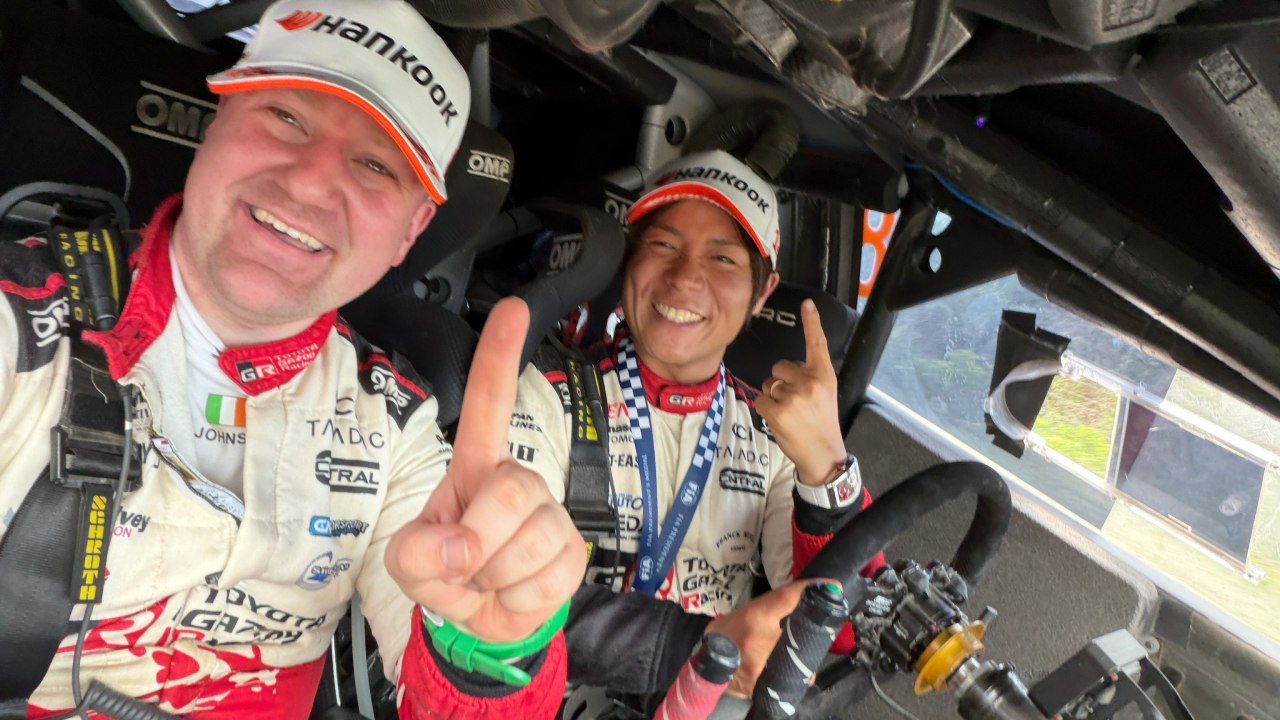
Japanese driver Takamoto Katsuta produced one of the most dramatic comebacks in recent Safari Rally history, claiming his first-ever World Rally Championship (WRC) victory at the Safari Rally Kenya, held from March 12-15, 2026 in Naivasha, Nakuru County.
After the heartbreak of retiring from last year’s Safari Rally, Katsuta returned determined and delivered a masterclass in endurance and consistency. Together with co-driver Aaron Johnston, he conquered the notoriously punishing Kenyan terrain to secure a historic triumph and maintain Toyota Gazoo Racing’s perfect winning record at Safari Rally since its return to the WRC calendar in 2021.
Toyota’s dominance in Kenya now stretches across six consecutive editions, with previous victories coming from Sébastien Ogier (2021, 2023), Kalle Rovanperä (2022, 2024), and Elfyn Evans (2025).
Katsuta’s victory was shaped on March 14, when the rally took a dramatic turn. Starting the day in seventh place, the Japanese driver surged to the lead as several front-runners fell victim to the brutal conditions.
Among those forced back were WRC championship leader and 2025 Safari Rally winner Elfyn Evans, nine-time world champion Ogier, Monte Carlo winner Oliver Solberg, and Hyundai Shell Mobis’ 2024 world champion Thierry Neuville.
Navigating rocky tracks, deep ruts, and unpredictable conditions, Katsuta completed 18 of the rally’s 20 stages in a total time of 3 hours, 16 minutes and 5.6 seconds. Two stages—Camp Moran 2 and Sleeping Warrior 2—were canceled for safety reasons.
Hyundai Shell Mobis driver Adrien Fourmaux, guided by Alexandre Coria, finished second in 3:16:33.0, while Sami Pajari and Marko Salminen wrapped up podium places for Toyota in 3:20:31.7.
Hyundai’s Esapekka Lappi and Enni Mälkönen came fourth with 3:22:12.9, while Robert Virves and Jakko Viilo of Škoda Fabia rounded out the top five in 3:27:44.3.
Early rally leader Solberg, navigated by Elliott Edmondson, ultimately finished 10th in 3:32:50.1 after leading the opening two days. Behind him were Ogier/Vincent Landais (3:33:36.3), Neuville/Martijn Wydaeghe (3:35:58.0), and Evans/Scott Martin (3:42:26.5), respectively.
Among the local competitors, former African champion Karan Patel and Tauseef Khan were the top Kenyans, finishing in 4:26:54.7 in their Škoda Fabia in position 17. They were followed by Aakif Virani/Zahir Shah (4:43:06.7) and Samman Vohra/Drew Sturrock (4:46:47.1) in that order.
One of the most inspiring performances came from paraplegic driver Nikhil Sachania, navigated by Deep Patel, who completed the rally in 21st spot in 5:15:33.4 in a Ford Fiesta R3, earning admiration from fans and competitors alike.
The 74th Safari Rally attracted more than 40 drivers and was run entirely in Naivasha, reaffirming the event’s reputation as one of the toughest and most unpredictable rallies in the world.
For Katsuta, the victory marks a career-defining moment, transforming last year’s disappointment into a landmark triumph on one of motorsport’s most demanding stages.