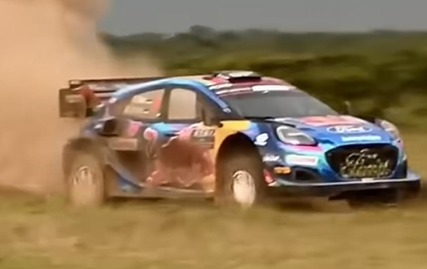

WRC Safari Rally shifts fully to Nakuru for March 12-15 event
For the first time in the storied history of the Safari Rally, the roar of World Rally Championship cars will not echo through Nairobi.
Instead, in a bold and historic shift, all competitive action of the 2026 WRC Safari Rally will take place entirely in Nakuru County, forcing fans in Nairobi and its environs to hit the road and follow the spectacle to the heart of the Rift Valley when the rally runs from March 12-15, 2026.
The move marks a significant departure from tradition where Kenyatta International Convention Centre (KICC) hosted ceremonial start and Moi International Sports Centre Kasarani hosted the first special spectator stage, but organisers insist it is both necessary and transformative.
A regulation-driven shift
Safari Rally CEO Charles Gacheru explained on January 30, 2026, that the change was driven by new FIA World Rally Championship sporting regulations for 2026, which have compressed the rally calendar.
“There is a big change this year because we are not going to have the rally in Nairobi County,” Gacheru said. “The reason for that is because there has been a change in the FIA WRC sporting regulations for 2026, which mandate us to run the rally from Thursday to Sunday only. So we have lost Wednesday, and it was not possible to come to Nairobi, so we have condensed everything in Nakuru County.”
With the rally now starting on Thursday instead of Wednesday, organisers were forced to choose a single host region rather than splitting the event between Nairobi and Naivasha as in previous years.
One of the biggest changes fans will experience is the relocation of the Shakedown stage. For the first time, it will be held on Thursday morning near the Naivasha Prisons, an area Gacheru says is deliberately designed to bring the rally closer to ordinary Kenyans.
“This is another change because we’ve put the Shakedown near the Naivasha Prisons, and it will be very accessible to all members of the public, all walks of life,” he said. “For the first time, the shakedown is being done in an area that is very accessible to people on foot, people coming by boda boda, people coming by matatu.”
Gacheru directly appealed to fans who traditionally flock to Kasarani, including those from Lucky Summer and Dandora, to make the journey to Naivasha and be part of the new chapter.
“There is a big wall there and the cars will be moving there, and they will get a very good opportunity to approach the cars,” he added.
The rally will then unfold across Nakuru County from Friday to Sunday, with the now-iconic Hell’s Gate National Park hosting the final stage.
“In 2025, I think we got over 100,000 spectators at Hell’s Gate,” Gacheru noted.
“We again welcome Kenyans to Hell’s Gate.”
He assured fans and stakeholders that preparations are firmly on track.
“All FIA and WRC promoter deadlines have been met. All documents are in. All roadbooks have been checked, all maps are ready, all itineraries have been approved,” Gacheru said, adding that the event has already been cleared by the Kenya Motorsport Federation and is awaiting final FIA approval.
Government backs Nakuru-only Safari Rally
Sports Cabinet Secretary Salim Mvurya echoed the confidence, confirming that Kenya is fully ready to host the global motorsport spectacle.
“We are now ready to host the WRC Safari Rally from the March 12 to March 15, 2026,” Mvurya said.
“All the technical aspects have now been concluded, and this time around, everything will be fully in Nakuru.”
Mvurya emphasized that the Safari Rally goes far beyond motorsport, describing it as a major economic driver.
“Safari Rally is not just a motorsporting event. It is a function that is going to inspire the economic units of our country, the entire ecosystem,” he said. “Tourism, small and micro enterprises will find opportunities in those four days to ensure that the entire economic ecosystem is enhanced.”
He revealed that government agencies, tourism bodies and the private sector are being mobilised to maximise the rally’s economic impact, noting increased private sector participation this year.
With 50 drivers already confirmed, specialised equipment, tyres and fuel already arriving in the country, attention is also turning to the future of the Safari Rally in Kenya.
Mvurya disclosed that discussions are underway to extend Kenya’s WRC contract by five more years, while also assessing other regions that could host future editions.
“After this event, WRC and the oversight team will be mapping out Kenya,” he said.
“We will be looking at other parts of the country so that subsequent events could have options to profile our diversity.”
However, Gacheru was clear that the decision to move away from Nairobi was not taken lightly.
“The move not to have Nairobi was not something we took lightly,” he explained.
“But we are in a straitjacket from the FIA WRC sporting regulations. We are urging the fans from Nairobi, please join us in Naivasha.”
As the Safari Rally prepares to break with decades of tradition, one thing remains unchanged: the promise of raw speed, dramatic landscapes and a uniquely Kenyan motorsport spectacle, now unfolding entirely on the plains and escarpments of Nakuru County.