

PS Bitok exposes ghost schools, fake students causing education fund delays
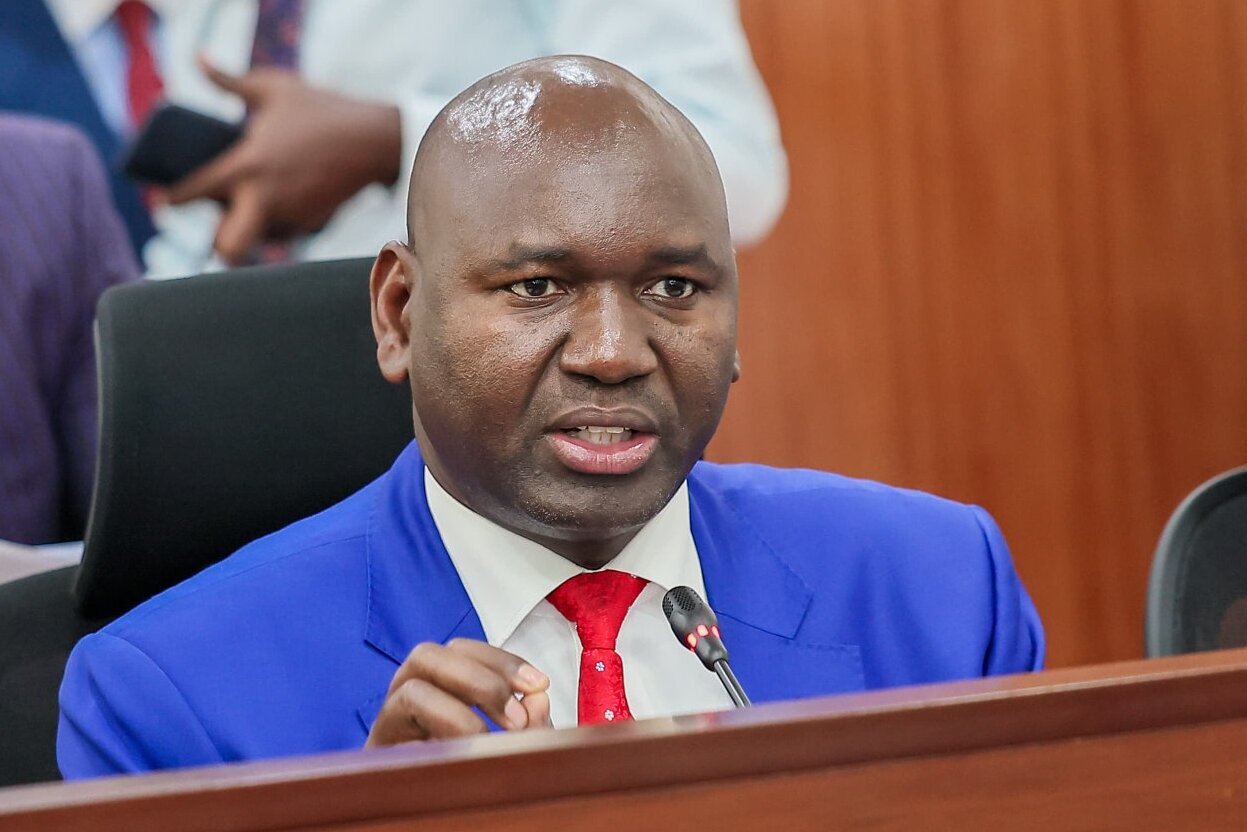
Principal Secretary, State Department for Basic Education, Julius Bitok when he appeared before the National Assembly’s Departmental Committee on Education, chaired by MP Julius Melly (MP Tinderet) to update members on the implementation of the State Department for Education budget on September 17, 2025. Courtesy photo
Kenya is losing billions in education funds because thousands of students on record do not exist in real classrooms, and some schools are only on paper.
Basic Education Principal Secretary Julius Bitok told Parliament that his verification exercise has already uncovered more than 50,000 ghost students in secondary schools.
That the number could go higher, considering that only about half the schools have been reviewed so far.
Dr Bitok explained before the Education Committee that the National Education Management Information System (NEMIS), together with data from school heads and sub-county directors, had been inflating student numbers.
Those inflated figures have been driving disbursements of capitation funds, but many of the claimed students cannot be found on the ground.
He said Kenya may be losing as much as Sh1.1 billion annually through this mismatch. Only 17,400 of approximately 32,000 public primary and secondary schools have been cleared and verified to receive government capitation.
The rest are waiting for confirmation that their data matches reality.
The delayed funding has hit many legitimate schools hard.
Head teachers told MPs that they struggle with paying support staff, buying teaching materials, and maintaining infrastructure due to withheld capitation.
Dr Bitok defended the delay, arguing that releasing funds without verification risks further misuse of public resources.
He also exposed a darker problem: “nonexistent schools”--institutions listed in records that do not physically exist. Some of those were registered long ago while others were newly added without the structures, pupils, or staff to match.
Parliament pressed Dr Bitok on what new safeguards the Ministry will implement. He proposed using biometric registration for students, improving data links between the Education Ministry and Civil Registration services, and increasing supervision from county and sub-county offices.
These revelations shine a light on long-standing issues in Kenya’s education sector. NEMIS was introduced in 2018 to tighten oversight, but manipulation, weak enforcement, and lack of accountability allowed false data to persist.
Genuine schools continue to suffer: overcrowded classes, shortage of books, and underfunded infrastructure remain serious problems.
Dr Bitok told MPs he hopes to complete verification in the coming weeks and then table a full report before Parliament.
“We must ensure every shilling goes to a real learner in a real classroom,” he said.